Soprano marks 40 years since her 1986 debut with new album, partnership with SM Entertainment, evolving exploration of technology
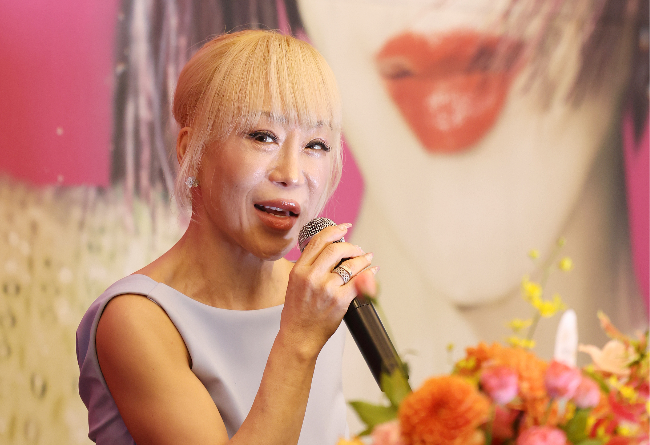
Forty years after Sumi Jo first stepped onto a European opera stage, the Korean soprano is not quite ready to look back.
"I'm still moving forward as I've done before" she said Wednesday in Seoul. "And I keep asking myself what more I can give to myself and to the world."
Speaking at a press conference marking the 40th anniversary of her 1986 European debut, the 63-year-old soprano certainly shows no sign of stopping, with an impressive range of new projects on the go: a 14-track album titled "Continuum," released the night before; an exclusive recording deal with SM Classics, the classical label under K-pop powerhouse SM Entertainment; a 20-city world tour already underway; the second edition of the Sumi Jo International Singing Competition in France in July, which drew 500 applicants from 55 countries; and an evolving collaboration with KAIST researchers exploring how her voice might pair with artificial intelligence and holograms.
K-pop pivot
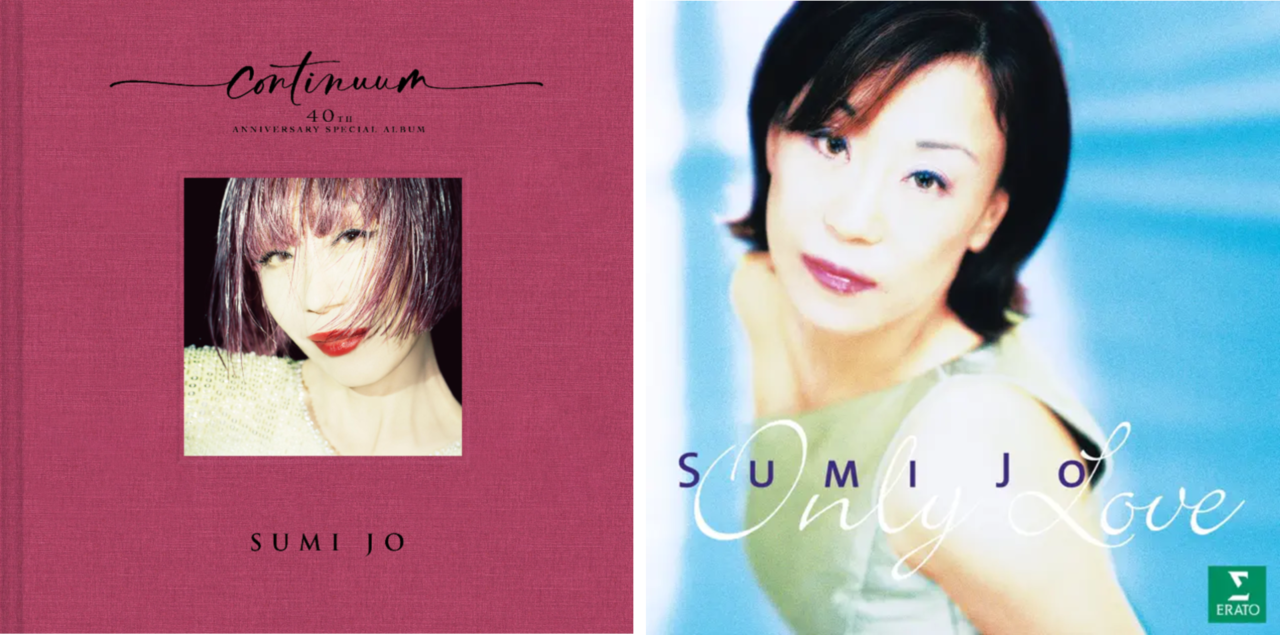
The album's title is no accident. "Continuum" captures what Jo says she has come to believe about both art and life: They don't begin or end at any fixed point.
Rather than stitching together a repertoire from composers long gone, Jo said, she asked contemporary composers to write new works for her tied to specific chapters of her life.
There is the child in Korea who practiced piano eight hours a day. The 20-year-old who arrived in Italy alone in 1983. The young soprano who launched her European career in France, frightened and homesick. And the artist now contemplating, as she put it, "what kind of world might lie far above, after I leave this one."
One of the album's most surprising tracks brings Jo together with Suho, leader of K-pop boy band Exo.
The duet, she said, was a deliberate stretch for both: a romantic, low-register piece that pushed the famously high-pitched Suho into unfamiliar territory.
Jo recorded her part first, then watched from New York as Suho recorded his in Seoul, the two greeting each other via videoconference at very different times of day.
"You could really hear how much he had practiced," she said. "I was moved. I think I've listened to it 10 times already."
The Suho duet is, in a sense, only the beginning.
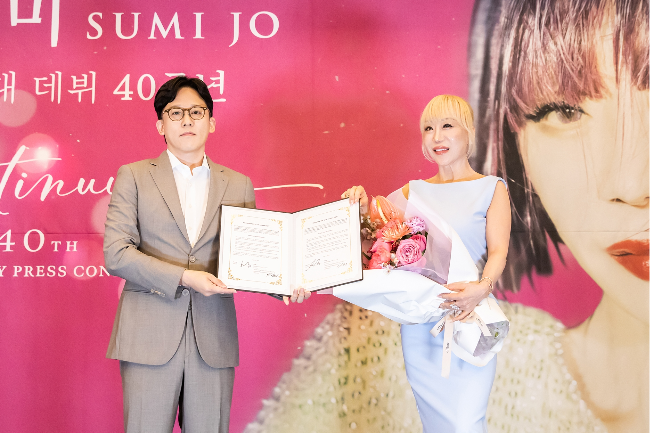
Earlier in the press conference, Jo signed an exclusive recording agreement with SM Classics, the company's classical music label.
SM Entertainment Chief Artists and Repertoire Officer Lee Sung-soo, who joined Jo on stage, framed the deal in historical terms: SM marked its 30th anniversary last year, while Jo's own milestone comes a decade earlier.
"She brought Korean music to the world a full 10 years before we did," Lee said.
For Jo, the appeal was less about prestige than reach.
"After 40 years, I've already worked with the world's top brands," she said. "What interested me was SM's global connections — and the chance to step out of the strict, polished world of classical music into something with a much wider audience."
The move is less surprising than it may sound. In 2000, when Jo released "Only Love," an album of pop ballads and musical theater numbers, it sold more than 1 million copies — a figure she noted with some pride at Wednesday's press conference.
The idea of a classical soprano recording such material was, at the time, almost unthinkable.
"I've always liked work that takes courage, work that's a challenge," she said. "That's why this moment with SM feels exactly right."
Soprano meets AI
Jo's openness to technology came late, and reluctantly. For most of her career, she said, she resisted any electronic mediation of her voice — even microphones in concert halls. When UNESCO asked her during the early days of the pandemic to record "Ave Maria" on her phone for a global message of comfort, she initially refused.
"Recording my voice on a telephone — I just hated the idea," she said. Eventually, out of boredom and curiosity, she tried it.
"And to my surprise, my voice came through quite well."
When KAIST's president invited her to join the university as a visiting professor, Jo said, she could not give an answer for a week. What ultimately convinced her was a visit to the campus. She had assumed that the country's most rigorous science students would have little use for a soprano. What she found was the opposite.
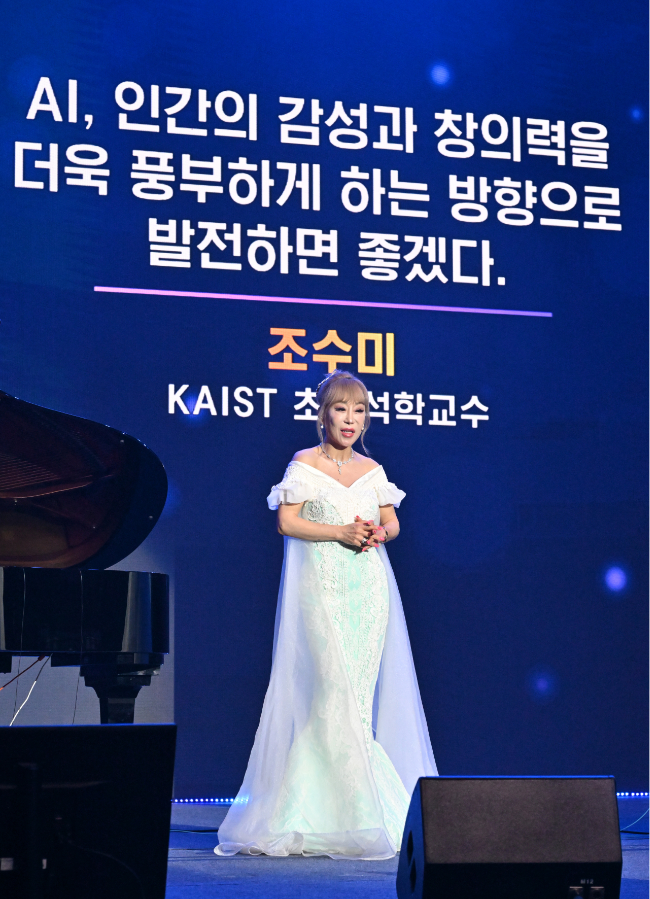
"These are students who barely leave their labs, who are absorbing every bit of knowledge in the world," she said. "And what they kept telling me they were looking for wasn't more brilliance, more sharpness — it was something warm, something that makes the heart tremble. They told me that thing was music."
The collaboration has since produced a string of experiments. There has been research into the acoustics of her voice. There have been AI-assisted duets. And there was a holographic performance, staged a few years ago, in which Jo herself sat in the audience and watched a digital version of herself sing the Queen of the Night's aria from Mozart's "Magic Flute."
Even so, she approaches the work cautiously.
"What classical artists struggle with the most is the idea of another medium stepping in and changing the color of our music," she said. "I'm still learning how — and how far — to go."
Her first audience
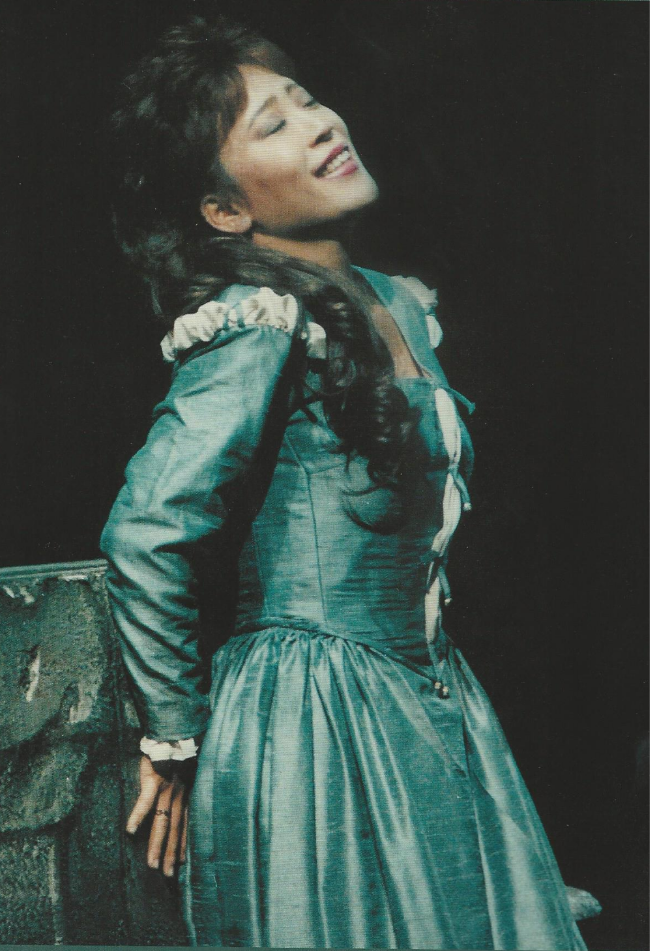
Among the more personal stops on Jo's 20-city tour in Korea is the one she insisted on taking place first.
The tour opens Saturday in Changwon, South Gyeongsang Province, where her parents were born and raised.
"They were the people who gave me the most courage in my 40 years," Jo said. "Even though they're not beside me anymore, I wanted them to hear this album live."
Jo's parents are no longer alive, but they may be the most important figures in her career.
Her mother, who had once dreamed of becoming a singer herself, encouraged Jo to practice piano eight hours a day from the age of 4. Her father, who studied English literature at a time when foreign-language education was still rare in Korea, played English cassettes during breakfast and French cassettes during dinner.
When Jo was 17, he flew alone to London and waited at the Royal Opera House until its director would see him — only to ask how his daughter might one day debut there. Jo, before turning 30, did just that.
What her parents gave her, Jo suggested, is what she now wants to give back.
Mentorship has become a central part of her plans: The second Sumi Jo International Singing Competition opens in France in July with 24 finalists to be announced Sunday. But she also wants to widen, not guard, the circle around classical music.
"Many people think it's difficult, expensive, that they don't have time for it," she said. "I want to make more space for families, for couples, for friends — small but real moments of happiness."
Every milestone, she said, leaves her less satisfied than restless. "It doesn't feel like someone saying, 'Well done,'" she said. "It feels like someone asking, 'And now what? What more?'"

gypark@heraldcorp.com