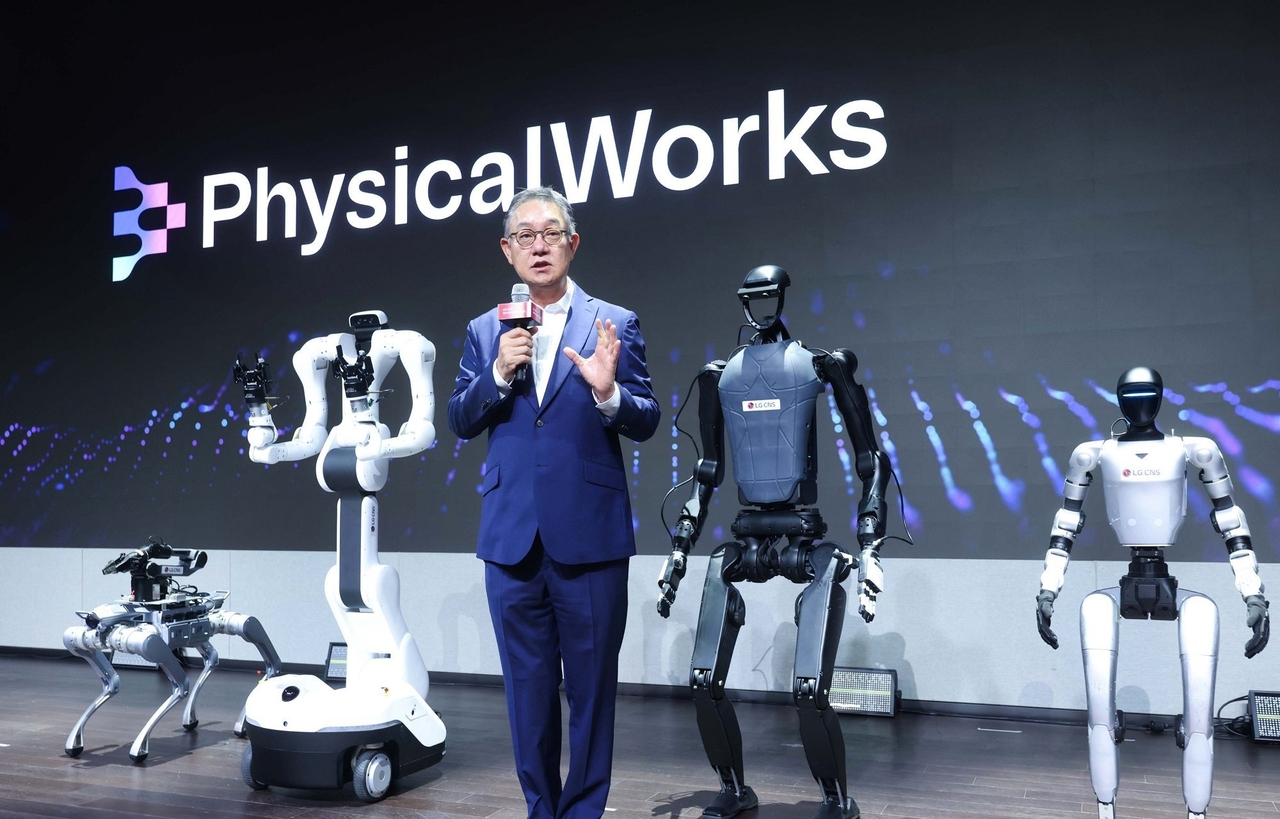
LG CNS, the IT services arm of LG Group and one of Korea's largest systems integrators, on Thursday launched a software platform to run fleets of robots from different manufacturers under a single control layer — a problem that has long required custom engineering to coordinate the machines.
The platform, called PhysicalWorks, comes in two parts. One module trains robots using simulation and video data. The other assigns and reassigns tasks across mixed-brand robot fleets in real time.

To show what that looks like, the company ran a live demonstration at its Magok campus in western Seoul featuring four robots from four different makers. A bipedal humanoid from China's Unitree picked up a packaged item and placed it in a box. A wheeled-leg quadruped from Deep Robotics took the box and carried it to Dexmate's wheeled humanoid, which loaded it onto an assigned shelf. The quadruped then returned for the next cycle while the wheeled humanoid placed an empty box back on the conveyor for the bipedal robot to refill.
When a staged emergency reassigned the quadruped to patrol duty, the platform pulled in a logistics robot from Bear Robotics to take over the transport task.
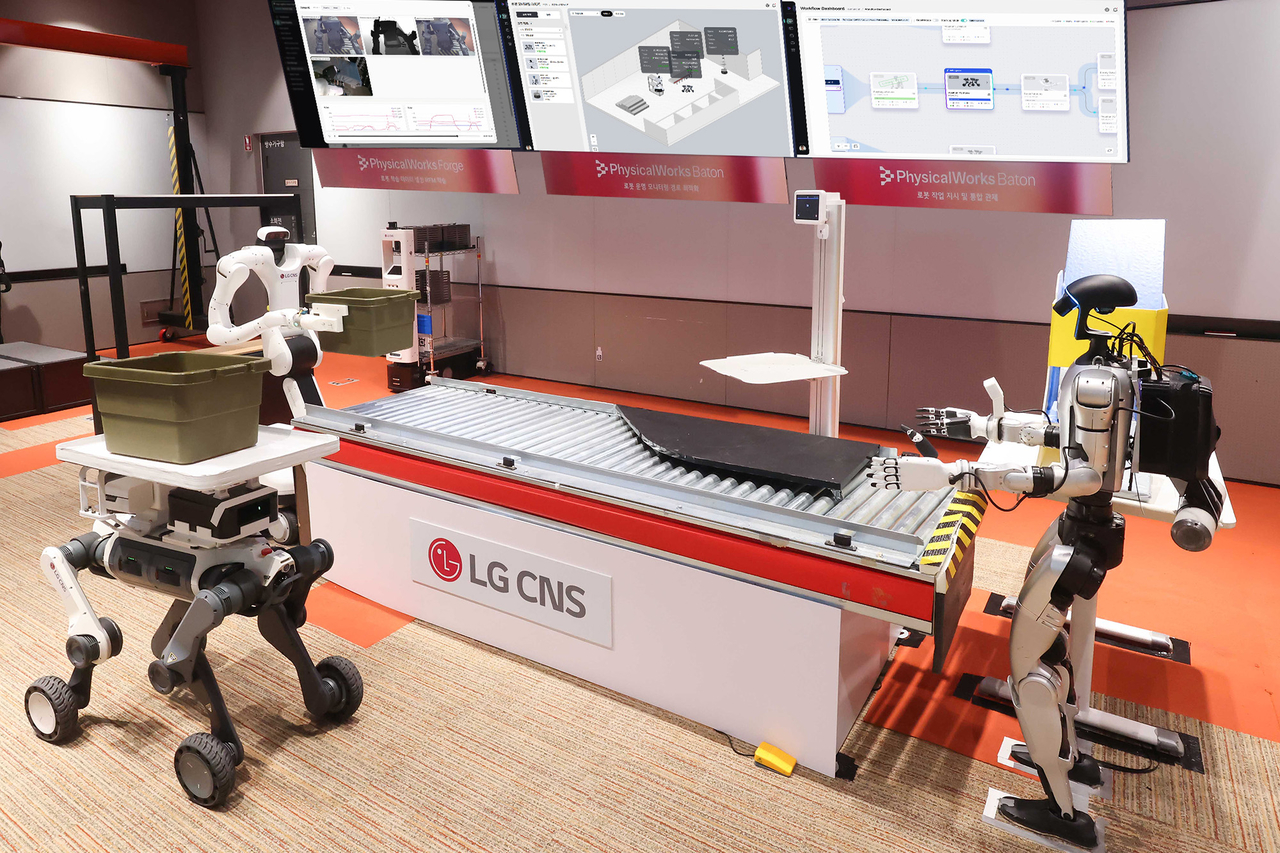
None of the robots was remotely controlled, and the handoff between two of them, roughly two to three meters apart, took about 90 seconds. A company representative on-site said the robots would "move faster as they accumulate more field training."
CEO Hyun Shin-gyoon said LG CNS's edge comes from four decades of building factory IT systems for Korean manufacturers like LG Electronics and LG Display.
"We source whichever robots fit the site, train them on the client's data, and run their workloads through our platforms," he said, explaining that the company's grasp of legacy production software is what makes integration possible at scale.
The launch caps an 11-month buildup. The company, which went public on the Kospi in February 2025, invested in US robot-brain startup Skild AI last June, took a stake in Dexmate in March and opened a robotics consulting unit in April.
LG CNS said it is running more than 20 proof-of-concept projects with clients in electronics, chemicals, batteries and shipbuilding, including welding work at shipyards facing labor shortages. Asked when these would translate into revenue, Smart Logistics and City division head Lee Joon-ho said meaningful results were "around one to two years" away.
The fleet-management module has been running since December at Busan's national pilot smart city, coordinating patrol, barista, luggage and cleaning robots. LG CNS posted 6.13 trillion won ($4.22 billion) in revenue last year.
mjh@heraldcorp.com


![[Graphic News] Average parental age of S. Koreans rises](https://wimg.heraldcorp.com/news/cms/2026/09/27/news-p.v1.20260927.0bcbf944ca9043c4a6ad4401fcfae25c_T1.gif?type=h&h=800)