Police dismantle barriers installed amid clashes over wartime sexual slavery memorial
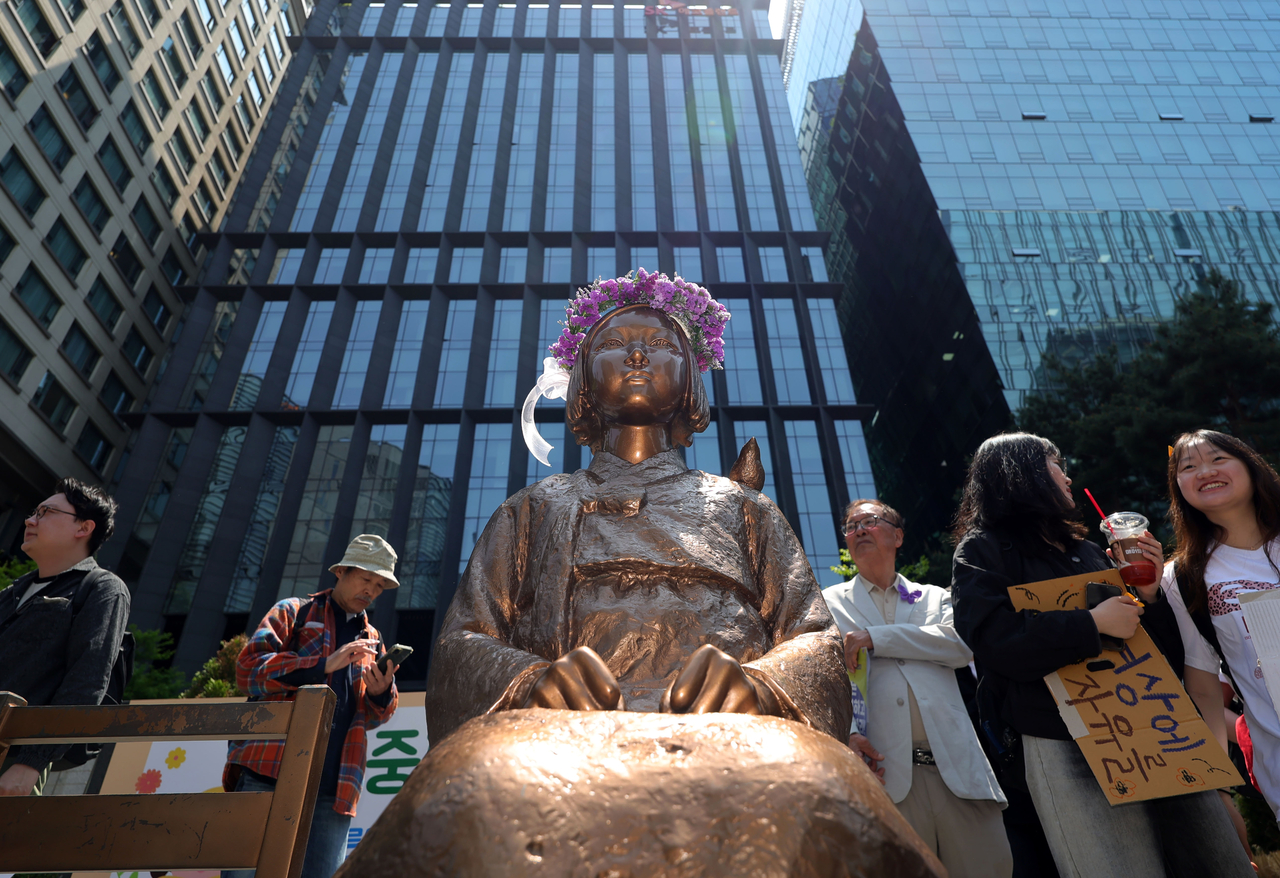
Police barricades surrounding the Statue of Peace near the former Japanese Embassy in central Seoul were fully removed Wednesday, six years after they were first installed amid concerns over vandalism and clashes involving anti-comfort women groups.
The removal took place alongside the 1,751st weekly Wednesday rally calling for justice for victims of Japan’s wartime sexual slavery system, organized by the Korean Council for Justice and Remembrance for the Issues of Military Sexual Slavery by Japan.
The civic group held a commemorative event to mark the dismantling of the barricades, which had enclosed the statue since June 2020.
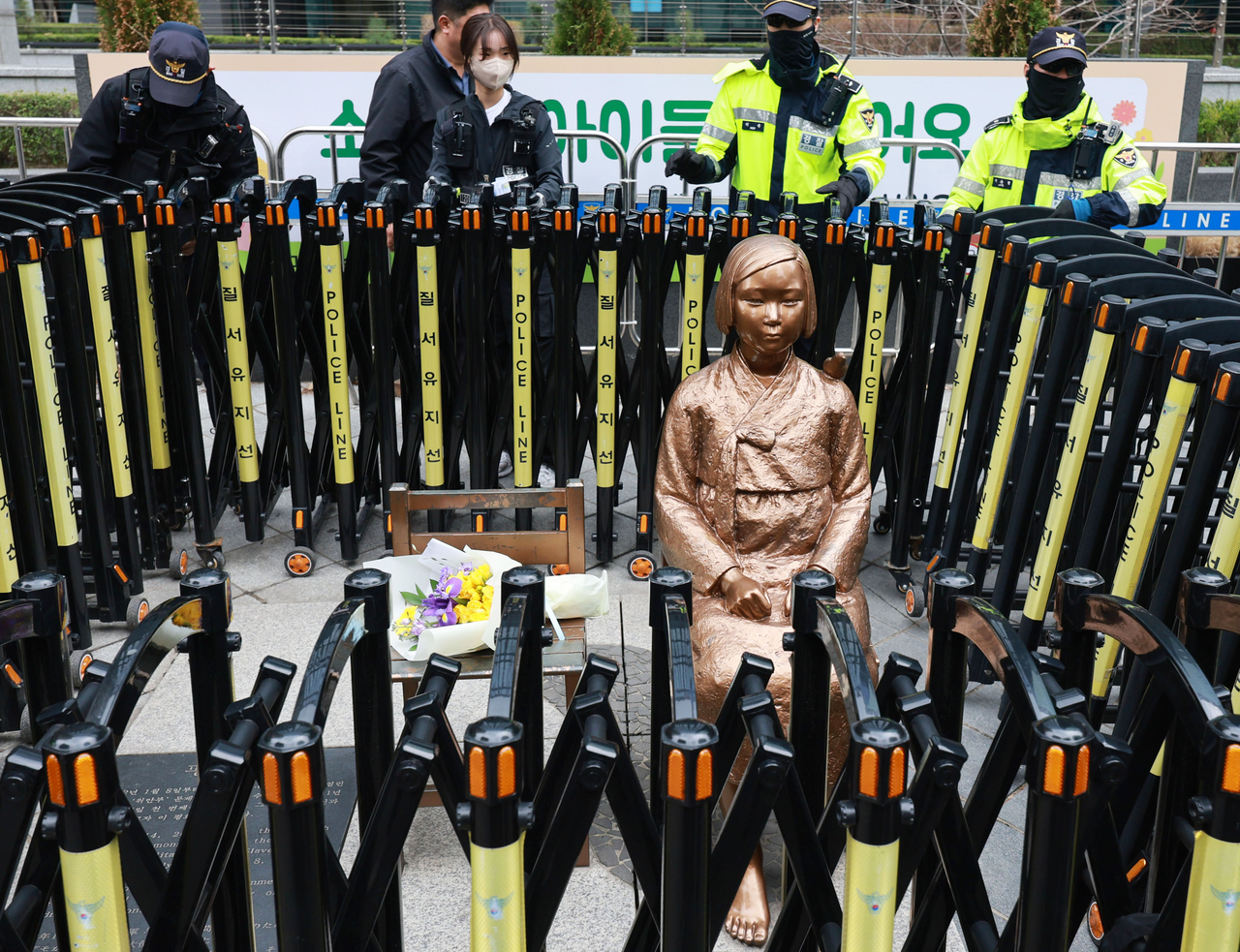
Police installed the barriers after protests by far-right and anti-comfort women groups raised fears that the statue could be damaged. After the head of such an organization, Kim Byung-heon, was arrested in March on charges including defamation of deceased victims, discussions regarding the barricades' removal gained momentum.
Police said police would remain deployed nearby to maintain safety and order during demonstrations.
The Statue of Peace, also known as the “Comfort Woman Statue,” was first installed on Dec. 14, 2011, to commemorate the 1,000th Wednesday protest demanding a formal apology and legal compensation from Japan for victims of wartime sexual slavery.
The bronze statue created by sculptors Kim Seo-kyung and Kim Eun-sung depicts a young girl seated in a chair, staring straight ahead. It has since become one of the most recognizable symbols of remembrance and activism surrounding the issue.
According to the Korean Council, many symbolic elements of the statue reflect the experiences of Korean women under Japanese colonial rule during World War II.
The girl's short hair symbolizes the violent abduction of women and girls, while the bird perched on her shoulder represents peace, freedom and a bond between the living and the dead. Her clenched fists express both anger toward the Japanese government and the determination of the victims not to give up.
The girl’s bare feet, with one heel slightly lifted from the ground, symbolize the hardships endured by victims and the ongoing pain caused by unresolved historical grievances.
An empty chair beside the statue invites visitors to sit alongside the figure and remember the victims. A white butterfly represents the souls of those who died before receiving an apology.
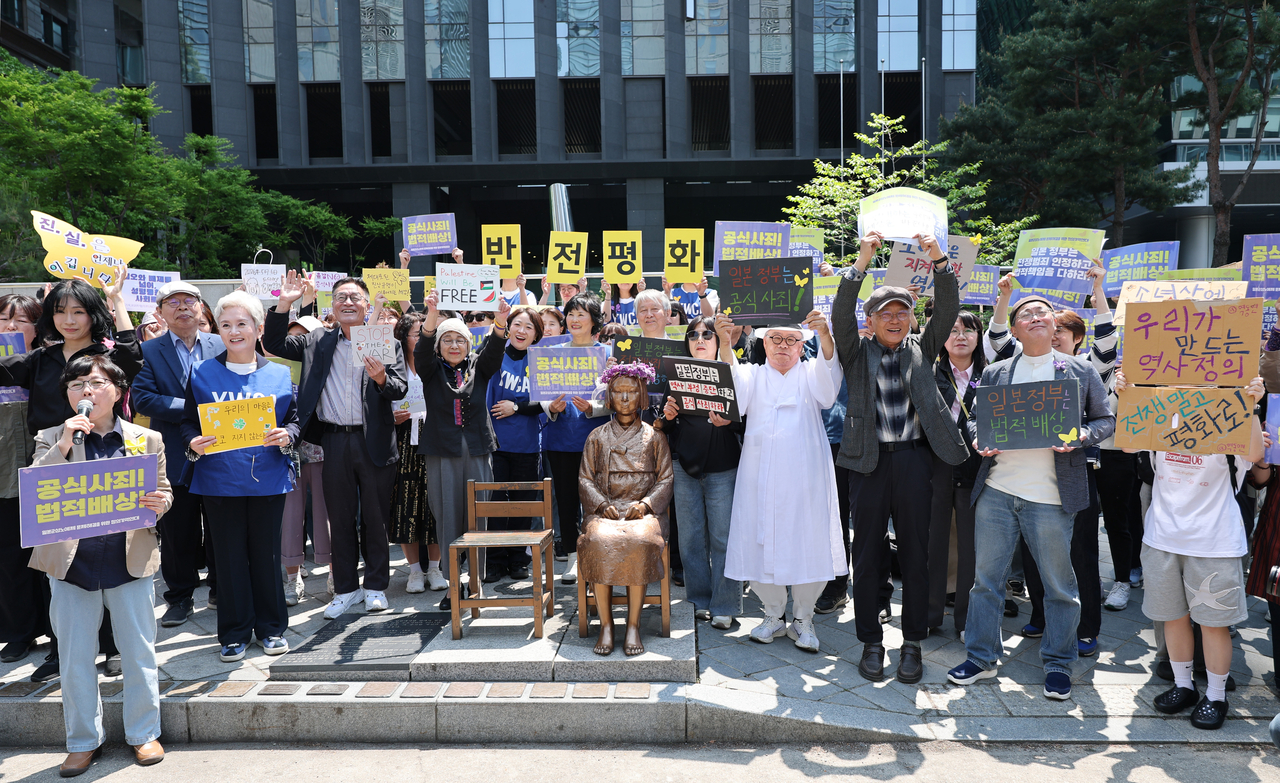
The weekly Wednesday demonstrations began on Jan. 8, 1992, and are considered one of the world’s longest-running regular protests. Held every Wednesday regardless of weather conditions, the rallies have become a major symbol of South Korea’s civil activism and historical memory movement.
The Korean Council had previously requested the removal of the barricades after the National Assembly passed revisions to a law aimed at penalizing the spread of false information about wartime sexual slavery victims. However, the request was temporarily delayed after anti-statue activists announced plans for renewed protests.
Following Kim’s arrest last month, police began temporarily removing the barricades during Wednesday rallies starting April 1, before deciding on their full removal this week.
jychoi@heraldcorp.com