Korea’s digital infrastructure and tech-savvy users seen as fertile ground for human verification system
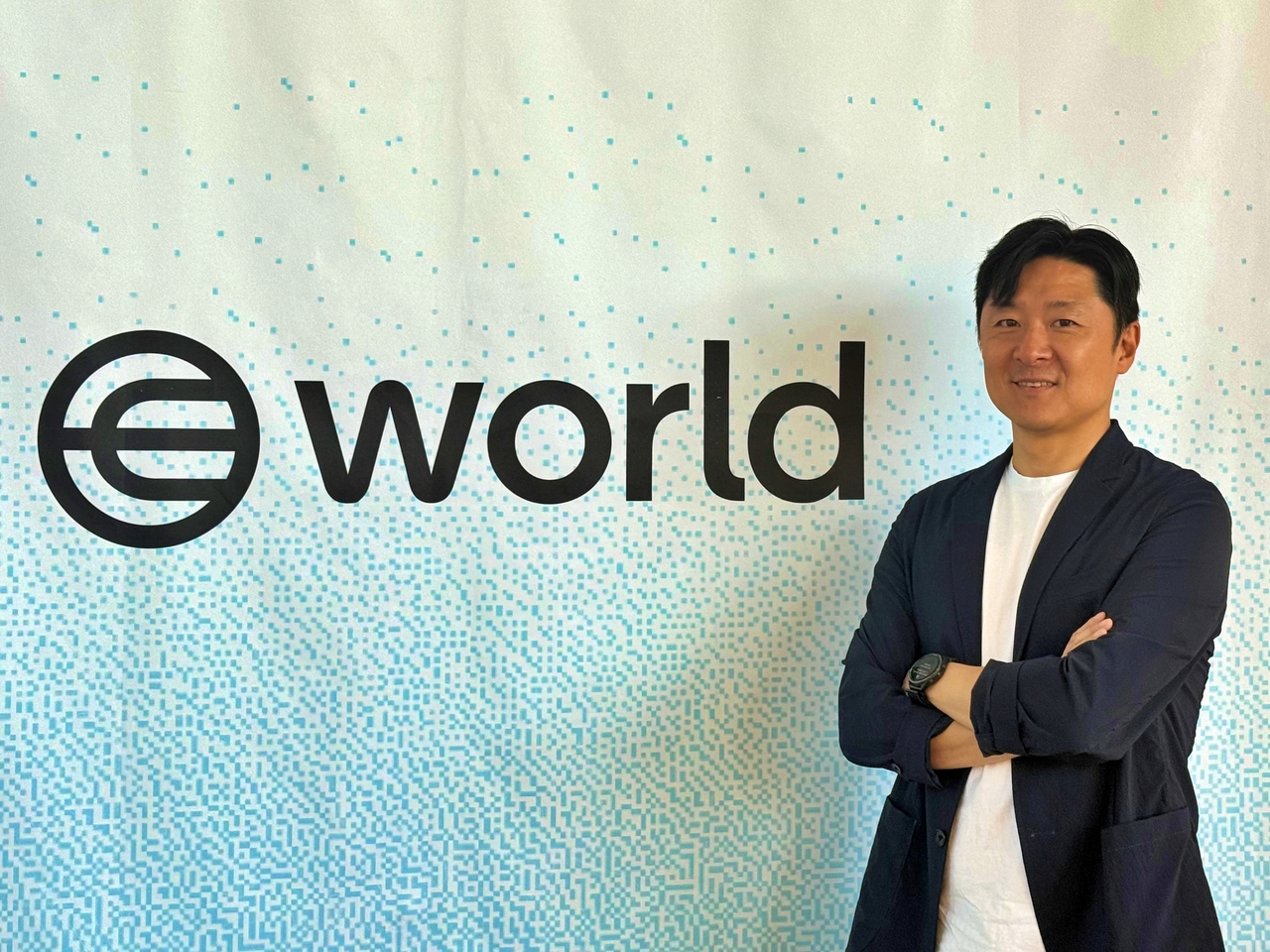
Tools for Humanity, the San Francisco-based human verification company co-founded by OpenAI CEO Sam Altman, is betting on Korea as an early market for technology that proves whether online activity comes from a real person, as artificial intelligence agents and automated bots become harder to distinguish from human users.
In an interview with The Korea Herald in Seoul on Monday, David Park, general manager for Korea at Tools for Humanity, described World ID as the company’s human verification system, designed to confirm that an online action is being carried out by a real person without revealing who that person is.
“Korea is one of the most important markets in our Asia-Pacific strategy,” Park said. “Korea, in particular, has a much faster pace of AI adoption and agent usage compared to other countries, which makes it an extremely important testbed.”
Park, who previously worked at CJ Entertainment, YouTube, Uber and Spotify, said his experience bringing global technology platforms into Korea has shaped how he approaches Tools for Humanity’s Korea business. In each case, he said, the challenge was not just introducing technology, but helping it take root in local services and user habits.
This time, Park said, the challenge is different because Tools for Humanity is working on the trust layer behind online services, rather than on content or mobility platforms. “As AI emerges and agents become more widely used, maintaining trust on the internet requires a process to verify that someone is a real human,” Park said.
The issue is especially relevant in Korea, where mobile identity checks, PASS, simplified verification services from Naver, Kakao and Toss, financial certificates and joint certification systems are already widely used. Park said Korea’s advanced real-name-based identity verification infrastructure also makes it a priority market for the company in terms of security and verification systems.
“It is a complementary relationship,” Park said. “It should be seen as playing a role in enhancing trust on top of already well-established systems.”
Traditional systems, including know-your-customer processes, verify “who I am,” while World ID focuses on whether an online action comes from a human, Park said. The company uses an independent, anonymized multi-party computation service to confirm that an individual has not previously been verified, preventing duplicate participation.
One early use case is ticketing, where bots and scalping remain persistent problems.
“In industries such as K-pop, K-content and sports — where Korea is a global exporter — fairness is a critical factor,” Park said.
If adopted by ticketing platforms, Park said the system could help limit purchases to one ticket per person per account. Tools for Humanity announced Concert Kit last month as a related tool to combat ticket scalping bots by issuing access codes only to users who have completed human verification.
Park also pointed to sports as an area with strong potential, citing last year’s Nexon Icons Match, a football exhibition event hosted by Korean game company Nexon, where a “human-only” gate allowed verified attendees to enter more quickly after completing verification. In K-pop, discussions are ongoing with the aim of creating use cases after the summer, though the timing depends on collaboration among multiple parties.
Gaming and digital platforms are also likely early adopters, particularly where fair access and protection against automated activity are important. Park said the technology could also be used in areas that require both fairness and anonymity, such as local government voting systems.
On privacy and regulation, Park said Tools for Humanity is in ongoing discussions with Korea’s Personal Information Protection Commission and is continuing a process of validation.
Park said the company does not collect sensitive personal information such as Korea’s resident registration numbers. The Orb, the device used for high-assurance verification, generates a unique code stored on the user’s device, while certain encrypted fragments are distributed across nodes operated by research institutions around the world, including the Korea Advanced Institute of Science and Technology.
“What is important is that verification is not performed using unprocessed data, but through already encoded values,” Park said. “Once registered, verification can be completed using this encoded value, and the Orb verification itself is completed only once.”
Park said World ID could become part of Korea’s digital infrastructure within three years, as more services look for ways to manage AI agents and verify human involvement.
“We believe this can become a foundational infrastructure within three years, rather than five,” Park said. “Rather than focusing on specific numerical targets, we place greater importance on how many services can be integrated.”
He said the company’s focus in Korea is to prove that human verification can work as a practical trust layer across digital services, rather than remain a standalone authentication tool.
yeeun@heraldcorp.com