Incoming chief conductor leads orchestra's 7th Korea tour ahead of official 2026-27 tenure
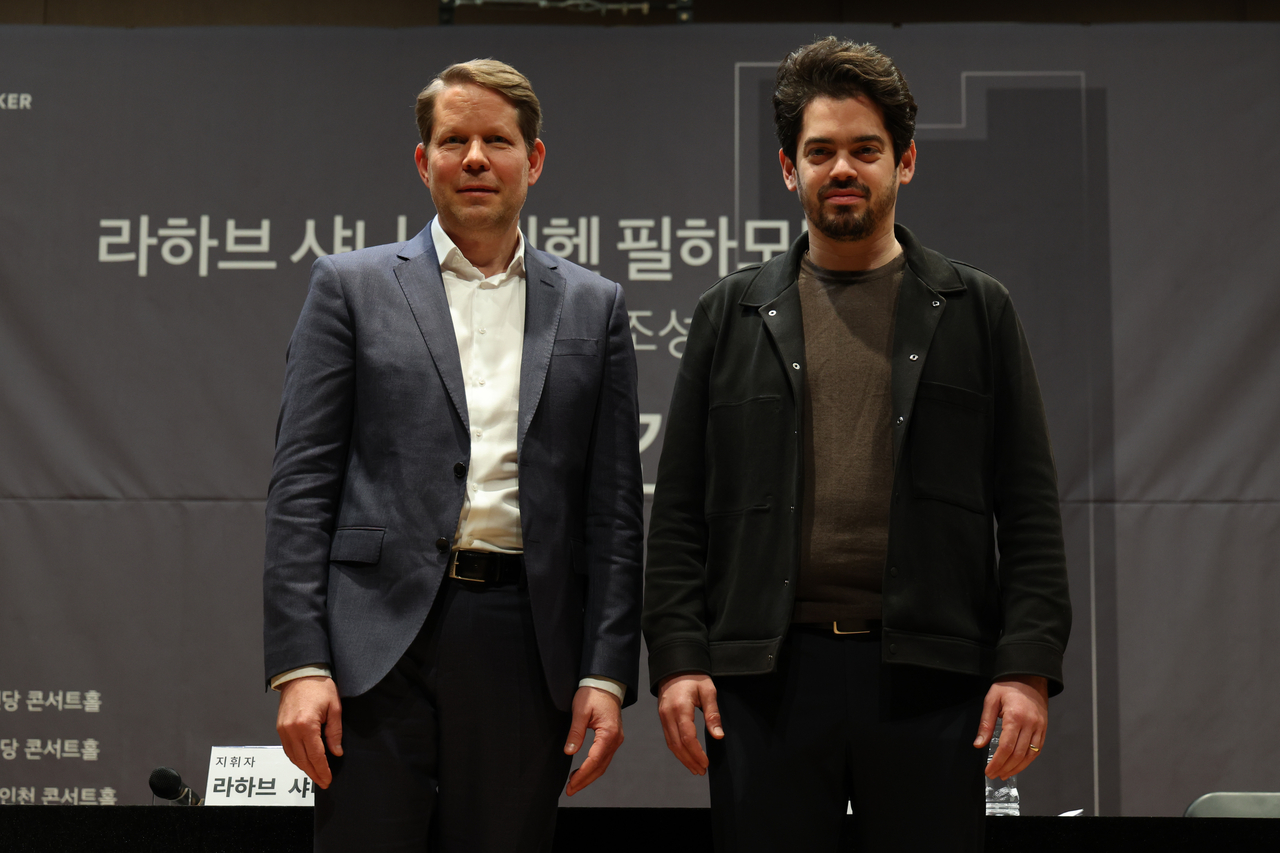
When Lahav Shani took the podium of the Munich Philharmonic in 2022, the encounter was immediate. “It was love at first sight, love at first sound,” the Israeli conductor said Monday at a press conference in central Seoul.
Four years later, Shani, 36, has returned to Korea with the orchestra he is set to officially lead from the 2026-27 season — and with pianist Cho Seong-jin as a soloist.
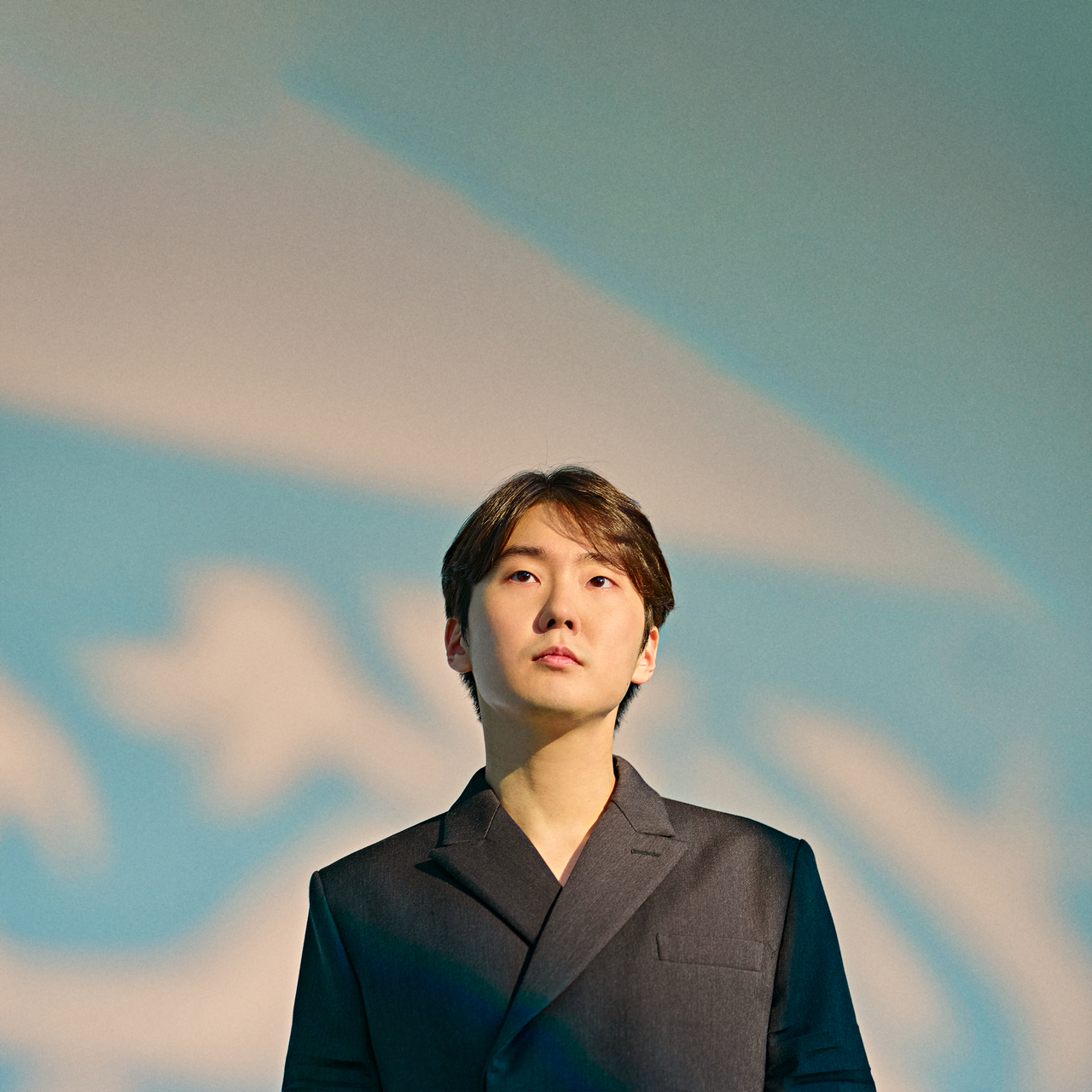
Cho, who first collaborated with Shani during the conductor’s 2022 Munich Philharmonic, appears in the orchestra’s Korea program as a soloist in Beethoven's Piano Concerto No. 1 and Prokofiev's Piano Concerto No. 2. Shani praised him as "a pianist of the highest possible level," citing his command of both Prokofiev's physical intensity and Beethoven's lyricism and phrasing.
The Munich Philharmonic's latest Korea tour marks the orchestra's seventh visit to the country. Founded in 1893 and closely associated with the Austro-German symphonic tradition, the orchestra has long been linked to Bruckner and Mahler, two composers central to its identity.
“I honestly was not looking for a new job, but I really fell in love with this orchestra,” Shani said, explaining that a shared artistic vision led him to accept the post.
For Shani, that vision is rooted in a sound he described as having "depth, richness, generosity" — qualities he sees as increasingly rare at a time when, he said, many orchestras seem eager to rush toward the final bar. The Munich Philharmonic, by contrast, is willing to "take time," lingering on harmonic shifts and allowing the music to unfold.
That tradition runs through the tour’s two programs. One pairs Beethoven’s Piano Concerto No. 1 with Mahler’s Symphony No. 1, while the other brings together Prokofiev’s Piano Concerto No. 2 and Brahms’ Symphony No. 4.
Mahler himself conducted the Munich Philharmonic, Shani noted, while Brahms’ Fourth has been closely associated with the orchestra’s former chief conductor Sergiu Celibidache.
Shani was not the only one to describe his move to Munich in unusually personal terms. Florian Wiegand, the orchestra’s executive director, arrived in Munich in 2025 after 13 years at the Salzburg Festival — one of Europe’s most prestigious festivals of music and drama — and offered a similar account of his decision.
“The Munich Philharmonic was the only orchestra where I could think of myself leaving the Salzburg Festival,” Wiegand said. A native of Munich, he first heard the orchestra in 1985 and, as a teenager, regularly skipped school to attend rehearsals under then chief conductor Sergiu Celibidache. He began his career as an intern with the orchestra in 1996. “It’s a nice circle,” he said, “because I left Munich in 1996 and I returned almost 30 years later back to the orchestra where it all started for myself.”
The press conference also touched on Shani’s canceled appearance at the Ghent Festival in September last year, which organizers withdrew after saying the conductor had not sufficiently distanced himself from the Israeli government.
Shani rejected the premise.
“I completely disagree that you should force someone to take any political statement in order for them to be able to work,” he said, calling the cancellation “a violent attack.”
The tour had already drawn attention before arriving in Korea, after an earthquake briefly interrupted a Mahler performance in Taipei, Taiwan on May 1.
The Munich Philharmonic performs at Seoul Arts Center on Tuesday and Wednesday, Art Center Incheon on Friday and Lotte Concert Hall in Songpa-gu, Seoul, Saturday, followed by performances in Japan on May 11 and 12. Wiegand also confirmed a return to Korea in December 2027 with violinist Clara-Jumi Kang for Bruckner’s Symphony No. 7.
gypark@heraldcorp.com