'I still draw inspiration from those who rose up against tyranny that day in 1980,' says artistic director Ho Tzu Nyen
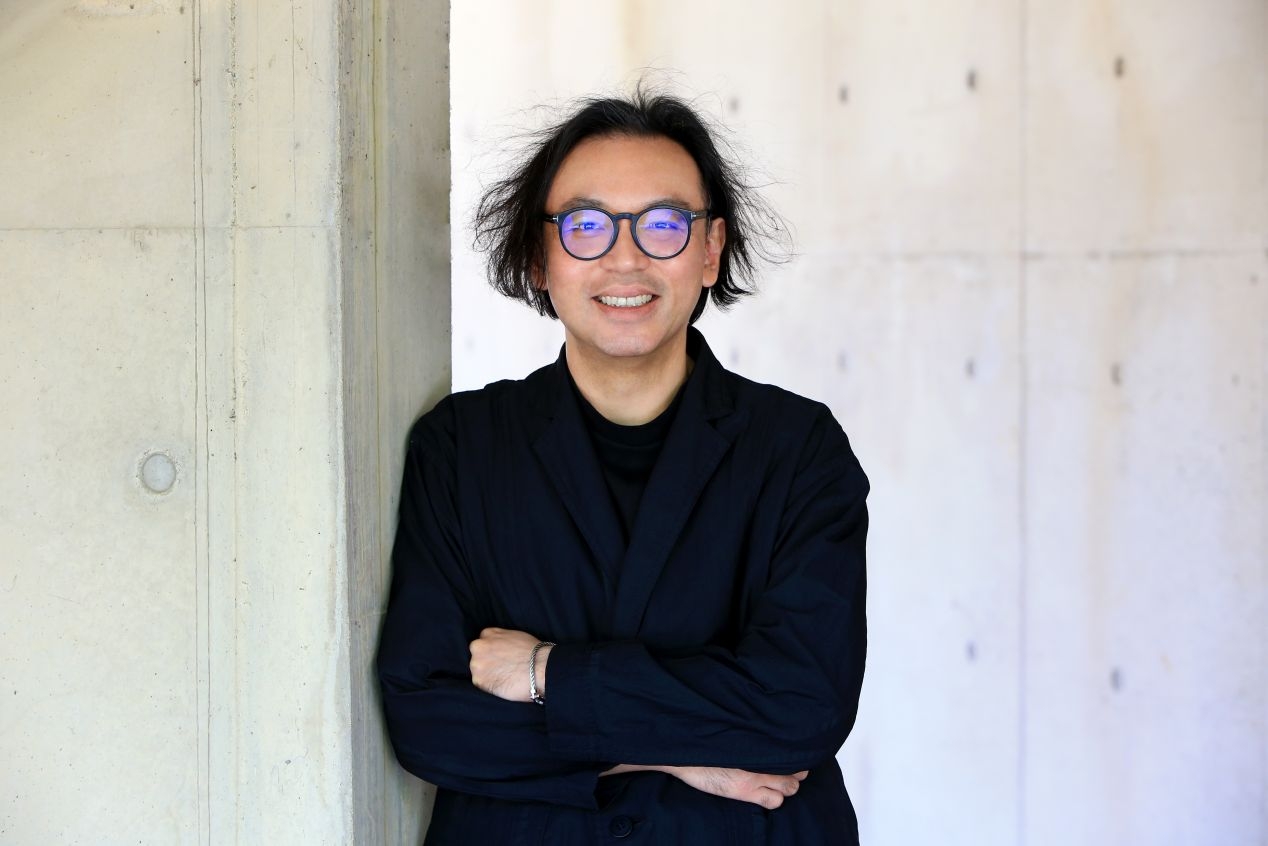
Heading this year’s Gwangju Biennale is, in a way, a homecoming for Singaporean artist Ho Tzu Nyen.
Back in 2020, Ho was commissioned to create a piece for the 13th Gwangju Biennale GB Commission, marking the 40th anniversary of the May 18 Democratic Uprising, whose spirit is commemorated in the biennale.
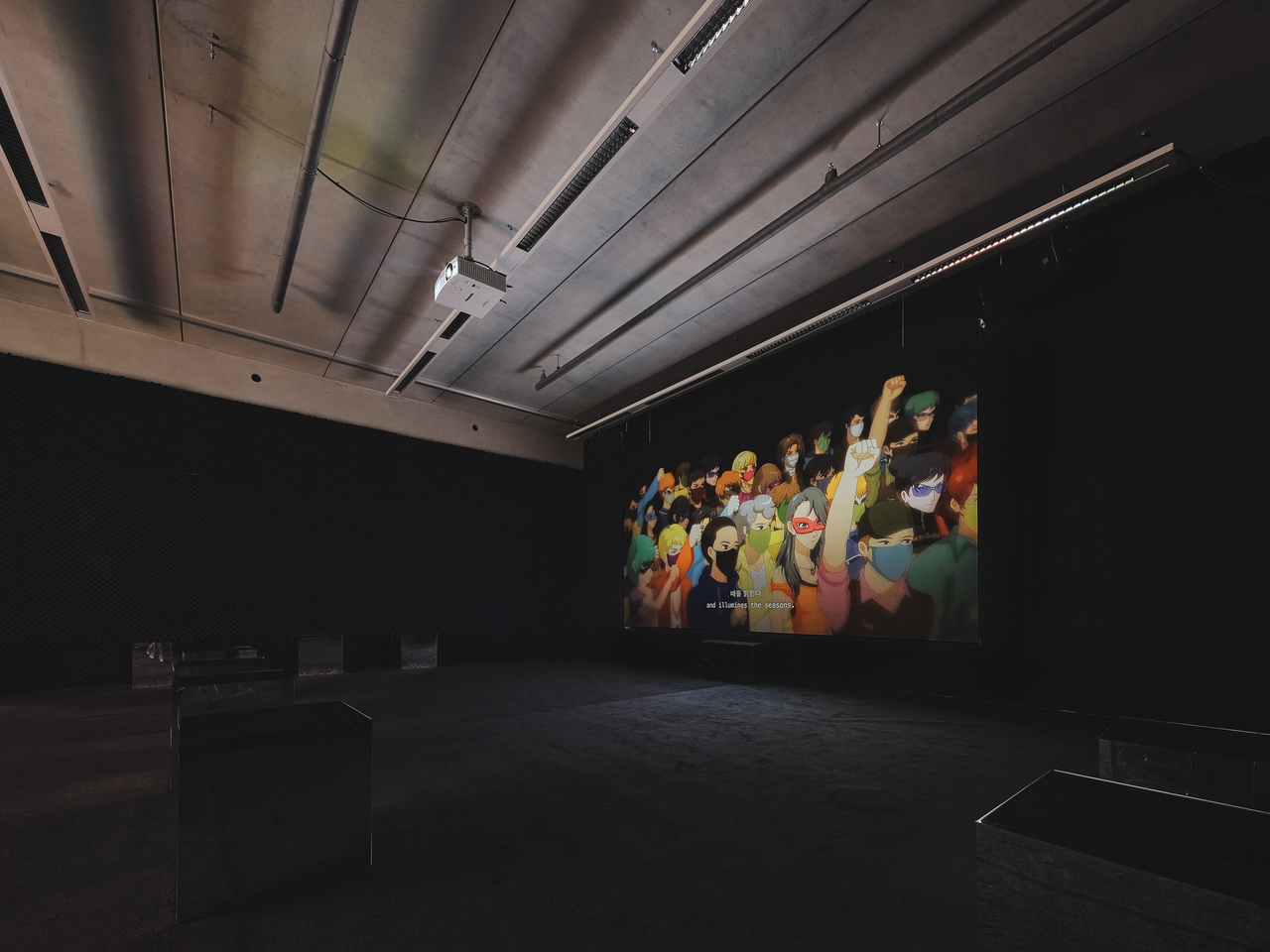
Ho’s commission, a two-channel video entitled “The 49th Hexagram” (2020), explores the history of uprisings that took place on the Korean Peninsula in the last century through animation created using film stills from South Korean movies that depicted those uprisings. The animation was created in collaboration with a studio in the North Korean capital, Pyongyang.
The title of the work derives from the ancient Chinese divination book of “I-Ching,” in which the 49th Hexagram represents revolution and renewal.
In his return to Gwangju, Ho is addressing change in all its iterations.
Under the theme “You Must Change Your Life,” inspired by the final line of the Austrian writer Rainer Maria Rilke’s poem “Archaic Torso of Apollo” that highlights the transformative power of true beauty or art, the biennale will explore change as an artistic method, through which artists experiment with new forms of life, power and relations.
As a practicing artist — he is the Gwangju Biennale’s first ever artist curator — Ho is bound to bring something extra to his role as the artistic director.
“I think my approach so far in dealing with the biennale is to try to treat it no differently as I would when making my own art,” Ho said in an interview with The Korea Herald on March 19 in Seoul, explaining how his art practice involves questioning every aspect of it and pushing every aspect of it.
While he believes there is no clear distinction between curators and artists, Ho thinks he might have less fixed curatorial habits.
“Hopefully, that allows for greater room for experimentation," he said.
It may be Ho’s empathy with artistic practice that led to the Gwangju Biennale taking on an experiment — showing a trajectory of artists’ work.
The Gwangju Biennale this year will show the smallest number of artists in its history, focusing on the entirety of their artistic practice.
“In many ways, we ended up with this out of my own personal curiosity to learn from other artists — how they live and how they work,” he said of the experiment.
In selecting the participating artists, the curatorial team sought artists whose works embody change and transformation at different scales and in different ways.
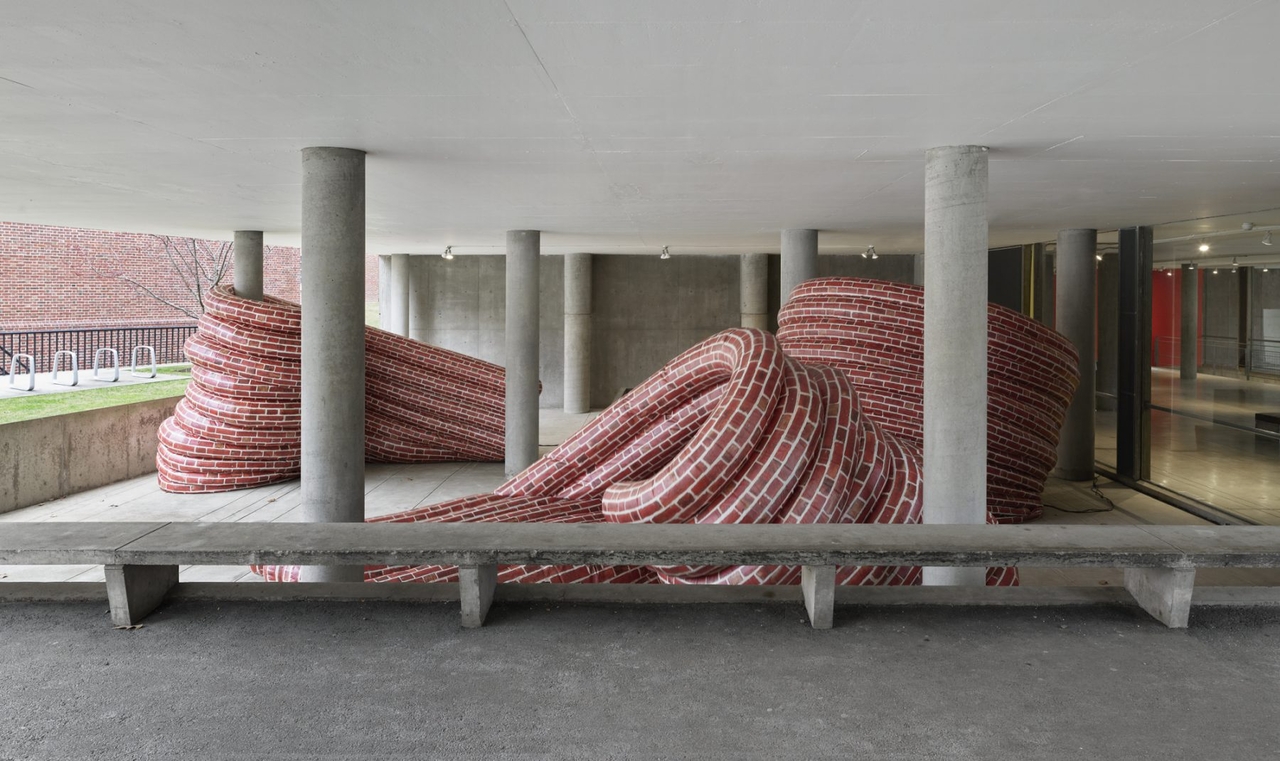
“There are artists who work with change at what we would call a kind of molecular level. Their works deal with physical molecular transformation, which is interesting because I think this is a fundamental component of all artmaking, because all artmaking involves changing something, change of a material, change of perception,” Ho explained.
“Then there are artists whose works involve a kind of intense change of how they live. These are artists whose works and practices and life are completely intertwined. There are also artists whose works have a social, community dimension to their practice. Their works involve some kind of attempt to change or to mediate larger social political systems,” Ho said.
Ho is interested in seeing how artists persist with their practices through the stages of their lives and the obstacles that they might face, and how they convert these difficulties through their practices into something “generative and even joyous.”
“It’s about endurance, but at the same time, a certain form of plasticity in how they (artists) are able to change themselves as a way to work with these external forces and difficulties to convert this, but at the same time, retaining their essential shape or integrity,” Ho said.
“These are artists who embody change through their lives. These changes are embodied in how they live.”
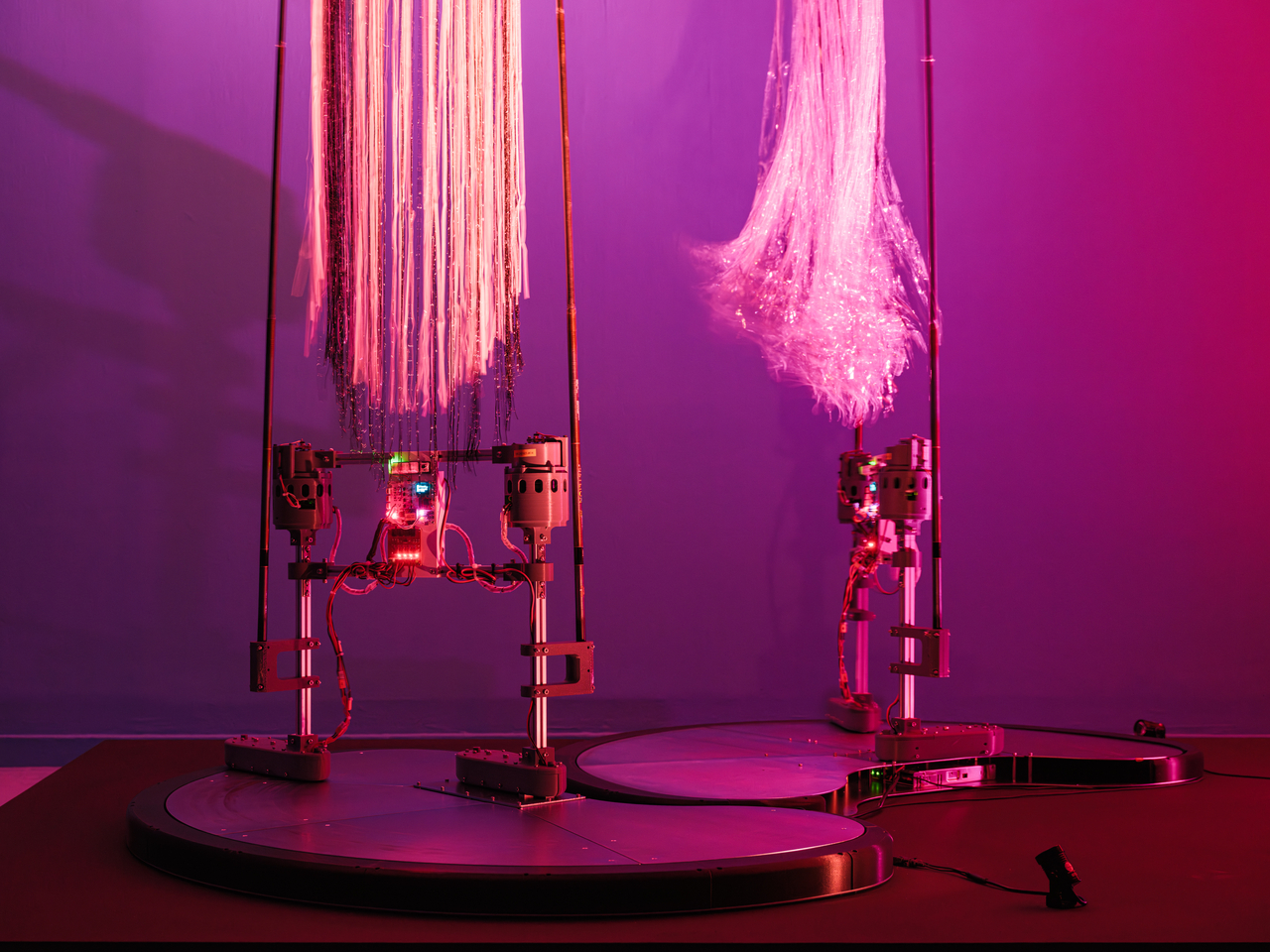
The average age of the artists at Gwangju this year is higher. “In order to observe their trajectory, we need time and duration in their practice,” Ho said, adding that some of the artists will be showing the entire series of works that they are doing.
“I think being able to do this at the biennale is interesting, but we are also avoiding the biennale turning into a series of solo exhibitions by artists,” Ho said. “It is an experiment in thinking about how to weave these two forms together.”
Showing multiple works by the same artist may open up a different way for the audience to approach art by seeing how an artist’s own life trajectories and biography is folded into the practice, Ho suggested.
“Everyone encounters similar challenges in their lives and we can see through the artists’ trajectories how they deal with these difficulties or how they attempt to channel these difficulties in order to convert them into something life-affirming, generative and even joyous,” he said.
While the biennale did not set a parameter, there is a large focus on Asian artists, which Ho attributes to the fact that three of the four curatorial team members are based in Asia with a deeper understanding and connections with the artists in the region.
“The Gwangju Biennale and also other cultural institutions in Gwangju, for example, the ACC (Asian Culture Center), have been very important and productive for many Asian artists, including myself,” Ho said. “So, I think it’s perfectly legitimate and I think even interesting that we take on an Asian focus at this moment.”
'Punching above its weight'
Budget constraints preclude certain artists from being considered despite the interests of the curatorial team.
“Some of these artists require a lot of resources to produce their work,” Ho said.
“Contrary to much public perception, the Gwangju Biennale doesn’t have a huge budget which is also to say that it’s been punching above its weight for a long time and this is something admirable,” Ho said.
This year, Ho is working with a budget of 2.9 billion won to 3 billion won (about $2 million) for the exhibition itself, a figure which has not changed much in decades, according to a Gwangju Biennale Foundation official.
The fact that artists responded enthusiastically to the invitation to participate speaks to the reputation that the biennale has built, he noted.

This year, there are about 10 commissioned works — four or five site-specific or context specific works with the rest being co-productions.
One of this year’s GB Commission works, “Bullim,” a sound installation piece by Kwon Byung-jun and Park Chan-kyong, is being produced in collaboration with the citizens of Gwangju and South Jeolla Province.
Metal pieces are being collected in the tradition of the Korean shamanic ritual practice of collecting pieces of metal from the public to be recast into musical instruments used to summon spirits.
There will be a performance as well.
“The performance is a very critical component of it as a way to activate these objects, as a way of returning to the community,” Ho said. “I know that they (artists) hope to be able to work with some local radio stations to transmit the sounds back into the community, which I think is an amazing idea,” Ho said.
While there have been some arguments that Gwangju Biennale’s focus on the spirit of Gwangju is no longer fresh, Ho continues to find inspiration in May 18.
“The 1980s is a very critical period for democratic movements across Asia. Starting with May 18th in Gwangju and maybe at the tail end of it, we can think about Tiananmen in China, but in between there were many protests in different parts of Asia, different cities in South Asia to Taiwan to Myanmar,” Ho said. “This is an incredibly important moment in Asian history,” he added, noting that these uprisings were self-organized through bottom-up organization.
“In Gwangju, the notion of change, like changing yourself and attempting to change your environment, is not an abstract idea. It is something which is embodied and lived. I still draw inspiration from those who rose up against tyranny that day in 1980. A lot of them changed their lives, sometimes heroically and sometimes tragically.”
Role of biennale
What is the role of a biennale today, when there are over 250 art biennales around the world?
“As an artist, for me, it’s a platform for relentless experimentation. Often, the worst thing that can possibly happen to a biennale is that it begins to ossify into habitual modes of doing things. This completely defeats the purpose of a biennale,” he said.
Having been in the shoes of an artistic director for more than a year now, Ho admits to a different understanding of a biennale.
“There is not one single model of what a biennale should be because it is inevitably tied to the city which hosts and presents it,” Ho said.
“I think it’s also a grave error to impose one way of making a biennale across all those cities. Each city has a biennale it deserves; it creates its own.”
Ho was appointed to his post in April 2025 at a time of transition following the brief martial law declared by then President Yoon Suk Yeol on Dec. 3, 2024. The position of the Gwangju Biennale Foundation president was vacant and Youn Bum-mo, former head of the National Museum of Modern and Contemporary Art, Korea, was appointed to the post a few months later, in July.
“Even though some of these conditions are challenging, the fiasco of the martial law in a way reaffirms the importance of Gwangju in May 18th. In a sense, despite our hands being tight financially, it does renew our sense of purpose,” Ho said.
“I think finding a way to persist despite these kinds of challenges is also something that is necessary for us to do since these types of persistence through difficulties is exactly what we are looking for in many of the artists we are interested in.”
Observing that many cultural institutions around the world are experiencing budgetary cuts that are related to the current political milieu, Ho said, “My biggest wish is for the foundation to attain a certain kind of stability.”
The frequent staff changes brought on by short-term contracts as a way to solve the tight budget has a destabilizing effect as knowledge and experience are not retained.
“You have the feeling that it always needs to restart from zero. I find these practices are unfair and unhealthy to many of the staff,” he said.
“I hope that the foundation and the city are able to come together to provide a much better and more stable environment for the team. And this will benefit the next edition,” Ho said.