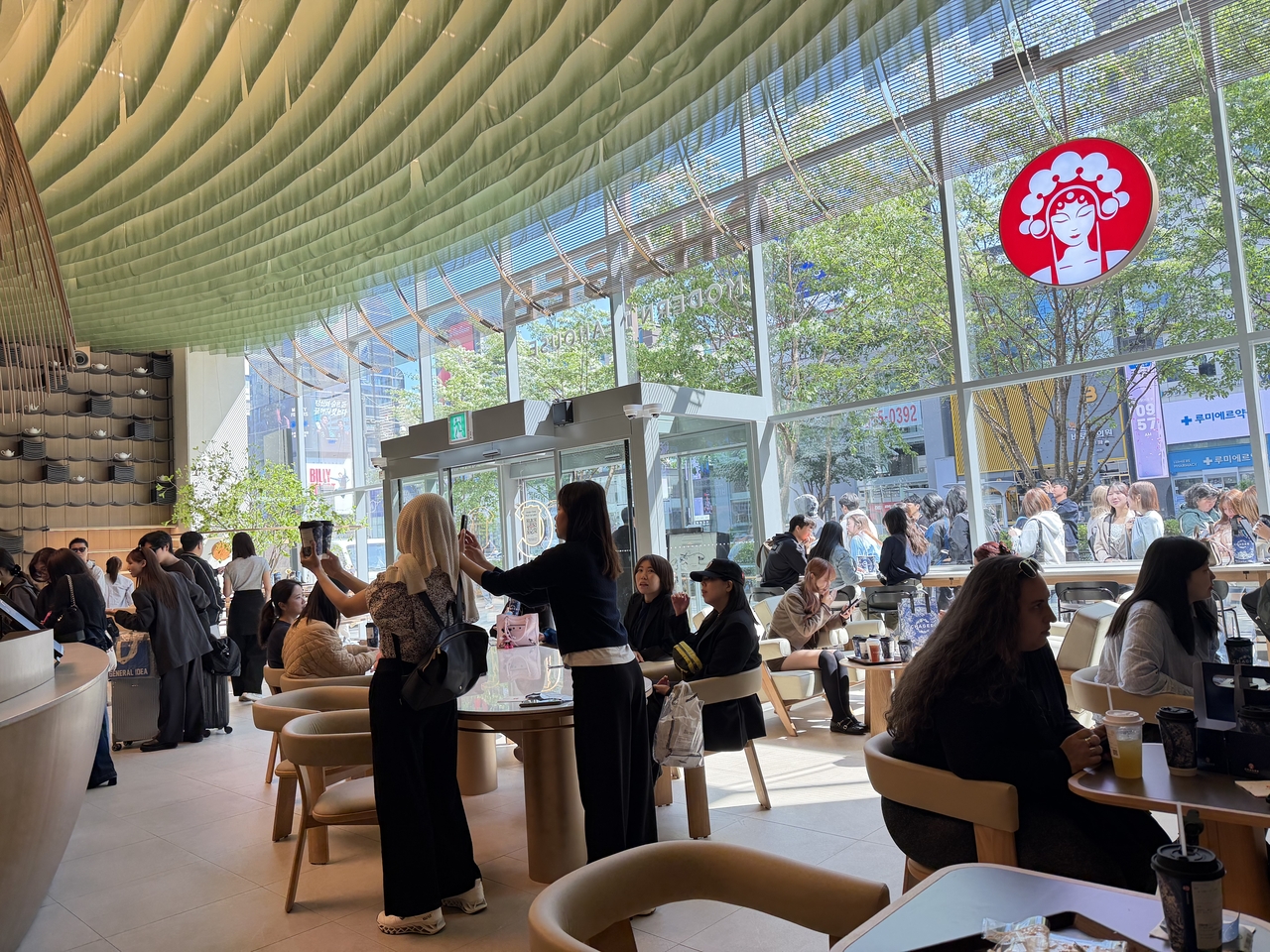
Nearly a week has passed since Chinese milk tea brand Chagee opened its first three Korean stores, and the lines have not gotten shorter.
On Children's Day, roughly 30 customers waited outside the Gangnam store before it opened. The group included Japanese tourists, drawn by the fact that Chagee has not yet entered Japan. App orders were blocked on this day to give walk-in customers priority. Inside, customers held up their drinks for photos to share online.
Chagee launched on April 30 in Sinchon, Yongsan and Gangnam. Korean blogs and Instagram feeds quickly filled with posts titled "Jang Wonyoung milk tea Chagee wait times, app ordering, menu picks, honest review."

The brand did not arrive as a stranger. Months before the launch, Ive's Jang Wonyoung was photographed sipping its milk tea, and Korean fans rechristened it "Jang Wonyoung milk tea."
"We saw this milk tea going viral, and since we were meeting in Gangnam today, we had to try it," said a 17-year-old student out with friends for the holiday.
"I first encountered this brand when I visited Shanghai. My wife says it's too bland for her, but I really liked it. It was more fragrant than other chain milk teas. I had to give it another try here in Seoul since it's now near where I live," said a 35-year-old Seoul resident.
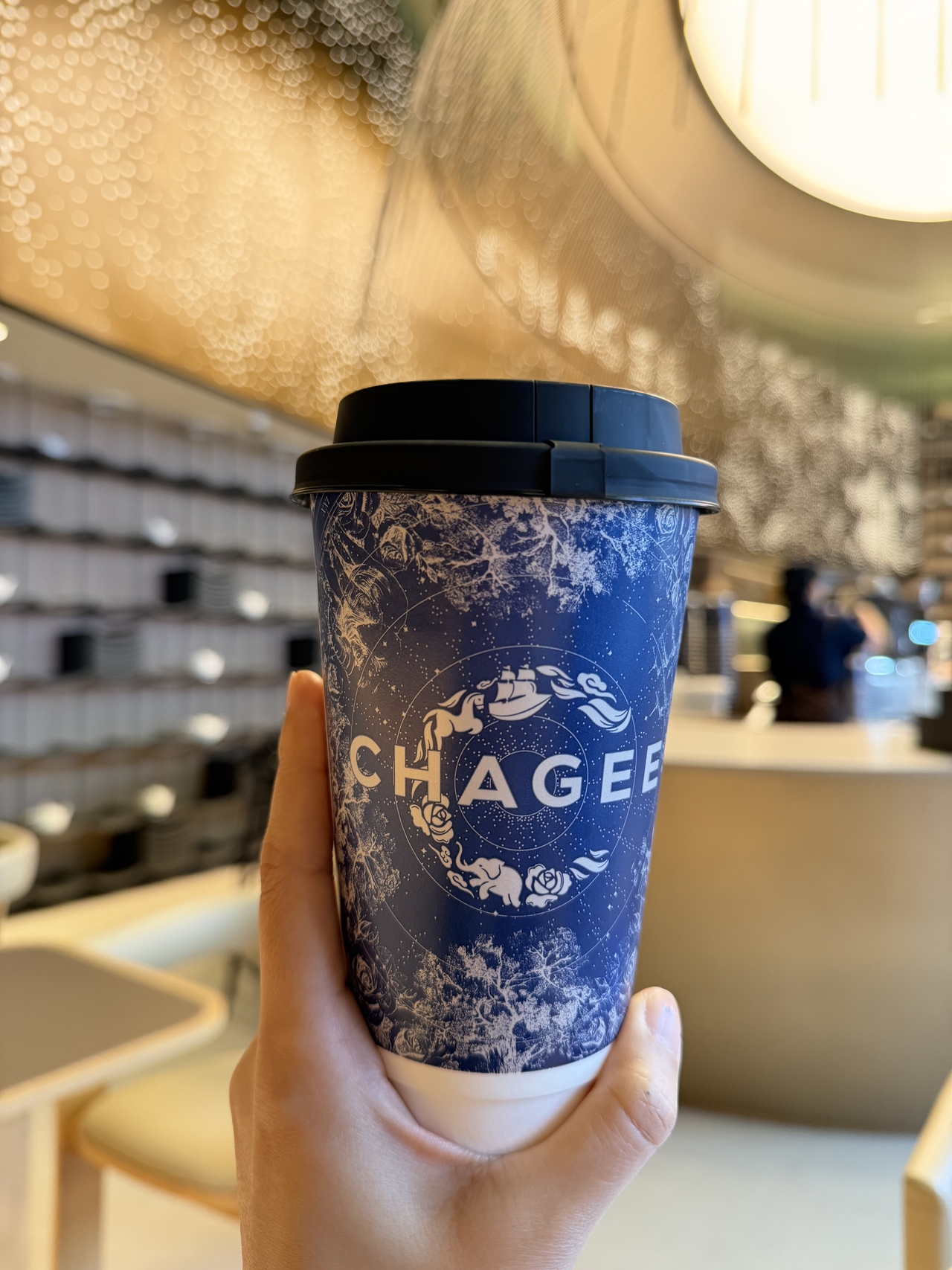
Chagee is the latest chapter in a consumer shift toward Chinese flavors that has expanded from hot pot and malatang into tea.
For decades, "Chinese food" in Korea meant Korean-Chinese dishes: jjajangmyeon, jjamppong, tangsuyuk. Authentic mainland fare felt distant.
Lee Eun-hee, a professor of consumer studies at Inha University, said that perception has shifted as more Koreans visit China.
"If you visit China, the smaller cities may be one thing, but the major cities are every bit as glamorous and cutting-edge as ours, and there are many drinks and foods that are different from what we have in Korea," she said.
The shift began with malatang. The build-your-own Sichuan spicy soup moved into mainstream lunch rotations in the late 2010s. Hot pot chains followed. Tanghulu, a Chinese snack of fruit skewers coated in hardened sugar syrup, had a short run as the city's snack-street obsession in 2023.
Industry watchers say the current rush to Chinese brands comes after a generation of young Koreans grew up with access to Chinese social media like Red Note and gained easier firsthand experience with China under expanded visa-free travel between the two countries.
Mixue, Chabaidao and Heytea, all proven players in their home market, opened Korean stores before Chagee.
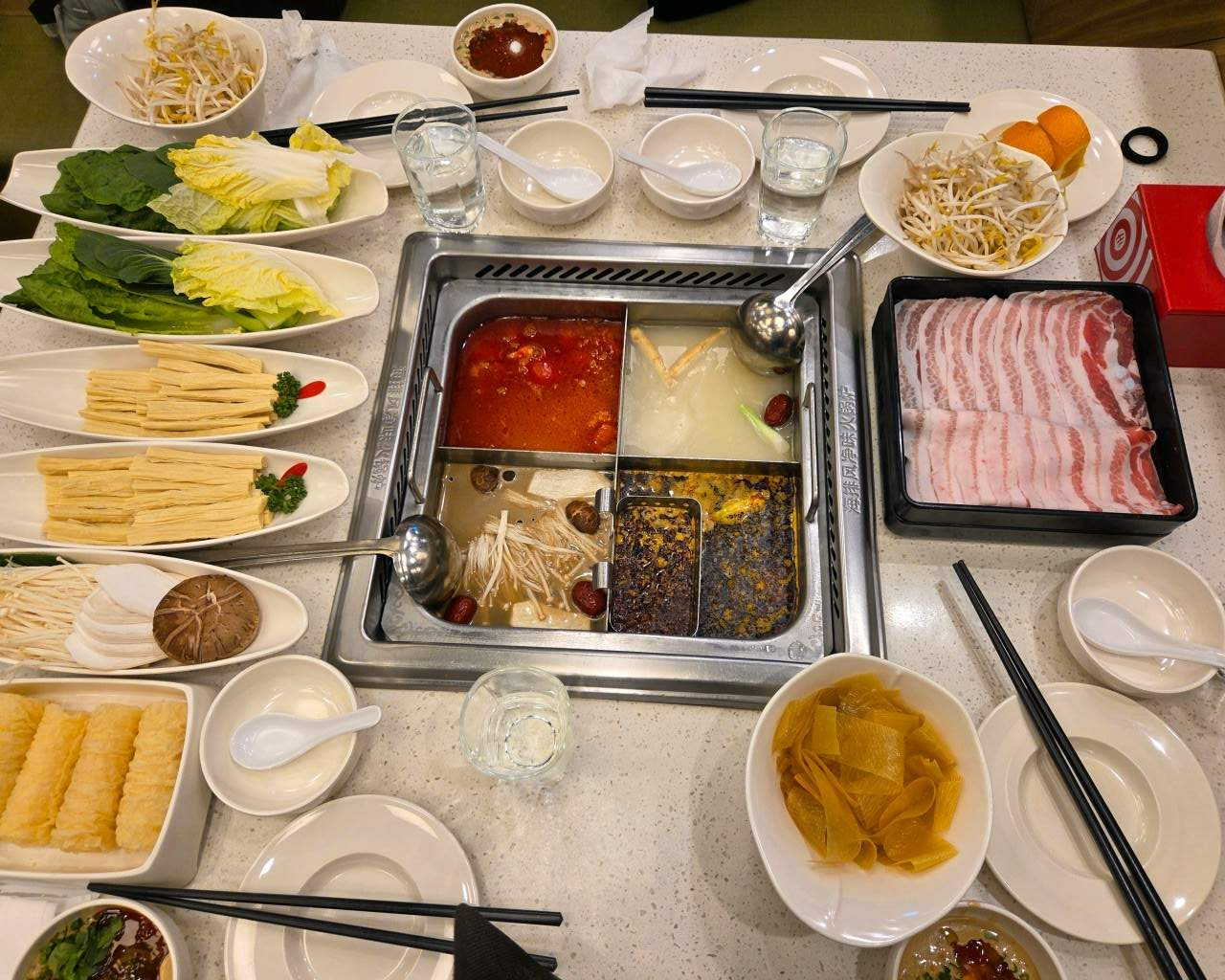
The Korean operation of Haidilao, the Sichuan hot pot chain famous for its noodle-pulling shows, posted 117.7 billion won ($84 million) in revenue in 2024, crossing the 100 billion won mark for the first time and nearly doubling its operating profit.
When Blackpink's Jisoo held her birthday dinner there this year, the chain's status as a destination was set.
For some customers, the appeal goes beyond the food itself.
"To be honest, I don't really eat mala, but I go to Haidilao for the tomato soup. Also for the service and how fresh the ingredients are. Because it's expensive, I don't get to go that often. I think it's a perfect place to go with friends on birthdays. They sing happy birthday songs for you and give free side dishes on your birthday," said Kim Ji-hye, 28.
Kang Ha-rim, 31, said she goes to Haidilao for the hygiene, the service and how well the format suits group outings. She added that hot pot scratches an itch Korean food does not.
"Shabu-shabu feels healthy. Hot pot feels like heavy food, in a good way," she said, citing the variety of ingredients and dipping sauces.
Competitor Yongga Revolving Hotpot opened its first Korean store in Gangnam, Seoul, in December 2024 and has since expanded to nine outlets, reaching Daegu, Busan and Cheonan, South Chungcheong Province.
Malatang chain Tang Huo Kung Fu, which entered Korea in 2013, now operates more than 560 outlets nationwide. Its revenue climbed 14.9 percent to 25.5 billion won in 2024.
Professor Lee said the appetite also reflects pent-up travel demand.
"Consumers cannot travel abroad as often as they would like, so when restaurants and franchises that were popular overseas come here, people get to experience that foreign feeling, and they really enjoy it. Korean franchises are familiar to the point of being boring. These new options give consumers something fresh," she said.
yoohong@heraldcorp.com