Analysts point to weak co-authorship, limited talent flows and low open-access visibility in Korea’s 'insular' higher education ecosystem
South Korea’s universities have spent years trying to raise their global profile, but a new country-level ranking suggests the more important question is not where they place, but how weak their connection to the international academic system is.
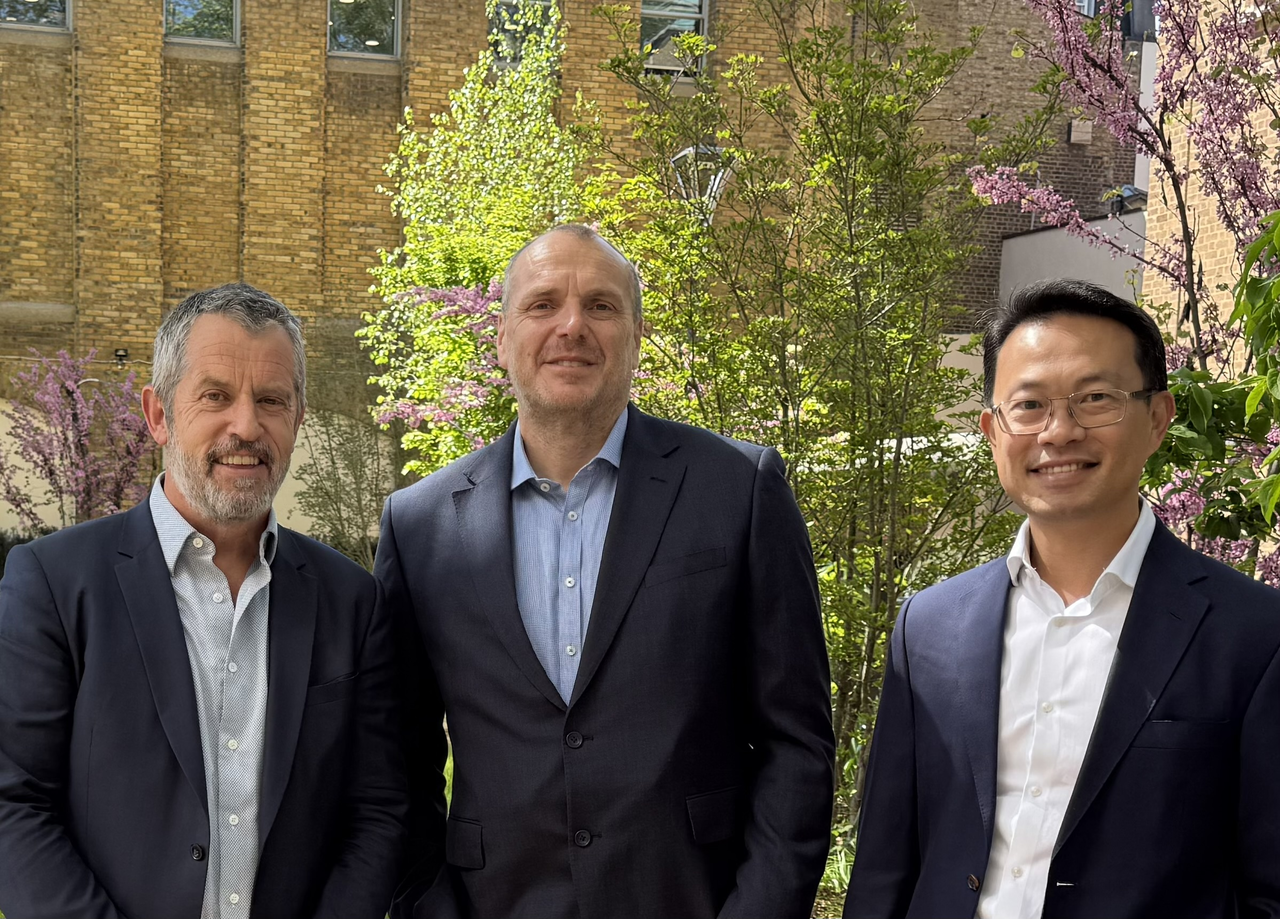
That assessment comes from the Country 100 by measuresHE. The new ranking and report evaluate the overall strength and global connectedness of national higher education systems. The project was co-developed by former Times Higher Education managing director for data David Watkins and THE principal data scientist Billy Wong, in collaboration with Quacquarelli Symonds co-founder Matt Symonds.
In an exclusive interview with The Korea Herald marking the report’s release, analysts said South Korea’s higher education system remains one of Asia’s strongest in research and institutional capacity, but falls well short of regional rivals when it comes to attracting global talent and building cross-border academic ties.
Strong system, weak links
Korea pushes internationalization through Study Korea 300K, a government-driven initiative to expand international student enrollment. But for Symonds, the effort has yet to change the country’s deeper academic profile.
“Korea is one of the most insular ecosystems in the top 20 (of the Country 100),” he said.
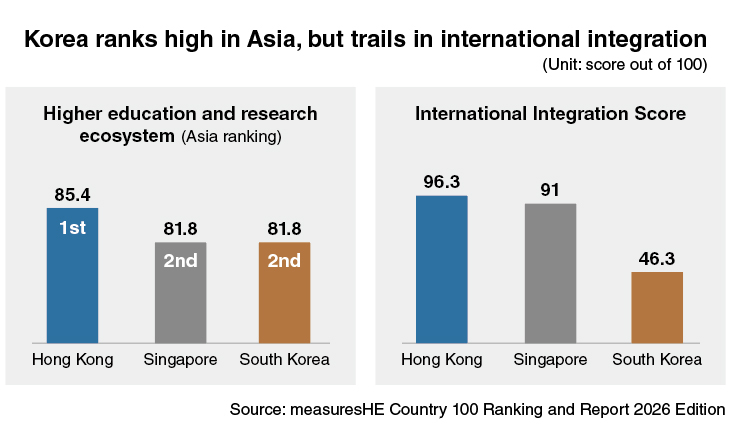
The report ranked Korea as Asia’s joint second-strongest higher education and research ecosystem, tied with Singapore and behind only Hong Kong. Globally, it placed joint 13th.
But that strong overall standing sat alongside a much weaker showing in international integration, a category that measures how well a country attracts overseas talent and participates in cross-border knowledge creation.
The category uses indicators including international co-authorship, the share of established global academic talent and the number of inbound international students. Each measure is adjusted for population size to allow cross-country comparisons.
Korea scored 46.3 out of 100 in international integration, far below Hong Kong’s 96.3 and Singapore’s 91.
Where Korea falls short
For the report’s authors, that gap points to a structural weakness that rankings alone cannot hide. A university system may perform strongly at home, they said, but remain only loosely connected to the global networks that shape influential research, talent flows and academic reputation.
“It must radically open its borders, fund international co-authorship and attract global talent,” Wong said.
Watkins said Korea’s weak score in international integration should not be mistaken for a lack of academic strength.
“I think Korea has a really strong higher education setting and it should be boastful and proud of it,” Watkins said.
But he said those strengths have yet to translate into the sort of outward-facing academic ecosystem seen in Hong Kong and Singapore, both of which have been more successful at embedding themselves in global research and student networks.
The report found Korea particularly weak in international co-authorship, suggesting that a relatively small share of its research output is produced with overseas collaborators.
South Korea's international co-authorship score stood at 22.9, while Hong Kong and Singapore logged scores of 93.3 and 85.9, respectively.
It also found a relatively low share of Korean research published in open-access formats, a factor the analysts said may limit the country’s global visibility and reach.
They noted that Korea may face disadvantages Hong Kong and Singapore do not, given that English is not the dominant language of higher education or public life.
Still, they said language alone does not explain the scale of the gap.
From metrics to substance
The findings come at a sensitive time for Korean universities: Some major private institutions face scrutiny over whether they have tried to raise their global standing through formal overseas affiliations rather than deeper academic engagement.
In one case, Korea University was accused of paying a Serbian professor 130 million won ($88,200) to list the school as a secondary affiliation on 180 Scopus-indexed papers.
An analysis of the Scopus database found that the number of journal articles and review papers attributed to Korea University in 2024 rose to 8,707 from 6,601 a year earlier. Of that increase, 1,011 papers were found to have come from around 80 outside scholars.
Korea University has denied wrongdoing, saying the scholars collaborated meaningfully with its faculty and took part in joint research.
The measuresHE report does not assess those allegations or rank individual universities. But the analysts said the controversy fits a broader pattern in which universities pursue the appearance of internationalization without fully building the conditions that sustain it.
For them, genuine internationalization is not simply a matter of adding foreign names to publications or expanding international branding. It means building durable academic relationships, drawing globally established scholars, producing research with overseas partners, and becoming a place where international students and researchers genuinely want to study and work.
Symonds said the findings would resonate with long-standing criticism that South Korean universities, while strong by many domestic measures, remain insufficiently plugged into the global academic networks that shape the most influential research.
seungku99@heraldcorp.com