Overhaul aims for more market-driven, transparent and innovation-led procurement
The Public Procurement Service has unveiled a reform package aimed at shifting procurement toward a more “citizen- and market-centered” model, while strengthening its role in supporting emerging industries.
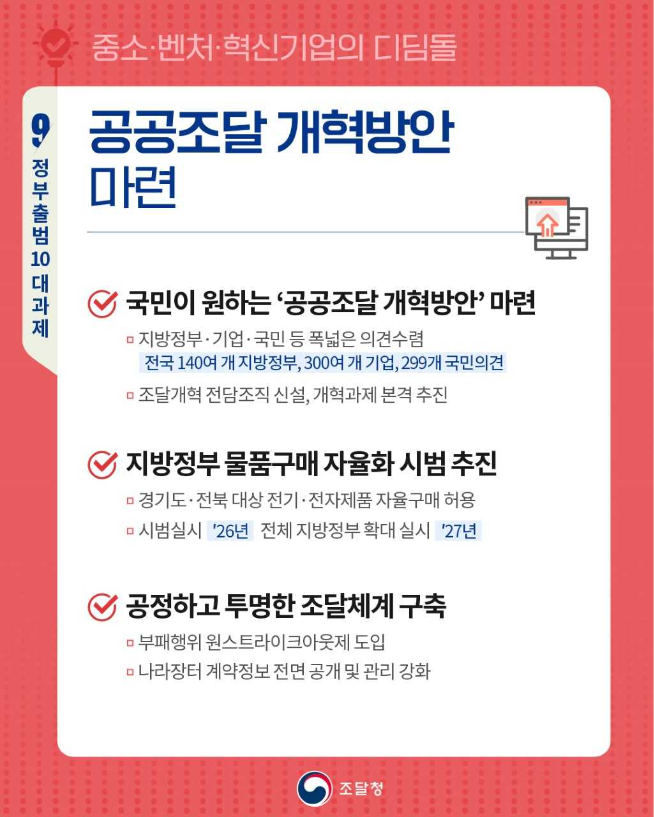
The plan outlines around 70 detailed measures across four pillars: expanding procurement autonomy for local governments, enhancing competition and transparency, fostering new industries, and advancing socially responsible procurement.
The reform is part of efforts to reposition South Korea's public procurement — which accounts for roughly 225 trillion won ($160 billion) annually — as a strategic policy tool, a theme highlighted in recent discussions with the agency’s leadership.
A key element of the reform is granting greater autonomy to local governments in procurement decisions.
Until now, many local authorities were required to purchase goods through centrally managed contracts. Under the new system, they will be allowed to choose between centralized and independent procurement, depending on what offers better value.
The policy will be rolled out in phases, beginning with a pilot program next year covering about 120 electrical and electronic product categories in Gyeonggi Province and North Jeolla Province, before a nationwide expansion.
To address concerns over corruption and unfair practices, the agency will introduce stricter oversight, including a “one-strike-out” rule for violations such as false origin claims or breaches of direct production requirements. All contract information — including negotiated deals — will also be disclosed through the government’s procurement platform.
The reform also aims to widen participation in procurement markets by preventing concentration among a few suppliers.
Measures include adjusting competition criteria in multisupplier contracts and shifting some monopolized items to open bidding.
Pricing standards will be aligned more closely with private-sector practices, while contracts lacking sufficient price verification will be converted to lump-sum agreements. At the same time, mechanisms will be introduced to reflect changes in the cost of raw materials more quickly, helping ensure reasonable profit margins for suppliers.
Quality oversight will be expanded beyond safety-related items to cover all contracted products, with stronger incentives for certified high-quality goods.
A central pillar of the reform is the use of public procurement as a platform to nurture future industries.
The government plans to significantly expand “innovation procurement,” under which it acts as a buyer of new technologies, with a focus on sectors such as artificial intelligence, climate technology and robotics.
By 2030, the scale of innovation procurement is expected to exceed 2.5 trillion won, with the number of designated innovative products rising to around 5,000.
To accelerate adoption, the agency will ease entry into the government procurement marketplace for AI-based products and introduce liability protections and specialized evaluation systems tailored to AI technologies.
The government is also pushing to use artificial intelligence in procurement operations themselves, deploying AI tools for price analysis, cost estimation and bid evaluation as part of a broader “AI transformation” in public administration.
The reform also emphasizes sustainability and social responsibility.
The government will expand purchases of low-carbon and environmentally certified products, while incorporating environmental criteria into bid evaluations to support the transition to a greener economy.
Support will also be strengthened for companies with strong labor practices, work-life balance policies and social economy organizations.
In the construction sector, stricter safety standards will be introduced, with only companies meeting defined safety criteria allowed to participate in bids.
Officials say the overhaul reflects a broader shift in how public procurement is perceived — from a transactional function to a strategic instrument of economic policy.
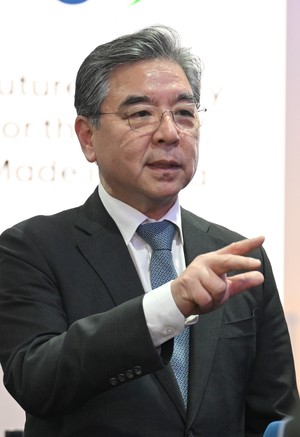
“The reform is designed to place citizens at the center while ensuring that procurement contributes meaningfully to economic growth and corporate competitiveness,” PPS Administrator Baek Seung-bo said.
kwonhl@heraldcorp.com