Commercial rollout could cut 520,000 tons of emissions annually
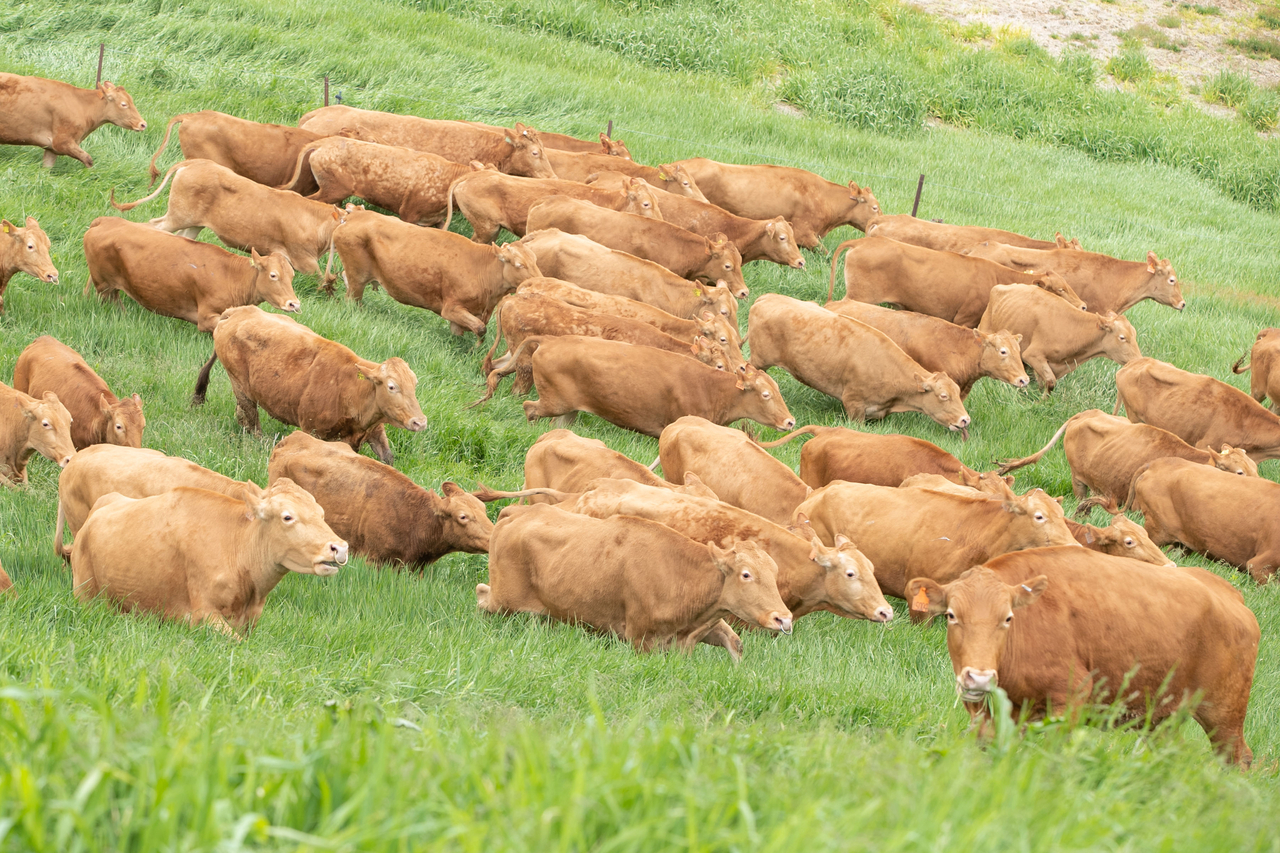
A natural feed additive developed in South Korea has been found to cut methane emissions from hanwoo, Korea’s native beef cattle, by more than 14 percent, clearing the national threshold for low-methane feed certification and raising the prospect of commercialization.
The additive, called MGOsyn, was developed by the city of Jeongeup, North Jeolla Province, and the Microbial Institute for Fermentation Industry as part of efforts to turn livestock carbon reduction technology into a local growth industry, the city said Monday.
MGOsyn is a natural compound made from monolaurin, garlic and oregano — ingredients recognized as safe for use. It is designed to suppress methane-generating pathways in the rumen, the first stomach chamber of ruminant animals such as cattle.
Researchers developed the additive over the past four years by analyzing more than 100 candidate substances, including microorganisms, natural materials, seaweed and chemical compounds, before selecting key ingredients and optimizing the formula.
In simulated rumen fluid tests, the additive reduced methane generation by up to 61 percent, according to research published in November last year in the international journal Frontiers in Microbiology.
A feeding trial on hanwoo cattle conducted by Sunchon National University, a state certification institution, found that MGOsyn reduced methane emissions by an average of more than 14 percent compared with conventional feed. The result exceeds the national certification threshold of 10 percent.
Jeongnong Bio, a participating company in the project, is preparing to apply for national certification for low-methane feed. If approved, MGOsyn is expected to become the first low-methane feed based on domestic technology, according to the city.
Jeongeup said commercialization of the product could reduce greenhouse gas emissions by 520,000 metric tons a year.
The city plans to move the research toward industrial use through on-farm demonstrations, commercialization, expanded corporate participation and technology transfers.
“This is a case showing that locally led science and technology can lead to real industrial applications,” a city official said. “We will gradually pursue corporate cooperation and technology transfers to support field application and commercialization of the technology.”
(This article was produced with the assistance of AI. -- Ed.)
hnpark@heraldcorp.com