Two exhibitions in Korea and France revisit Bang Hai-ja and Shin Sung-hy who reshaped painting through decades of work abroad
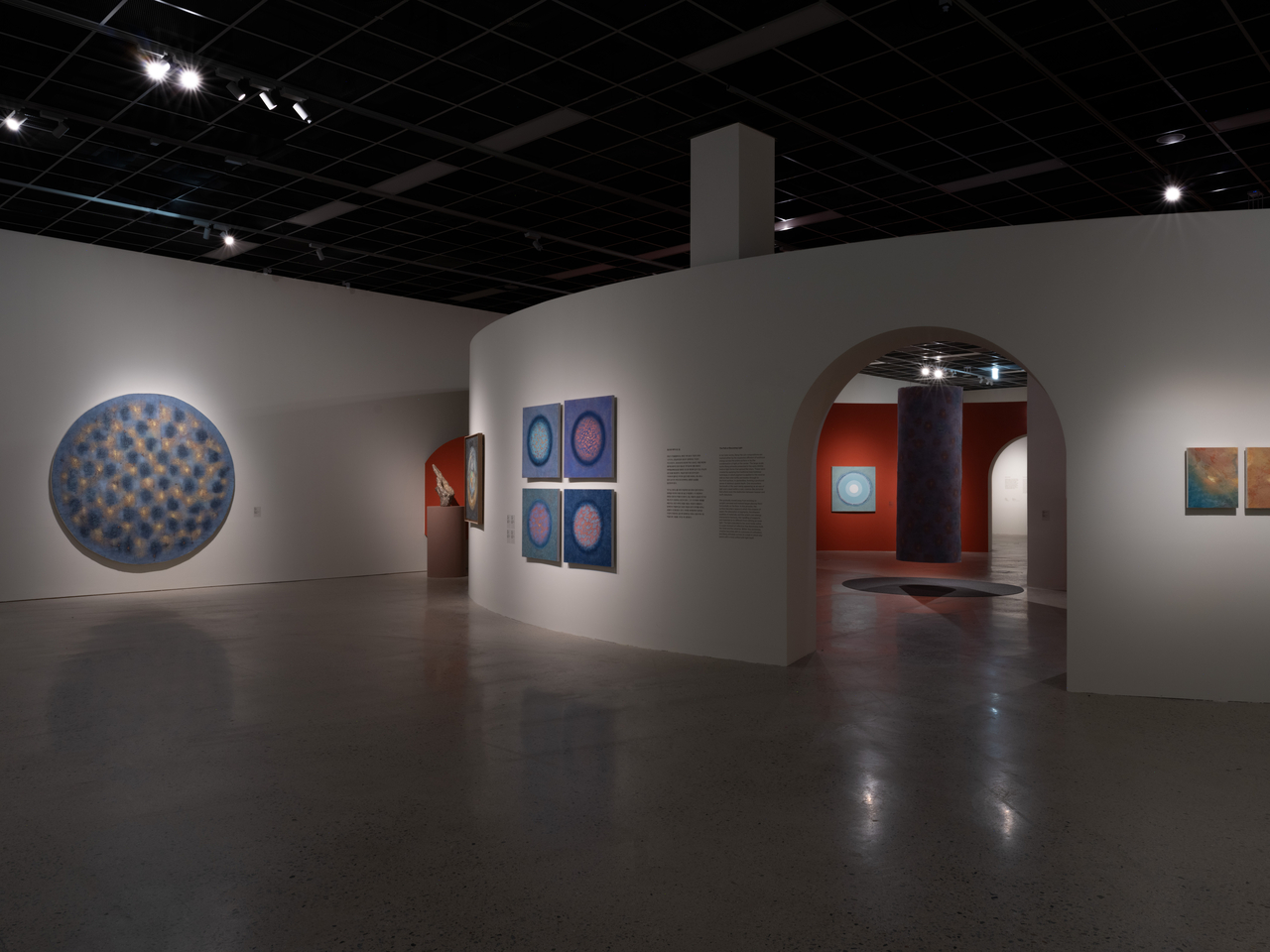
Two Korean artists whose practices were shaped in France in the late 20th century are back in the spotlight in Korea and France — Bang Hai-ja (1937–2022) and Shin Sung-hy (1948–2009), whose works are now being revisited in major museum exhibitions.
For the two artists, born nearly a decade apart, experiences in France shifted how they approached their work. For Bang, painting became a way to explore light; for Shin, it became a process of rethinking the canvas itself as material and structure.
Bang’s lifelong artistic practice now comes into focus in a major retrospective in Cheongju at the National Museum of Modern and Contemporary Art, Korea, the museum’s regional venue in North Chungcheong Province.
Spanning from the 1960s to the 2000s, the retrospective “Bang Hai Ja: Sowing Light Across Heaven and Earth” brings together 67 works and more than 200 archival materials, running through Sept. 27.

More than half of the works are from France and have never been shown in Korea, including major pieces from the Centre Pompidou and the Cernuschi Museum, according to MMCA.
“This exhibition offers an important opportunity to fully reexamine the artistic world of Bang Hai-ja, which has not been sufficiently recognized within the history of Korean contemporary art,” said Kim Sung-hee, director of the National Museum of Modern and Contemporary Art, Korea.
Working with "hanji" — traditional mulberry paper — and natural pigments, Bang sought to express an inner light. She later expanded her practice beyond painting to include murals, printmaking and stained glass.
Bang moved to France in 1961 as the first Korean government-sponsored art student abroad, in search of new artistic possibilities at a time when few women artists were experimenting with abstraction.
If Bang’s work expands painting through light, Shin approaches it through material.
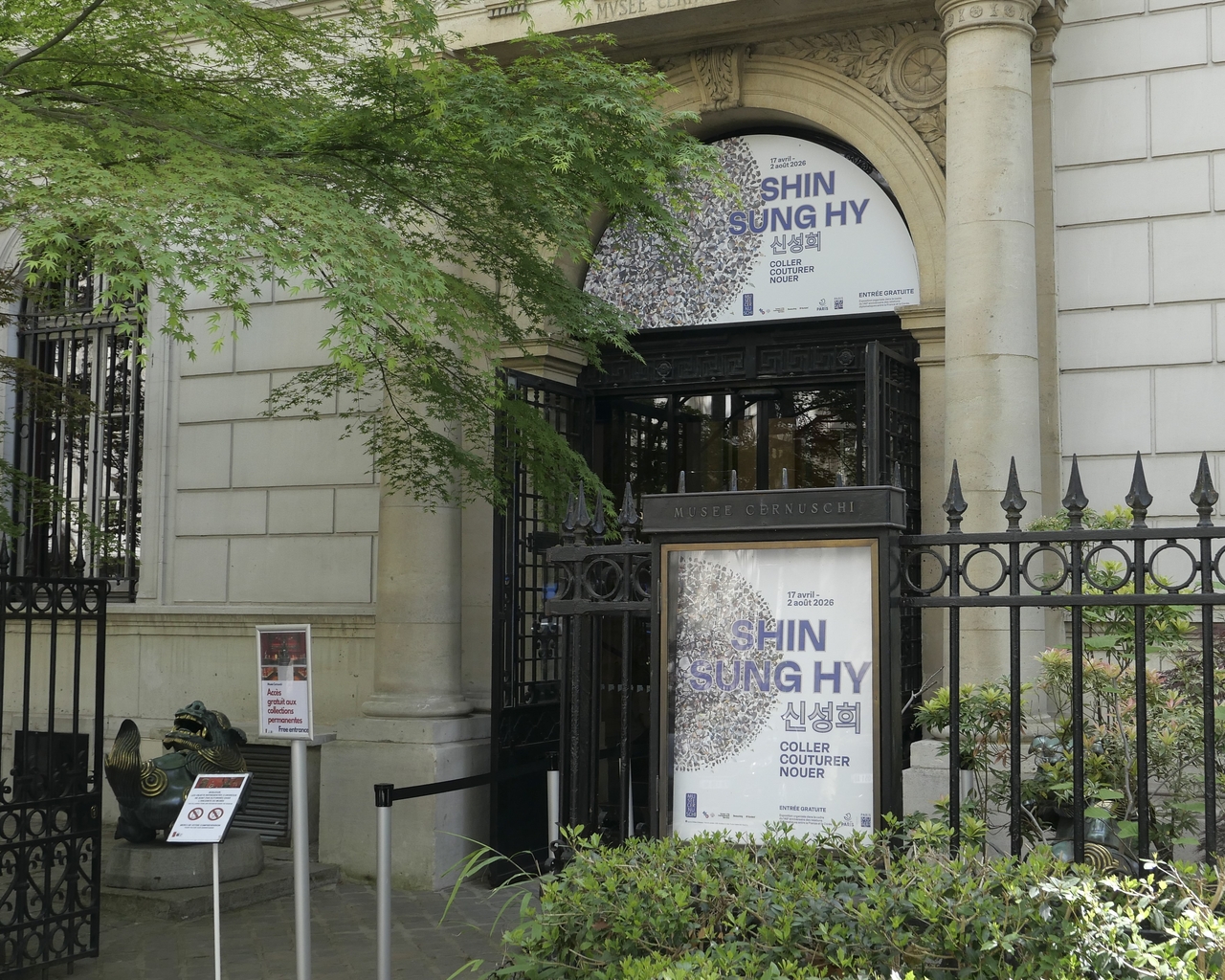
At the Cernuschi Museum in Paris, “Shin Sung Hy: Coller, Couturer, Nouer” presents around 30 works spanning the artist’s career, marking his first posthumous retrospective at a French museum.
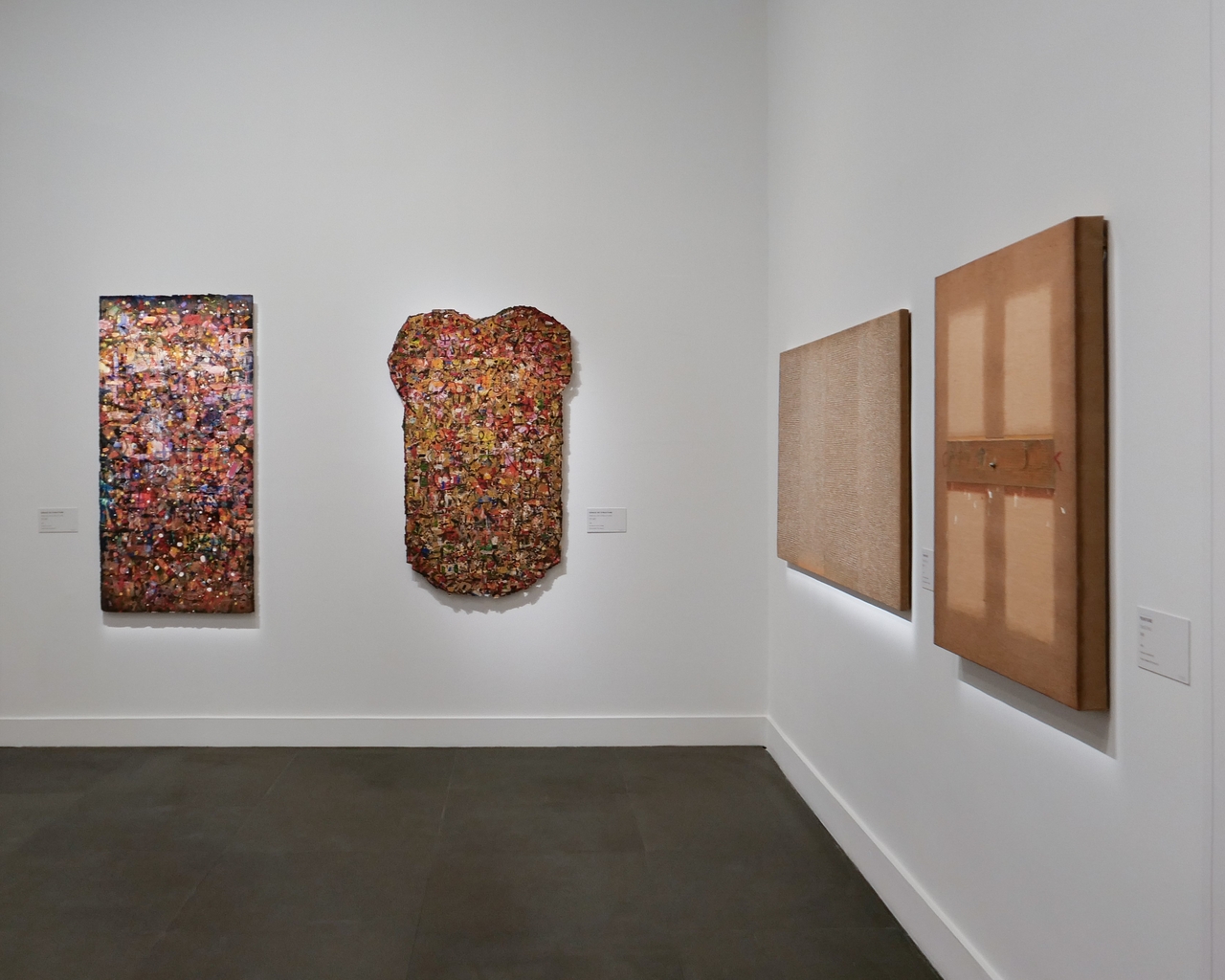
Shin, who moved to Paris in 1980, pushed against the flatness of the canvas in increasingly direct ways. His early collage works drew on the luminous colors of stained glass, but his practice soon shifted toward cutting, stitching and reassembling the canvas itself.
His work has often been discussed in relation to supports/surfaces, a French movement of the late 1960s that sought to break painting down to its basic elements, treating canvas and material as subjects in their own right.
Yet, Shin’s approach ultimately diverges from that trajectory, according to Mael Bellec, head of Chinese and Korean collections at the Cernuschi Museum.
“Without the possibilities opened by supports/surfaces, such work might have been difficult to attempt,” he said in a statement. “Yet Shin chose not to dismantle painting, but to reconstruct it, reworking those ideas through his own material language.”
His early collages (1983–1992) later evolved into the “Couturage” series (1993–1997), in which he cut and stitched painted canvases, and the “Nouage” series (1997–2009), where he unraveled and hand-wove them into spatial structures.
Organized as part of the 140th anniversary of diplomatic relations between Korea and France, the exhibition runs through Aug. 2 at the Cernuschi Museum in Paris.
yunapark@heraldcorp.com