South Korea’s public library network grows while evolving as community hub
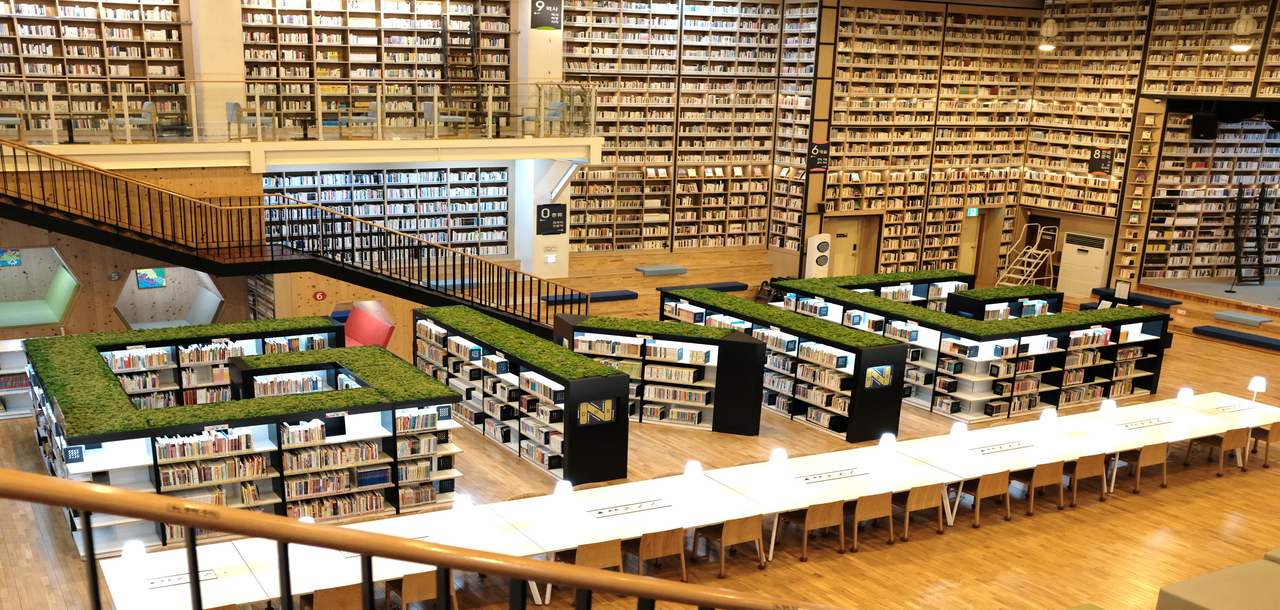
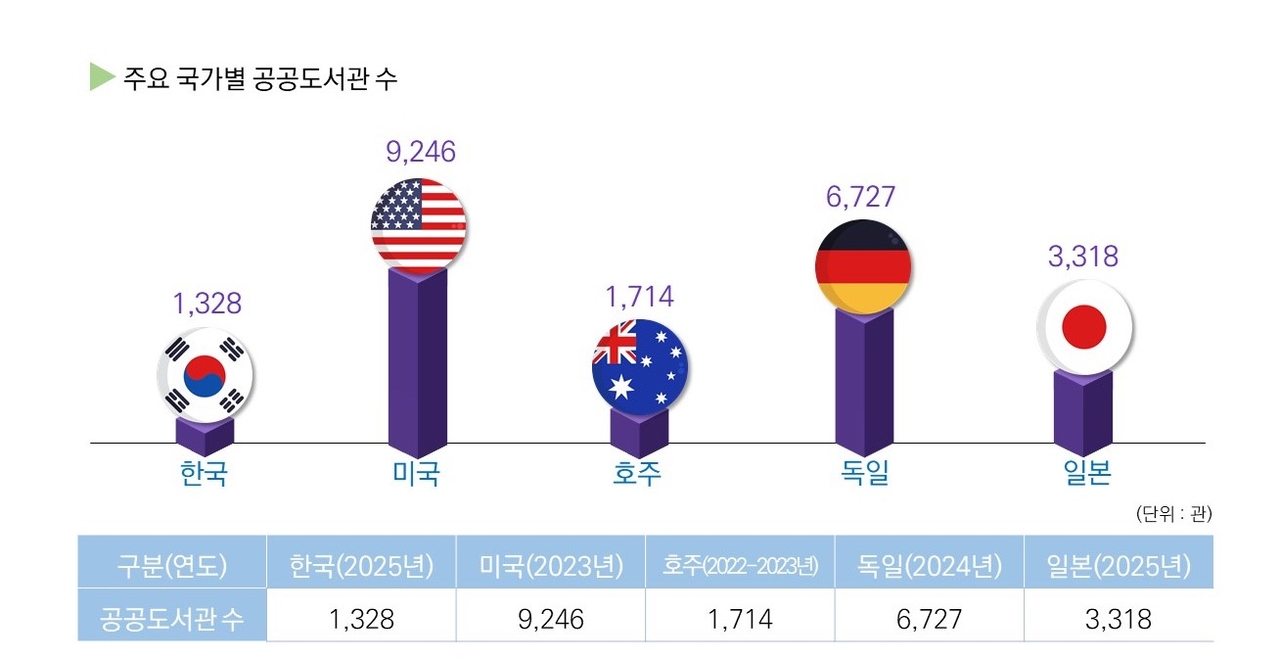
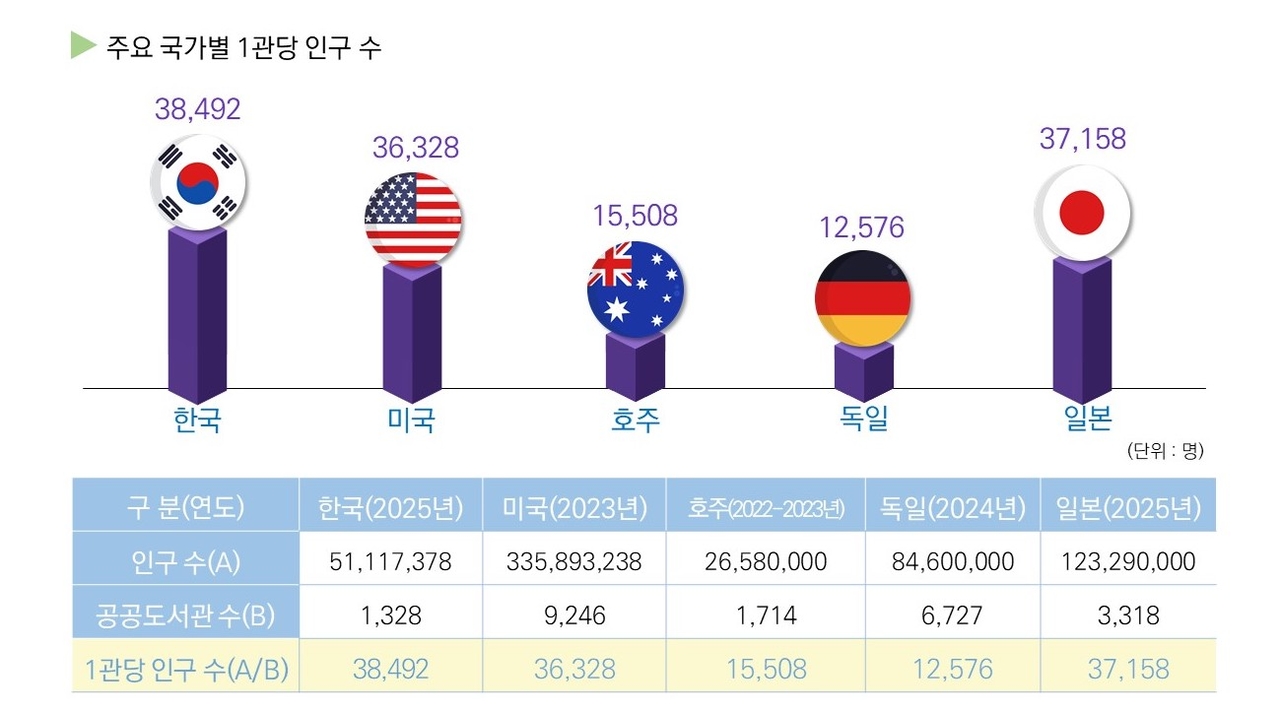
South Korea's public library infrastructure continued its steady expansion and improvement through 2025. The total number of public libraries nationwide reached 1,328 by the end of the year, marking an increase of 32 institutions or 2.5 percent compared to the previous year. This expansion has improved accessibility, reducing the population served per library by about 1,000, settling at 38,492 people.
Of the 1,328 public libraries, Seoul and Gyeonggi Province have the most, with 214 and 328, respectively.
Total visits to public libraries exceeded 230 million in 2025, a 2.8 percent increase from the year before. Book loans remained stable at 140 million.
The scope of library programming has also expanded. Each library operated an average of 92 reading and cultural programs annually, resulting in a 6.8 percent increase in total participants on-year. This suggests that libraries are increasingly serving as community centers for lectures, exhibitions and social activities, in addition to their traditional role as reading spaces, according to the Ministry of Culture, Sports and Tourism.
The total collection grew by 1.4 percent from the previous year to approximately 126.11 million books, bringing the number of books per capita to 2.47.
While the country's public library infrastructure continues to expand, the current ratio of 38,492 people per library — nearly triple that of Germany's — underscores an accessibility gap. To address this, the government's 4th Comprehensive Library Development Plan (2024-2028) aims to increase the total number of libraries to 1,400 by 2028, which would bring the service burden down to approximately 37,000 people per library.
gypark@heraldcorp.com