Vietnam, Korea agree to explore nuclear plant construction options, financial support
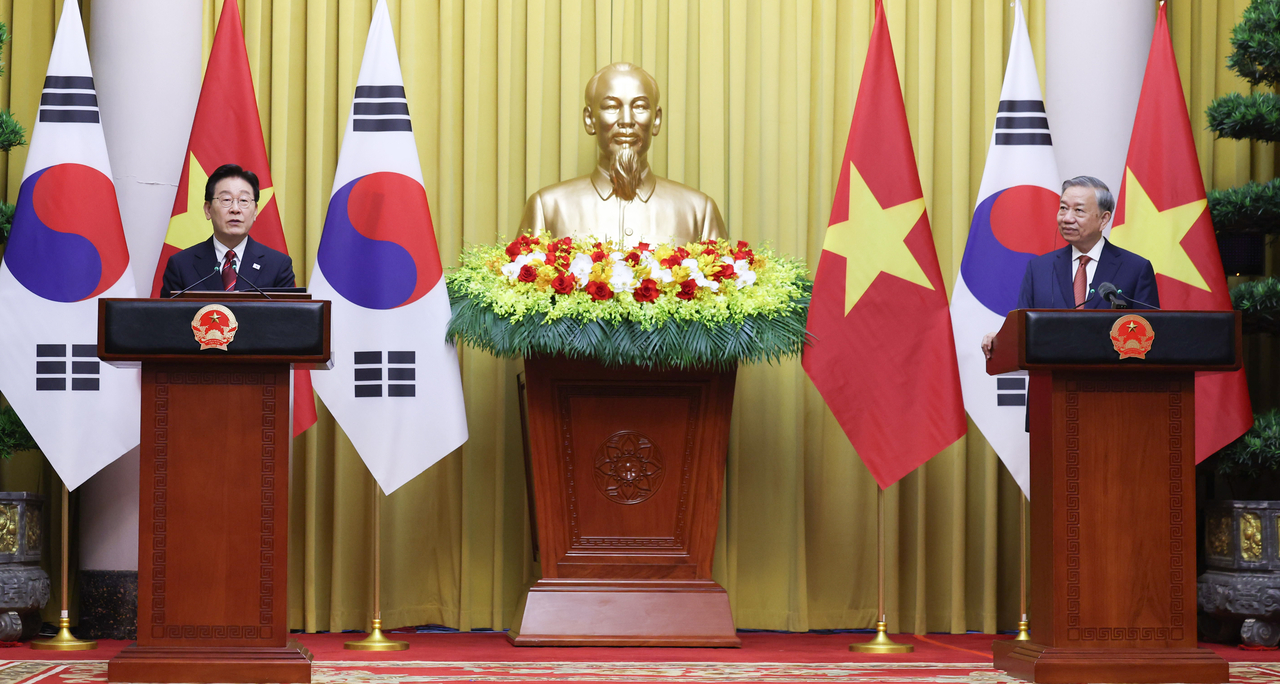
HANOI, Vietnam — The leaders of South Korea and Vietnam agreed Wednesday to deepen strategic cooperation in energy and infrastructure amid supply-chain instability compounded by the war in the Middle East.
As an outcome of the summit, South Korea and Vietnam signed two agreements to deepen cooperation in nuclear energy. The deals will explore options for new nuclear power plant construction in Vietnam and review the feasibility of South Korean financial support, as Seoul seeks to win the project to construct Ninh Thuan No. 2 nuclear power plant.
South Korean President Lee Jae Myung and To Lam, who holds Vietnam’s two top posts as president and general secretary of the Communist Party of Vietnam, met for the summit in Hanoi on the second day of Lee’s four-day state visit to the country.
“We agreed to strengthen strategic cooperation in the fields of energy and infrastructure based on the firm mutual trust between our two countries,” Lee said during a joint news conference following the summit with Lam.
Lee also disclosed that a contract is set to be signed Thursday for South Korea to export rail cars for Ho Chi Minh City’s urban railway system. The $110 million deal involves Hyundai Rotem supplying rolling stock for Ho Chi Minh City Metro Line 2.
Lee said Seoul “hopes this contract will contribute to improving Vietnam’s railway infrastructure and expects it to lead to expanded cooperation between the two countries in the large-scale transport and logistics infrastructure projects Vietnam is pursuing.”
Lee added that he and Lam “agreed to maintain close communication” over the new city and new airport projects Vietnam is pursuing as part of its national development vision.
Lee referred to the Dong Nam New City Development Zone 1 project, worth $740 million, and the Gia Binh new airport operations consulting project, valued at $70 million.
Lee underlined that Korea and Vietnam would ultimately aim to “create many exemplary cases of infrastructure cooperation between the two countries.”
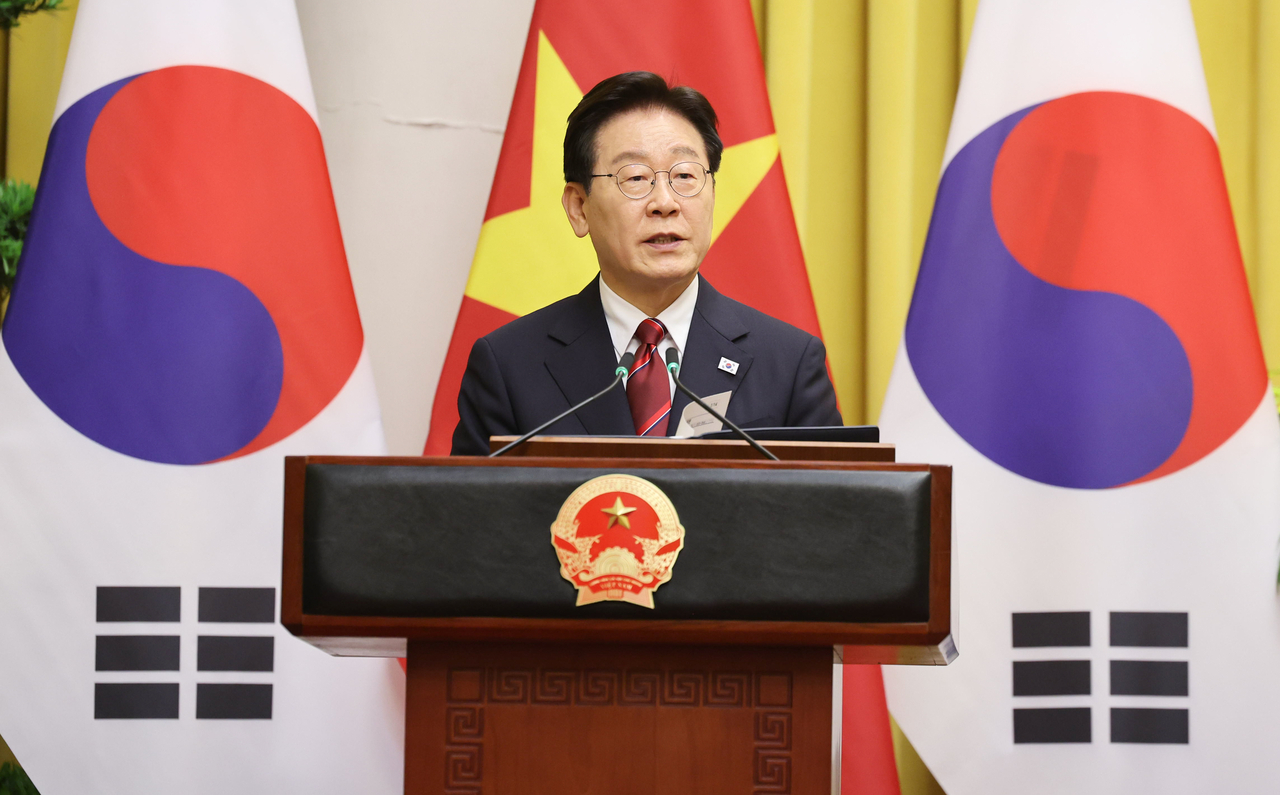
On the energy front, Lee said, “The two of us shared the view that, amid supply-chain instability stemming from the recent situation in the Middle East, the need for cooperation between our two countries has grown even greater.”
“We also agreed to work even more closely together to strengthen energy security and stabilize supply chains,” Lee added.
Following the summit, the two sides signed two memorandums of understanding on the construction of nuclear power plants. South Korea has emerged as a leading contender for Vietnam’s Ninh Thuan 2 nuclear power project in Ninh Thuan Province after Japan withdrew from the bidding last December.
The state-run Korea Electric Power Corp. and Vietnam National Industry-Energy Group signed an MOU on “Studying the Possibility of Cooperation for Nuclear Power Plant Development.”
Vietnam National Industry-Energy Group is the developer of the Ninh Thuan 2 project and is expected to select a partner through a government-to-government arrangement rather than an open international tender.
Cheong Wa Dae said the MOU aims to “explore measures for new nuclear power plant construction, jointly analyze risks in plant construction and support the establishment of plans to optimize the construction period.”
The presidential office said the significance of the agreement is to “build the foundation for Korean companies to secure the right to a new nuclear power project.”
A second MOU on “Studying the Possibility of Cooperation for Nuclear Power Project Financing” was signed by three South Korean state-run institutions — the Export-Import Bank of Korea, Korea Trade Insurance Corporation and Kepco — together with the Vietnam National Industry-Energy Group.
Cheong Wa Dae said the MOU aims to “establish a system for exchanging nuclear power project information and review the feasibility of financial support.”
The presidential office added that the significance of the MOU is to “preemptively establish a customized support system that meets Vietnam’s large-scale financing needs, thereby laying the foundation for entry into Vietnam’s nuclear power market and strengthening the partnership between the two countries.”
Kepco has been actively pursuing the Ninh Thuan 2 bid since last year, with South Korean firms including Daewoo E&C also expressing interest in participating.
Daewoo has led new city and infrastructure projects in Vietnam, including the Hanoi Starlake City urban development project, and has built a broad local network there. It has also proven its nuclear construction capability by successfully building the Shin Wolsong Units 1 and 2 plants in South Korea.
Vietnam had originally planned to build two nuclear reactors in Ninh Thuan province, selecting Russia for the first project and Japan for the second. But Vietnam’s National Assembly formally scrapped the projects in 2016 after projected construction costs rose to more than double the initial estimates, raising fears of a severe fiscal burden, while safety concerns also intensified following the 2011 Fukushima nuclear disaster in Japan.
In 2024, however, Hanoi decided to revive nuclear development to address mounting electricity shortages and again approved plans for two reactors in Ninh Thuan. Russia secured the first project.
dagyumji@heraldcorp.com