HANOI — President Lee Jae Myung said Wednesday that he would use his state visit to Vietnam to elevate bilateral ties to a “more future-oriented and more strategic” level, as he began his official activities in Hanoi.
Lee made the remarks during a luncheon with Korean residents in Vietnam on Wednesday, as the first stop on the itinerary of his four-day state visit to Hanoi from Tuesday through Friday. The event was held hours ahead of his summit with To Lam, who holds dual posts as president of the country and general secretary of the Communist Party of Vietnam.
Lee noted that the “two countries became key partners cooperating across all sectors in a comprehensive manner.”
“Through this visit, I intend to develop our already highest-level cooperative relationship into one that is more future-oriented and more strategic,” Lee said in his opening remarks. Bilateral ties were elevated to a comprehensive strategic partnership in 2022 on the occasion of the 30th anniversary of diplomatic relations.
“During this visit, I will meet with Vietnam’s leaders to expand cooperation in strategic sectors such as nuclear power, infrastructure, science and technological innovation,” Lee said.
Lee added that his meetings with the Vietnamese leadership aim to “pursue more advanced cooperation on supply chain stability, sustainable growth and global challenges including climate change response.”
On Thursday, Lee is scheduled to meet Prime Minister Le Minh Hung, Vietnam’s No. 2, who oversees the economy and administration, and hold talks and a luncheon with the country’s No. 3 leader, National Assembly Chairman Tran Thanh Man.
Lee also underscored the significance of him and Lam becoming the first foreign leaders to pay state visits to each other’s countries since the launch of their respective administrations.
“Does this alone not show the special relationship between Vietnam and Korea?” Lee said.

Lee is the first foreign leader to visit Vietnam since the inauguration of the country’s new leadership, following Lam’s election as president on April 7. Lam was the first foreign leader to visit South Korea in August 2025, following the launch of the Lee administration two months prior.
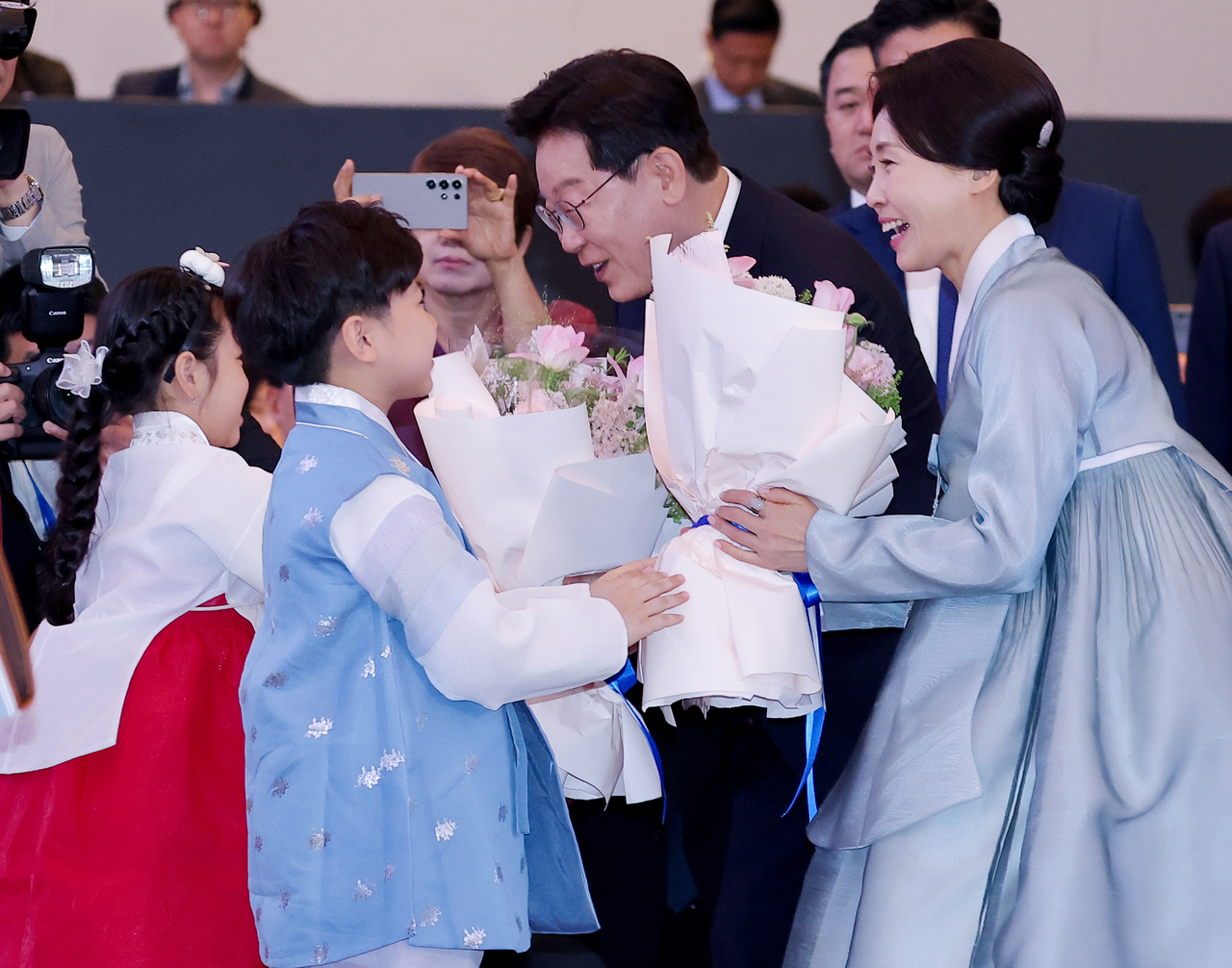
During the meeting with Korean residents, Lee highlighted the pivotal role the Korean community in Vietnam has played in strengthening bilateral ties, saying, “the sweat and dedication of each and every one of you have helped build the strong Vietnam-Korea relationship we see today.”
Lee also noted that nearly 200,000 South Koreans reside in Vietnam, making it home to the fifth-largest Korean community in the world and the largest in the Association of Southeast Asian Nations bloc.
“Above all, the nearly 100,000 Korean Vietnamese multicultural families serve as a precious foundation linking our two countries by blood,” Lee said.
While acknowledging difficulties faced by Korean residents in Vietnam, Lee also pledged to address their grievances.
“The government will do its utmost to carefully look into the hardships currently experienced by overseas Koreans in multicultural families and to resolve them as swiftly as possible, in order to build a more inclusive Republic of Korea,” Lee said, referring to South Korea by its official name.
Ahead of the summit, Cheong Wa Dae explained the Lee-Lam meeting was aimed at deepening strategic economic cooperation in sectors ranging from infrastructure to nuclear energy, while advancing the shared goal of expanding bilateral trade to $150 billion by 2030.
The presidential office underlined that the summit would help Korean companies pursue opportunities in Vietnam’s national transformation projects, including nuclear power plants, new cities and new airports.
Cheong Wa Dae framed the summit as an opportunity to strengthen energy security and stabilize supply chains, including for critical minerals, amid global uncertainty.
The presidential office illustrated that the summit is expected to broaden future-oriented cooperation between Seoul and Hanoi in artificial intelligence, semiconductors and science and technology.
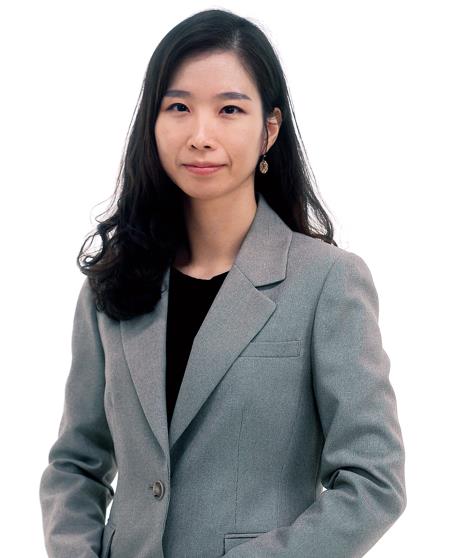
Nguyen Vu Tung, formerly Vietnam's ambassador to South Korea and an incumbent professor of international politics at the Diplomatic Academy of Vietnam, said Lee's visit comes “at a particularly pivotal moment in bilateral relations” after the inauguration of the new leadership in Vietnam.
“It also reflects the ROK's wholehearted support for Vietnam's major political events, for its new leadership and above all, for its socio-economic development in the years ahead,” the professor said in his commentary in English-daily Vietnam News.
The professor underscored that Lee’s state visit to Vietnam “presents an opportunity for both sides to further strengthen the strategic and comprehensive nature of the bilateral relationship.”
“Expectations are running higher than ever for closer cooperation in emerging areas, such as energy, science and technology, semiconductors, digital transformation and artificial intelligence, alongside the traditional pillars of the partnership,” the professor said.
He underscored that the elevation of the Korea-Vietnam partnership will “contribute to peace, cooperation and prosperity in the region.”
“Both sides also recognize the need for closer bilateral coordination to more effectively navigate the complex shifts taking place in the regional and global geopolitical and geo-economic environments,” Nguyen said.
dagyumji@heraldcorp.com