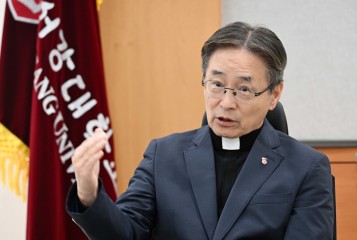
President Sim Jong-hyeok wants university to turn global networks, interdisciplinary AI and personalized education into research and student impact
Behind each university’s global ambitions are choices about what to preserve, what to develop and where to go next. In “World Class,” The Korea Herald interviews leaders of Korean universities about the strengths they are cultivating and the futures they envision. — Ed.
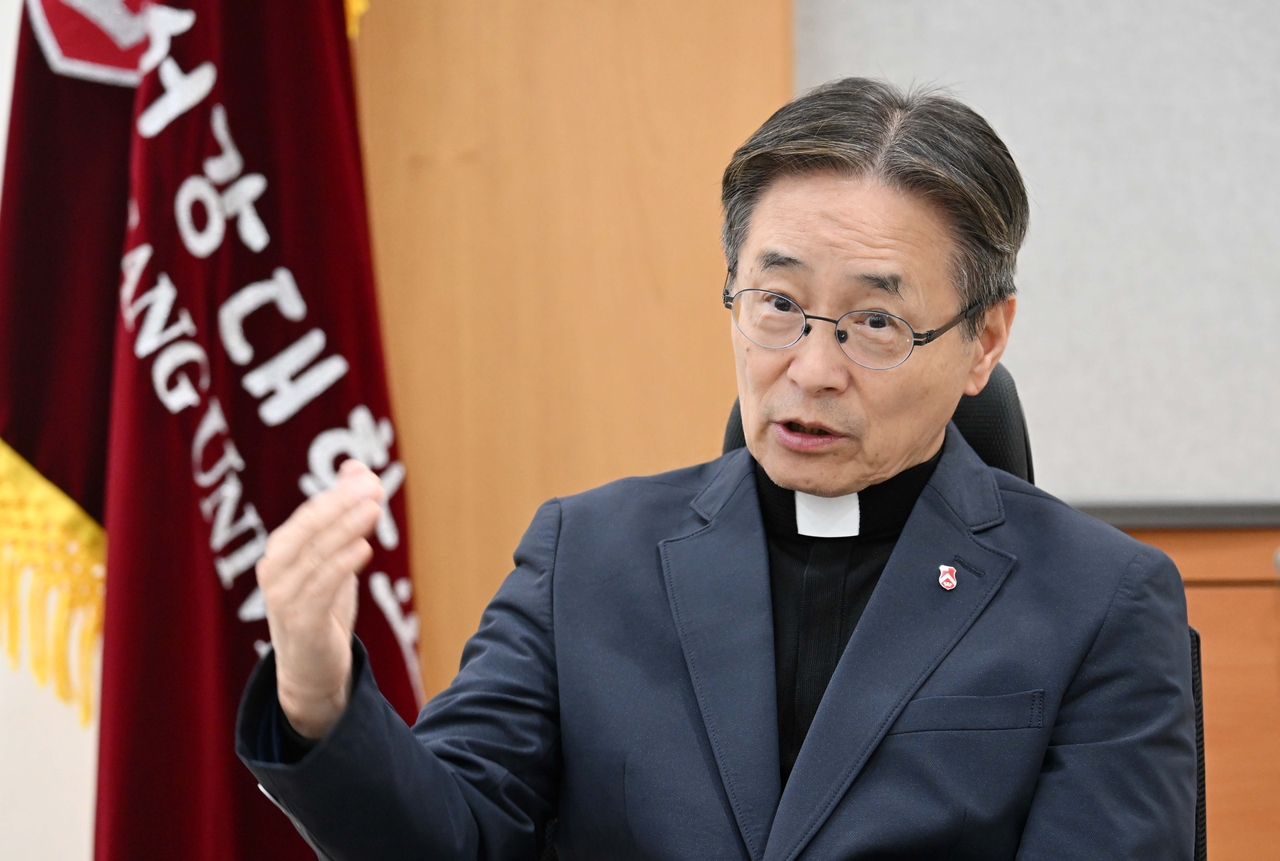
At Sogang University, international students and professors sometimes spend hours hiking together. For university President Sim Jong-hyeok, those outings are one way to help students from abroad build relationships that carry over into campus life.
“Personal attention, support and care for each student are extremely important to us,” Sim told The Korea Herald. “That is not something I often hear other universities emphasize.”
Sim wants the Jesuit university to draw on what he sees as its advantages — a tradition of close student care, strong interdisciplinary links and a global Jesuit university network — to build deeper relationships between students, faculty and overseas partners.
That philosophy informs Vision 2030+, the strategy Sim introduced in his second term as president.
His first-term Sogang Vision 2030 focused on building the infrastructure for change, including new academic programs, research-support systems and international education structures.
Among its most visible outcomes was Loyola International College, created as a dedicated platform for international education.
Sim said most of the first plan’s strategic goals were implemented as intended.
Vision 2030+ builds on that foundation by putting greater emphasis on the quality of students’ experiences, the depth of international research collaboration and Sogang’s ability to attract globally competitive scholars.
“The weight will shift away from the simple expansion of physical foundations and quantitative student exchanges so that international cooperation can become part of the university’s core capabilities,” Sim said.
Beyond recruiting foreign students
One of Sim’s priorities is improving the experience of international students after they arrive.
Loyola International College was conceived during his first term as a place where students could study primarily in English in fields including Korean studies, international commerce and relations, global media, business and economics. Sogang is considering expanding the college into science and engineering over the longer term.
Sim wants international students to participate more fully in the wider Sogang community and build relationships with Korean students, professors and alumni.
That approach reflects the Jesuit concept of "cura personalis," or care for the whole person.
Sim described hiking events that sometimes draw around 100 participants. Sogang alumni have also funded cultural and industrial visits and begun inviting small groups of foreign students to meals, while internship and employment-support programs are being developed for those hoping to remain in Korea.
The university is also expanding Korean-language support and encouraging international students to participate in clubs, mentoring and other activities alongside Korean students.
Sogang plans to track enrollment alongside how many students continue their studies, graduate, take part in university life and go on to graduate education or employment.
Turning networks into research
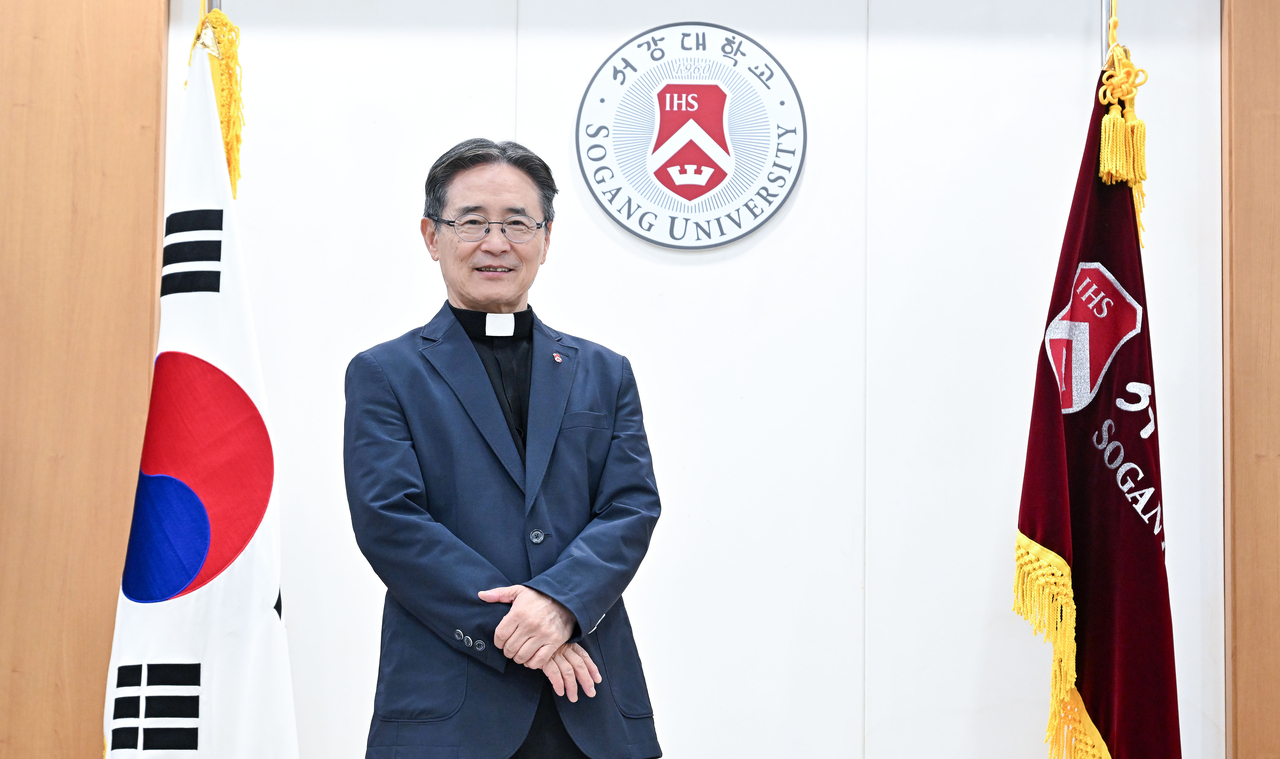
A developing partnership with the University of Notre Dame is one example of how Sim wants to turn Sogang’s international relationships into research collaborations.
Sogang will host the first Notre Dame-Sogang Conference from Dec. 14 to 17, with an 11-member delegation from Notre Dame, including senior administrators and eight faculty members, expected to visit Seoul.
The conference will feature sessions on sensor technology, energy and sustainability, artificial intelligence and materials science, along with a short AI course for students, research brainstorming and facility tours. The universities are also scheduled to sign an agreement during the visit.
The aim, Sim said, is to use the meetings to identify researchers on both sides who can work together on joint projects. He said the university would gauge the success of its partnerships by whether researchers collaborate and the institutions commit resources to their work.
As a Jesuit university, Sogang belongs to a global network of institutions spanning Asia, Europe, the Americas and other regions.
In the Asia-Pacific region, it participates in the Association of Jesuit Colleges and Universities in Asia Pacific, through which students take part in exchanges and service-learning programs.
Sogang students also participate in overseas “exposure” programs combining field experience, service and reflection in countries including Mongolia, Cambodia and the Philippines.
Globally, Sogang is part of the International Association of Jesuit Universities, whose members discuss shared challenges including AI ethics, youth mental health and social division.
Sogang plans to pursue similar arrangements with other overseas universities through joint seminars, researcher exchanges and, where there is sustained demand, joint research centers.
Bringing global scholars to Sogang
At the same time, Sogang is seeking to strengthen its own research base by recruiting internationally prominent scholars.
Through its Magnus Scholar initiative, the university is targeting researchers with strong international research records and connecting them with faculty and Sogang research groups.
“It is important to bring Nobel Prize-level scholars to our university,” Sim said.
The Magnus Scholar package includes research incentives, substantial research space and reduced teaching requirements.
The effort is being pursued alongside the government’s Brain Pool+ initiative, through which Sogang secured 3 billion won ($2.2 million) annually for five years to recruit leading overseas scientists.
Sim said the university also wants to recruit beyond science and engineering and bring prominent humanities and social science scholars to Sogang. He wants overseas scholars to work directly with Sogang researchers, build teams and connect students and younger academics to wider international research networks.
Sim said the university was also strengthening its research capacity while giving existing faculty incentives to take part in international joint research.
“We have recently launched the Sogang Academy of Global Eminence as a hub for our international research network, while launching the ‘Saint One Point’ system to improve the incentive system for professors who produce research outcomes,” Sim said.
AI beyond the engineering school
Sim sees AI as a way to bring researchers from different fields together and make Sogang more attractive to international expertise.
That thinking led to the creation of SAIX Peers, a university-wide forum for researchers from engineering, natural sciences, humanities and social sciences who work with or are interested in AI.
At one of its first major gatherings, Sim said, close to 100 professors attended, more than he had expected. Organizers deliberately mixed faculty from different fields at each table. Some professors began forming research teams during the gathering itself, Sim said.
The university has continued the initiative through regular brown-bag meetings where professors present their research and identify potential collaborators. Some teams formed through the network have already begun securing research projects, according to Sim.
An engineering researcher may provide technical expertise, while a scholar in law, finance, media, behavioral science or the humanities brings knowledge of their field and a different set of questions.
Sim sees that model as a way for Sogang to distinguish itself as universities invest in AI. He wants Sogang to become an “AI-driven university,” with AI embedded across education, research and eventually university administration.
Sogang was selected this year for the government’s AI-centered university program, which is expected to provide around 3 billion won annually through 2033 for AI education, research and industry cooperation.
Under the program, the university plans to offer 74 AI courses and four advanced AI-linked majors. It is also preparing 112 “AX bridge” courses across departments, designed to allow students to apply AI to problems within their own fields.
AI microdegrees, interdisciplinary tracks and customized programs for students without technical backgrounds are also being developed.
The university is looking for ways students and staff can use AI in their day-to-day work. A generative AI idea competition held this year invited students and university employees to use AI to solve practical campus problems.
Winning projects included STREAM, a system that automatically generates schedules for students working campus jobs and checks departmental operating rules, as well as an AI copilot for research-fund administration, an automated library-classification tool and a personalized system for planning students’ academic pathways.
Ten teams were awarded prizes, with some ideas being considered for pilot implementation on campus. Sim said the university plans to continue holding such competitions.
Sogang is also investing in the computing infrastructure needed to support that work.
Sim said the university is preparing GPU-server capacity and plans to operate local large language models that students can use for coding and other work without depending entirely on commercial subscription services.
From international presence to global impact
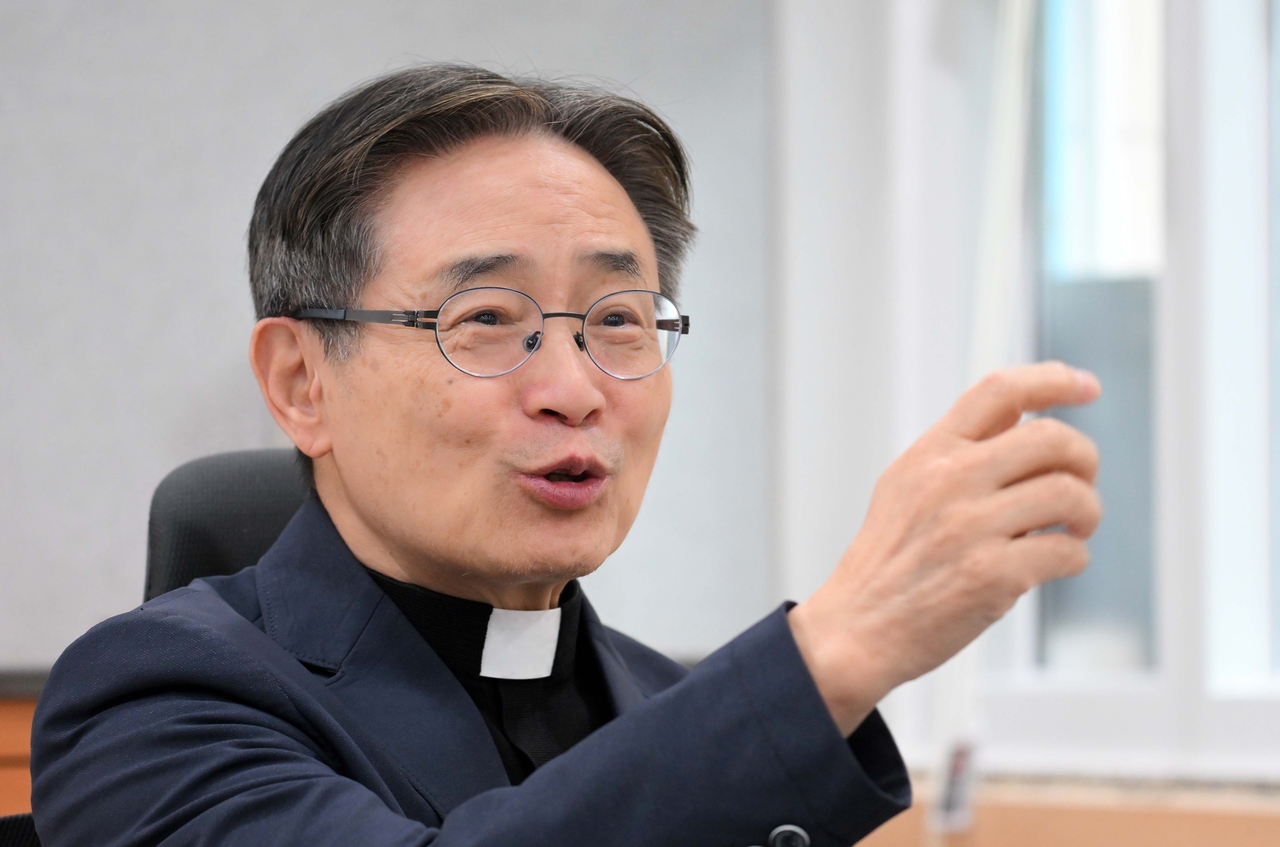
Sogang has expanded education for international students, built overseas university networks, established new research-support structures and increased investment in emerging fields such as AI.
Sim’s next challenge is to make those efforts reinforce one another.
When asked what would convince him at the end of his term that Sogang had become more international, Sim pointed to how students and researchers experience the university and how others come to view it.
He wants researchers abroad to see Sogang as a partner they can work with and students to leave with an experience they would recommend to others.
“If students come to Sogang and just think it was ordinary and never think about it again after going home, then I don’t think we can call that a success,” Sim said.
seungku99@heraldcorp.com