Hybrid SUV blends global platform with local tuning, lifting Renault’s market presence
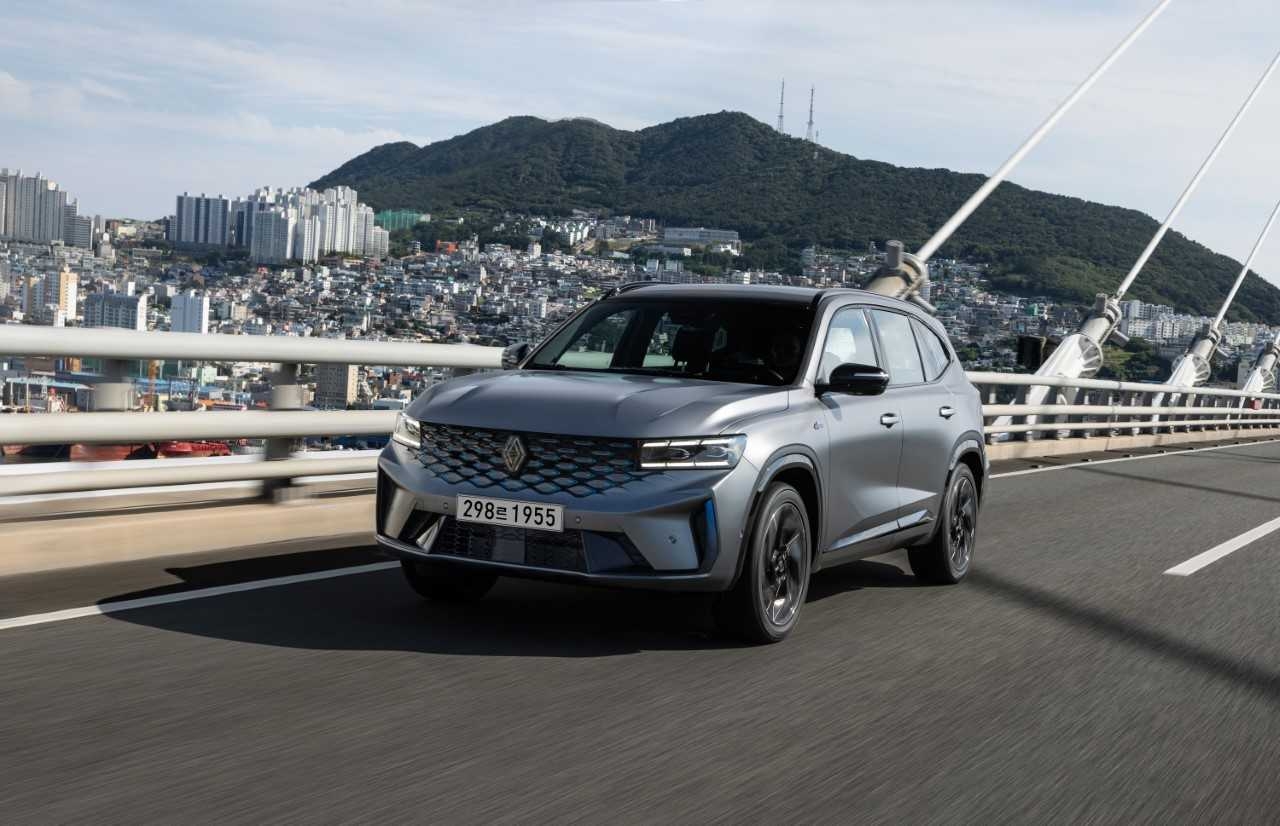
Renault Korea's Grand Koleos is gaining traction in the highly competitive auto market, emerging as a key model that signals more than just strong sales performance.
The South Korean market is defined by demanding consumers, fast-changing trends and intense rivalry. A vehicle that succeeds locally is often seen as proof of both product competitiveness and strategic execution.
Against this backdrop, the Grand Koleos is increasingly viewed as a turnaround model for Renault Korea, helping the company regain market presence. Since its launch, the mid-size hybrid SUV has delivered on both product appeal and sales, contributing to a shift in the brand’s momentum.
Built around a hybrid-focused strategy, the model balances fuel efficiency, ride stability and cabin quietness — key attributes for Korean consumers in the SUV segment.
Industry watchers say the vehicle’s significance extends beyond specifications, as it has helped restore confidence in the brand.
A defining feature of the Grand Koleos is its blend of global engineering and local adaptation: The model has been refined to reflect the specific demands of Korean drivers — an approach often described as “Born in France, Made in Korea.”
Korea presents a particularly challenging environment for automakers. Demand is concentrated in mid- to large-size SUVs, where consumers place high value on ride comfort, noise insulation and overall build quality. In such a market, spaciousness or performance alone is not enough to secure consumer acceptance.
Several factors have helped position the Grand Koleos as an SUV that resonates with Korean consumers.
The Grand Koleos incorporates a hybrid system designed not only for fuel economy but also for smooth driving dynamics and low noise levels. Suspension tuning and body setup have also been calibrated for local road conditions, enhancing everyday driving refinement.
Safety is prioritized, too. The model meets stringent domestic standards and includes a range of driver assistance systems, an important factor in a segment where family buyers account for a significant share of demand.
The model’s performance is also shaping Renault Korea’s broader strategy: The company seeks to position Korea as one of its global operations hubs, particularly for the mid- to large-size vehicles. The Grand Koleos is emerging as a starting point for that transition.
Subsequent models are expected to build on this foundation, reflecting a broader shift from recovery to expansion.
With the Grand Koleos now established in the domestic market, attention is turning to its potential role outside of Korea. What began as a turnaround model for Renault Korea may yet evolve into a pillar of the company’s wider strategy.
hyejin2@heraldcorp.com