Next-gen AI6 to be built on Samsung’s 2nm as Tesla deepens chip roadmap
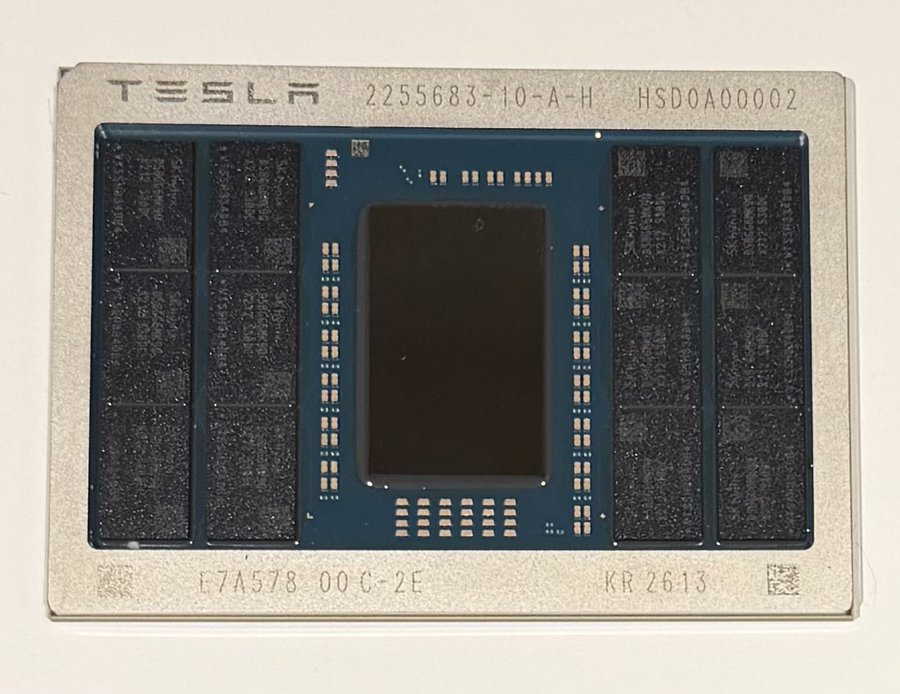
Samsung Electronics is set to deepen its role in Tesla's AI chip lineup after the automaker completed the design of its next-generation AI5 processor, a milestone that could help revive the Korean company's struggling foundry business.
Tesla CEO Elon Musk said Wednesday that the electric vehicle company's AI chip team had "taped out" the AI5 processor, marking the point at which a design is finalized and sent to manufacturing partners.
"Congrats to the @Tesla_AI chip design team on taping out AI5! AI6, Dojo3 & other exciting chips in work," Musk said on his X account.
In another post, he confirmed that both Samsung and TSMC will support production and that its chip will be "one of most produced AI chips ever."
The AI5 chip will serve as the core processor for Tesla's fifth-generation full self-driving hardware, or HW 5.0, and is also expected to power its humanoid robot programs — placing it at the center of the company's broader AI strategy.
Tesla is seen taking a "multi-foundry" approach in its chip supply using the world's top two contract chip manufacturers, to secure capacity and reduce supply chain risks amid a global race for advanced-node chips.
Samsung has supplied earlier-generation AI4 chips and last year secured a contract to produce Tesla's next-generation AI6 processors, in a deal estimated at about 23 trillion won ($15.6 billion) running through 2033.
Providing additional details on Tesla's chip roadmap on Thursday, Musk said AI6 will be produced using Samsung's 2nm process at its Texas fab, delivering roughly double the performance of AI5 at the same die size. An upgraded version, AI6.5, will be manufactured on a 2nm node by TSMC in Arizona, offering further performance gains.
For now, the addition of AI5 volumes, though financial terms remain undisclosed, further cements ties between Samsung and Tesla, and provides the Korean chipmaker with a high-profile opportunity to validate its leading-edge process technology.
Production is expected to be split across facilities capable of handling 2- to 3-nanometer nodes, with Samsung likely leveraging its new Taylor fab in Texas, alongside existing capacity in Pyeongtaek. AI4 chips have been produced in Korea.
For Samsung, the Tesla orders come at a critical juncture. Its foundry unit has been posting quarterly losses of around 1 trillion won, weighed down by weak order flow and stiff competition from TSMC. Securing marquee AI customers is seen as essential to reversing that trend.
The company said earlier it is in active discussions with major clients in the US and China and expects to increase orders for 2nm chips targeting high-performance computing and AI applications by more than 130 percent this year.
Beyond automotive chips, Samsung is also expanding its advanced-node pipeline. It has secured production of DeepX's second-generation AI processor on its 2nm process, slated for mass production in 2027, and is manufacturing its own Exynos 2600 mobile processor for smartphones using gate-all-around architecture — a key test of both its design and fabrication arms.
The foundry is also becoming more tightly integrated with Samsung's memory business. Executives have said the base die for next-generation high bandwidth memory or HBM5, is being developed on a 2nm process, advancing from the 4nm node used in HBM4.
herim@heraldcorp.com