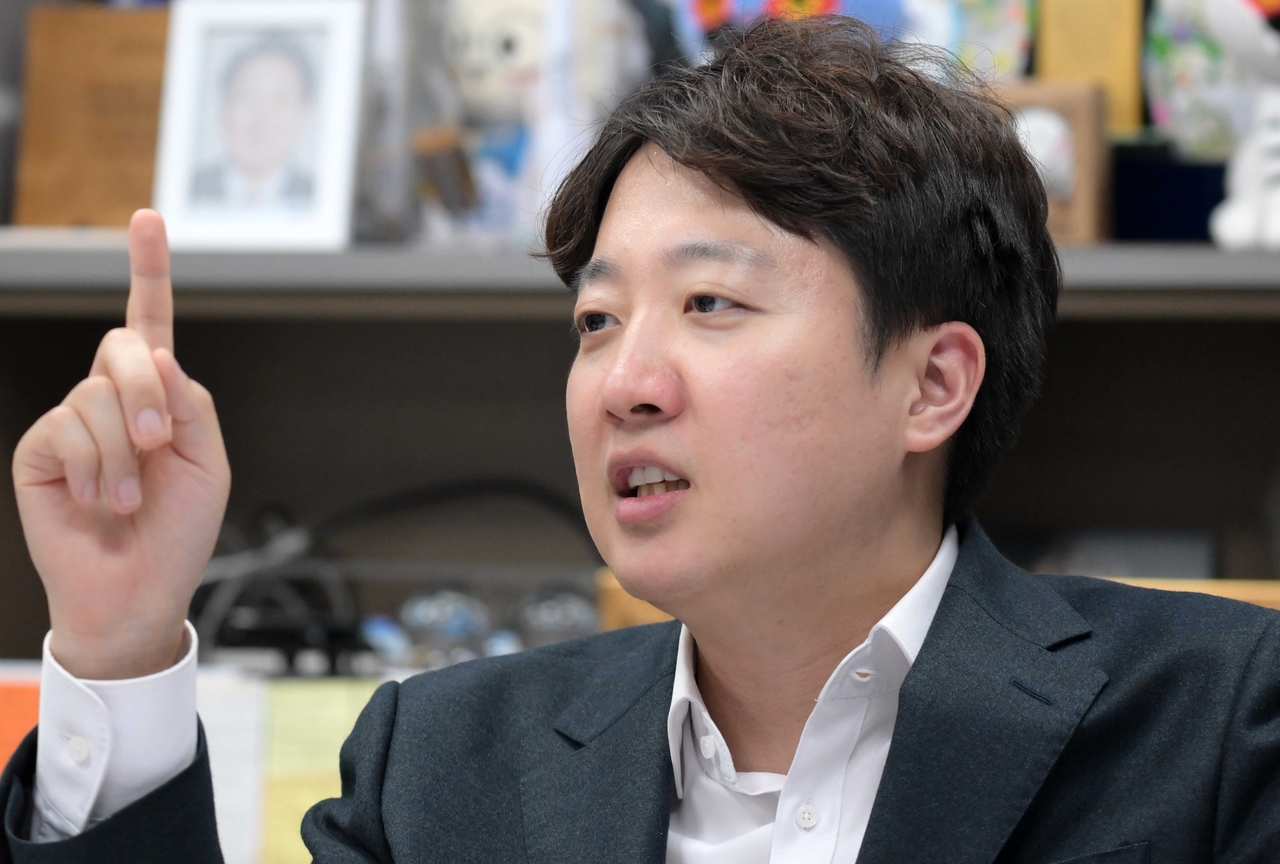
South Korea's conservatives have lost their diplomatic standing, pushed aside by the Lee administration's more pragmatic approach and saddled with an increasingly ineffective pro-US, anti-North Korea mantra, according to Reform Party Chair Lee Jun-seok.
"The conservatives' voice has been completely lost in the field of diplomacy," Lee said in an interview with The Korea Herald.
While their impact on diplomatic affairs has been reduced, the conservatives should not fall back into their comfort zone of calling for alignment with the US, the 41-year-old conservative lawmaker said.
Citing the US' apparent lack of consultation with allies on the conflict with Iran, Lee said that US President Donald Trump's policies have been "far from sustainable."
Lee suggested speaking out against US policies when necessary, adding that "blindly siding" with the US could backfire if the US takes military action against North Korea, as it did to Venezuela and Iran, Lee said.
He said the habit of putting the US alliance before everything else was acting against Korea's conservatives, branding its proponents "Kimchi MAGA."
"The rise of Kimchi MAGA affects the conservatives' thought process and leads to their misconception that things must continue to go on this way," Lee said.
Citing a debate he was involved in over Trump's military operation to capture Venezuelan President Nicolas Maduro, Lee said, "Kimchi MAGA breeds pretend to be honorary US citizens, but no one in the US cares about them."
On a related issue, Lee criticized President Lee Jae Myung's recent post on X that prompted an online spat with the Israeli government. The Reform Party leader said the Korean president's post only provided a pretext for the US to put pressure on Seoul.
The president's post shared a video allegedly showing someone being thrown off a roof by Israeli soldiers, saying human rights should be respected and war crimes investigated. The quoted post, which the president later confirmed was filmed in 2024, prompted criticism from the Israeli Foreign Ministry and from conservative Korean politicians.
Lee of the Reform Party described the liberal president as a political figure who tends to prioritize image over substance in his diplomacy. In this regard, Lee stressed that the incumbent president's failure to draw a line in North Korea issues, by being a "pacemaker" for Trump's reengagement with North Korean leader Kim Jong-un at the cost of a complete denuclearization in North Korea, must be avoided.
As the leader of a minor conservative party — Reform has 3 lawmakers out of 295 in the National Assembly — Lee said that seeking out a new diplomatic niche is increasingly important in South Korea's political landscape.
One example could be to present to the world South Korea's unique position as a country with ties to both the US and Iran.
Lee said during his lunch meeting with US Deputy Assistant Secretary of State for Northeast Asia David Wilezol in March, he told Wilezol that South Korea could play a special role in resolving the Middle East conflict. Lee added that Wilezol was unaware that both Seoul and Tehran had streets named after their counterparts' capital cities.
Also, responding to Trump's warship request by dispatching nonlethal assets could be a third option, Lee said, instead of being entrenched in the binary politics of whether to either dispatch warships to the conflict zone or not.
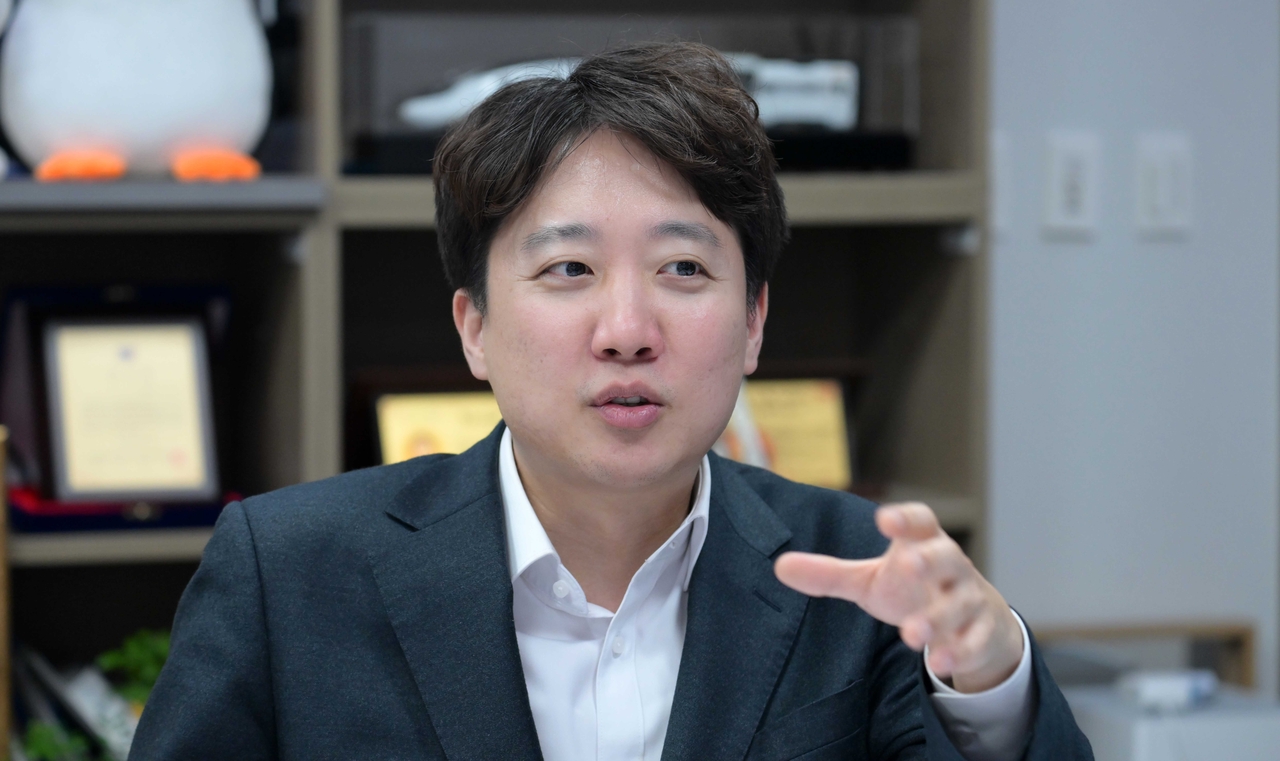
Creating AI-native playbook
Lee, who studied computer engineering at Harvard University, entered politics in 2011 at the age of 26.
Estranged from the People Power Party he chaired from June 2021 to August 2022 ― months after victories in presidential and local elections — Lee made a comeback to politics in April 2024 by taking Hwaseong B constituency in Gyeonggi Province, three months after he founded the Reform Party.
The outcome has prompted the aspiring engineer-turned-politician to delve into artificial intelligence technology and to apply his engineering knowledge to politics. In this vein, Lee said he participated in a hackathon for software engineers in March, for the first time in his 15-year political career.
Lee, who met Japanese minor party Team Mirai's founder Takahiro Anno last year, said his party, as Team Mirai did, could make South Korean politics more tech-savvy. He noted that his party has introduced a range of AI-powered solutions to boost efficiency in political party management.
For example, Lee's party wrote a code on its own to develop an AI-powered, automated solution to conduct surveys for policymaking. The introduction of AI cut the cost of carrying out such surveys by 90 percent, Lee said.
For the party’s local election hopefuls, the Reform Party has developed its own mobile app that uses AI to help candidates optimize campaign event scheduling and ensure no activities breach election regulations.
Lee added that AI technology could also be used to employ multimodel debates ― possibly modeled after residents of a given constituency or a parliamentary committee ― to detect flaws in certain policies or bills.
"I have managed an annual budget of the People Power Party, but if it were me now, I could manage it with one-fifth if AI solutions for political party management go full scale," said Lee, who formerly led the People Power Party.
By hiring three software developers, Lee said his party was conducting an experiment that could set a new standard in South Korean politics.
It tilts toward youth as well: Sixty-three percent of all candidates for the June local elections are aged 39 or younger.
Lee said he had high hopes for the Reform Party, with some 120,000 dues-paying party members as of April, to become an AI-native organization. He highlighted that the major parties' AI transformation would likely be met with resistance given their long-time reliance on human efforts to mobilize voters.
"The legacy mass will rather serve as a hindrance for a political party's AI transformation," Lee said. "The Reform Party starts from scratch. We are building up on our own."
consnow@heraldcorp.com