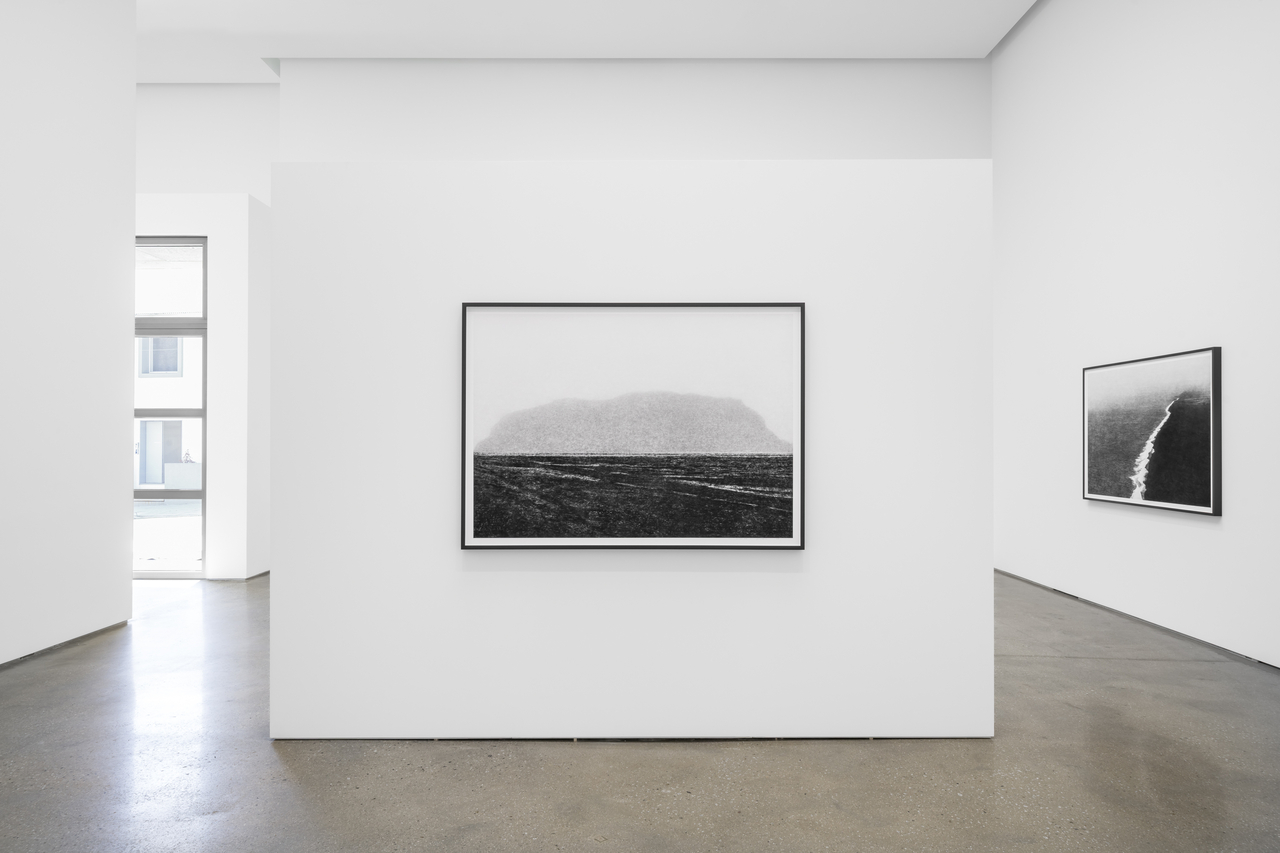
From a distance, the image featuring “togi” (earthenware) appears to be a still life drawing rendered in pencil, but is in fact a photograph.
The work's texture comes the “hanji,” traditional Korean mulberry paper, that photographer Lee Jung-jin has worked with for over 20 years. For those who might ask whether the work is a drawing or a photograph, the artist says “It does not matter at all.”
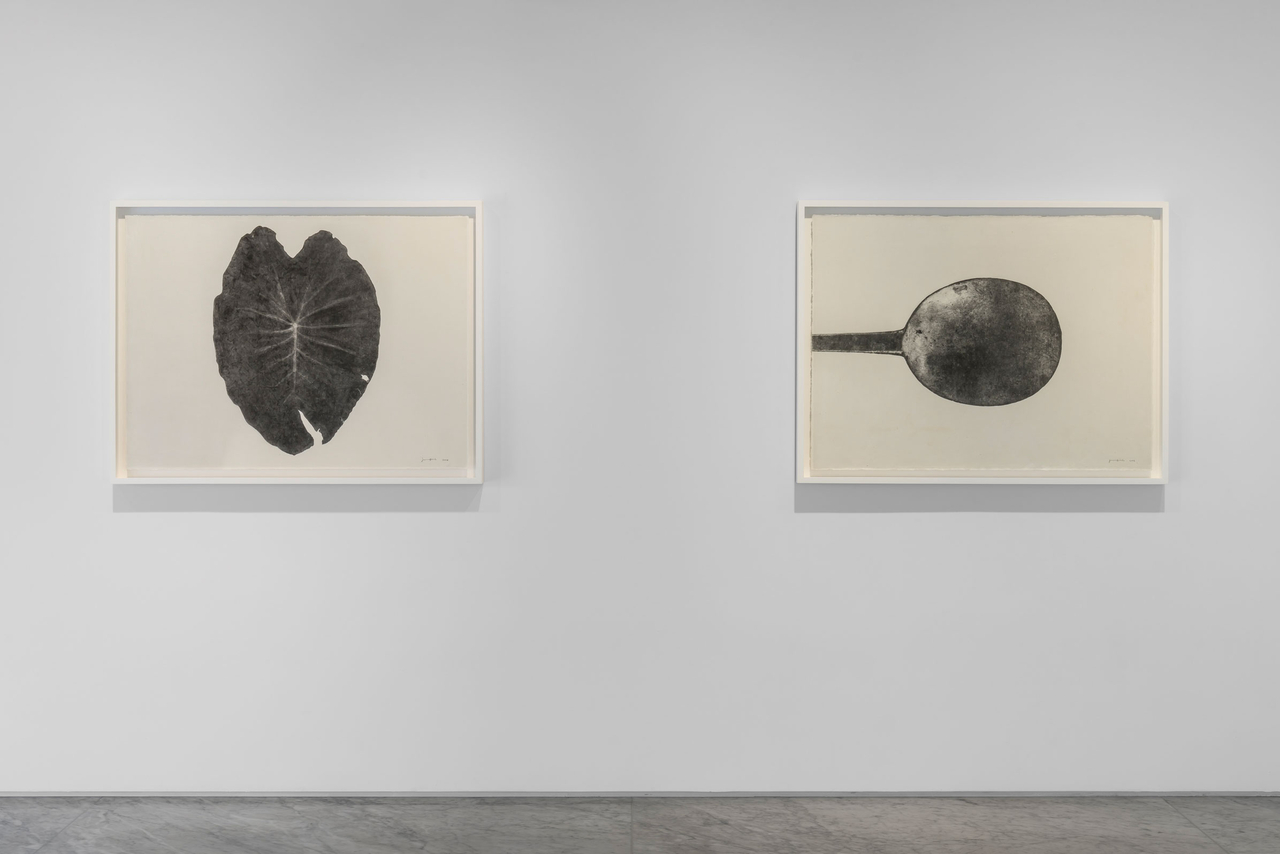
Speaking to reporters on Tuesday at PKM Gallery, where her solo exhibition is on view, Lee said her “work sits somewhere in between. It has always been on the boundary.”
“I’ve always thought of my work as being like poetry.”
She chose hanji for its depth, and the warm, layered quality it adds to her images. By applying photosensitive emulsion to the paper, she lets its texture shape the image. The artist says hanji gives the work a meditative quality.
Lee unveiled her “Unseen” series at the exhibition, featuring photographs taken in Iceland, a place she has long admired. She initially hesitated to visit, thinking its landscapes had already been captured by many artists.
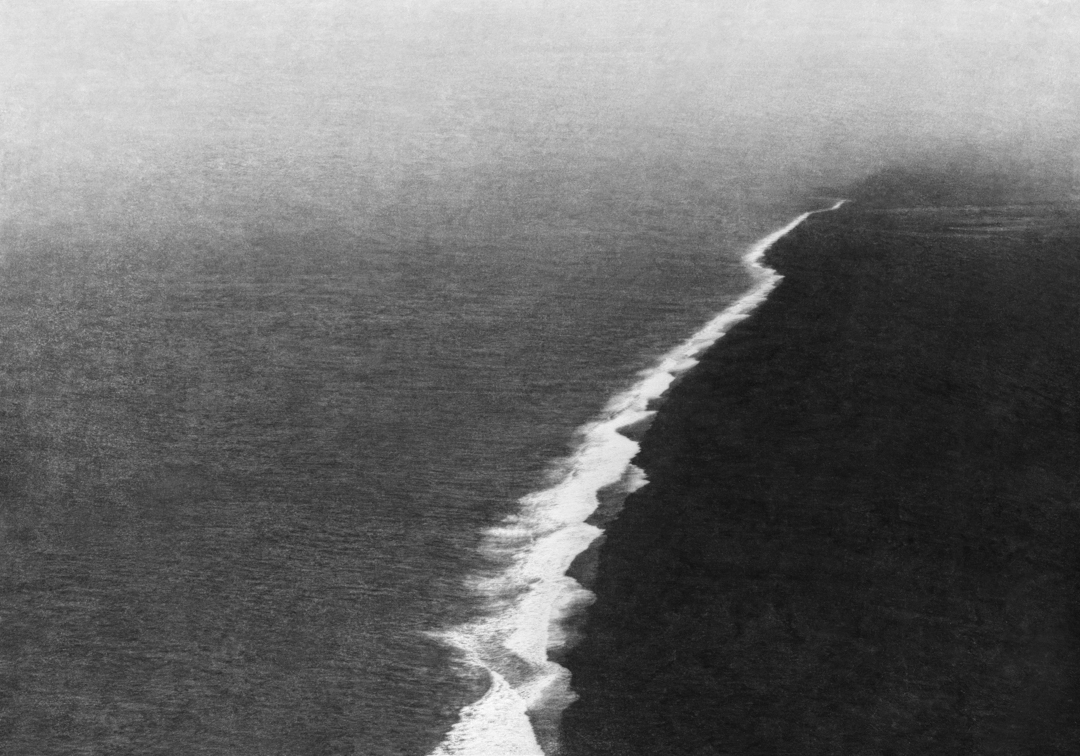
“Then I thought, ‘Why not approach it in my own way?’ There must be another aspect of the place that has not been seen,” Lee said, adding, that is why the series is titled “Unseen.”
Standing before her works, the black volcanic rocks, white snow and foaming waves appear even deeper than black, possibly shaped by the depth of the hanji as the artist intended, drawing the viewer into quiet contemplation.
“If the desert feels quiet, still and barren, Iceland came to me as something much more dynamic,” Lee said.
Lee studied ceramics at Hongik University in Seoul before entering the field of photography through documentary practice.
After moving to the United States in 1988, she developed and refined a distinctive process — beginning with her“American Desert” (1990-95) series — in which she brushes a light-sensitive chemical coating onto hanji with a brush.
“The 'Unseen' series, first shown in London last year, marks its Korean debut, making it a rare presentation,” said Park Kyung-mee, founder of PKM Gallery.
The exhibition runs through May 23.
yunapark@heraldcorp.com