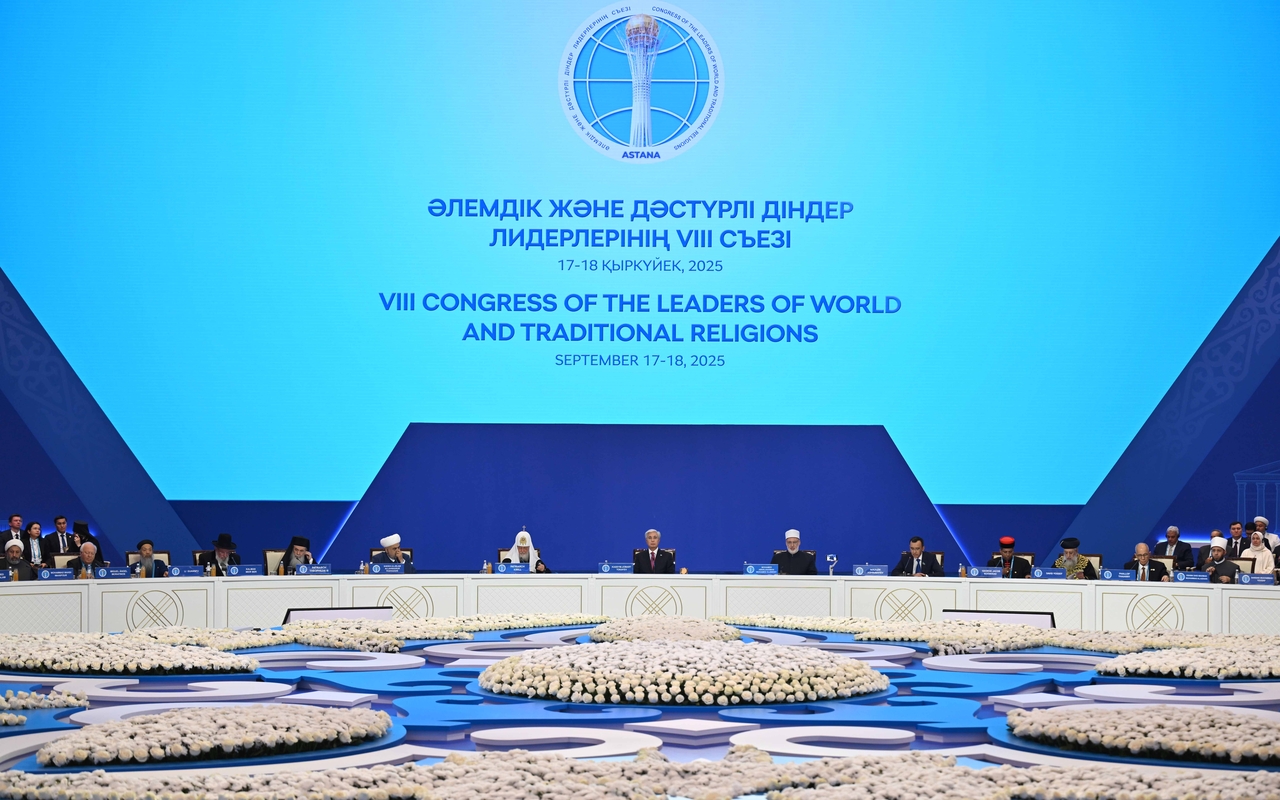
The Embassy of Kazakhstan in Seoul is once again highlighting the Astana Peace Declaration adopted last year.
The declaration, adopted at the conclusion of the eighth Congress of Leaders of World and Traditional Religions on Sept. 17–18, highlights religion as a force for cooperation and a trust-based global order.
In a statement shared with The Korea Herald, the embassy said the declaration could expand South Korea-Central Asia cooperation in humanitarian and diplomatic areas, including academic exchanges, cultural initiatives, artificial intelligence ethics and climate-related issues under the C5+K framework.
The C5+Korea framework is a diplomatic channel through which the governments of Kazakhstan, Kyrgyzstan, Tajikistan, Turkmenistan and Uzbekistan can engage with Korea.
The congress promotes interreligious cooperation, UN engagement, heritage protection, education against radicalization and youth participation under the framework of “spiritual diplomacy.”
According to the embassy, South Korea was represented by the Jogye Order of Korean Buddhism.
The Ven. Jeong Beom, a member of its International Relations Committee, attended on behalf of its president, The Ven. Jinwoo, while The Ven. Mun Jeong participated in a youth forum on the role of younger generations in promoting peaceful coexistence.
Jeong Beom highlighted seon meditation as a pathway to inner peace and stressed the importance of mutual understanding, compassion and wisdom in addressing global conflicts, according to the statement.
“The participation of the Korean side demonstrated the Republic of Korea’s active engagement in promoting interreligious dialogue and its strong commitment to the values of peaceful coexistence,” the embassy said.
The next congress is scheduled to take place in Astana, Kazakhstan, in 2028.
sanjaykumar@heraldcorp.com