As the Hungarian conductor makes his Korean debut, he reflects on music as connection, healing — and a second life beyond the violin
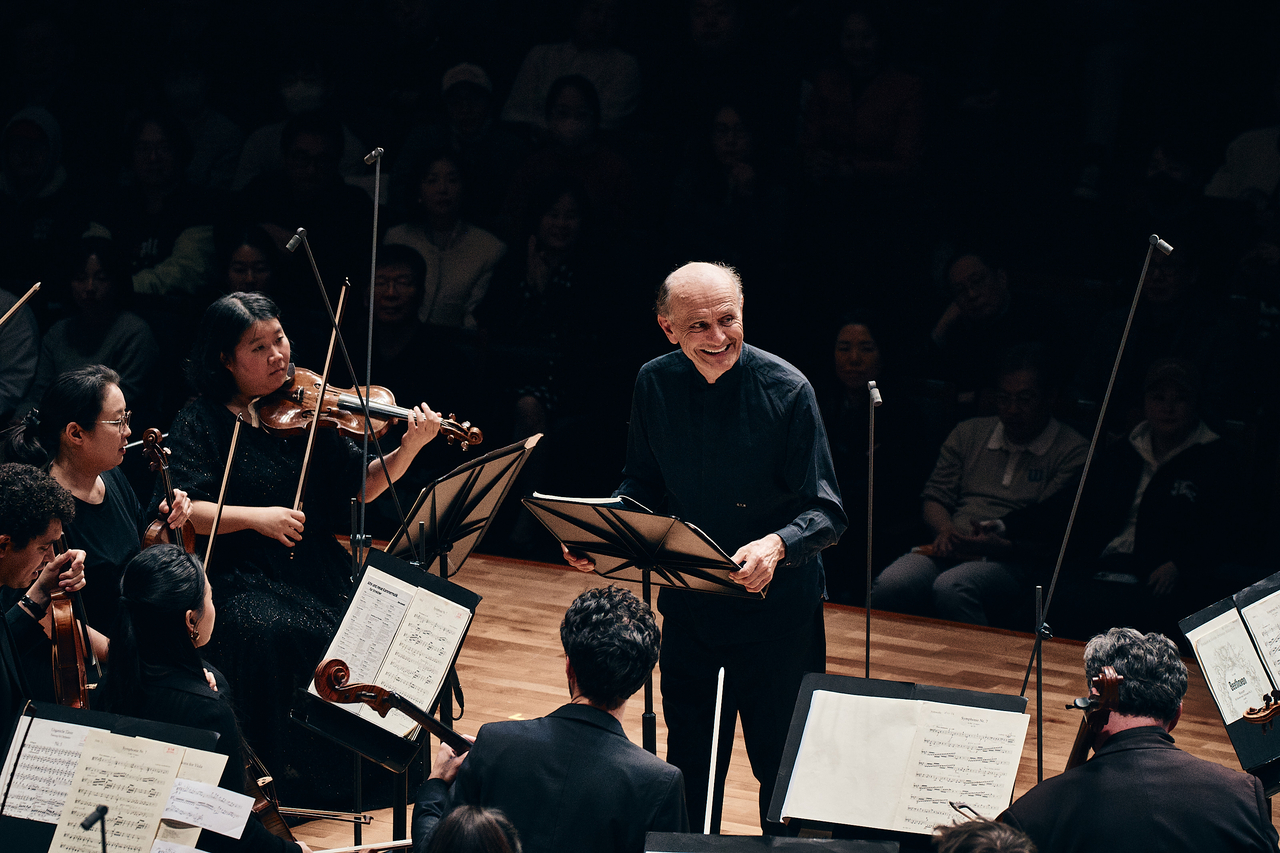
For Gabor Takacs-Nagy, arriving in Korea had long been a personal wish.
Despite decades of international touring across Asia, the Hungarian conductor had never set foot in the country — until this week. On Tuesday evening, he finally took the stage at the Seoul Arts Center, leading the Verbier Festival Chamber Orchestra, an ensemble he has shaped for nearly two decades.
His Seoul debut came as part of the Seoul Arts Center Orchestra Festival, which brings together leading orchestras from across Korea alongside invited international ensembles such as the Verbier Festival Chamber Orchestra. He described the format as “completely unique.”
It was, by his own account, worth the wait.
“I loved the concert hall — fantastic acoustics,” he said after the performance, in a stream of exhilarated words that seemed to mirror his conducting style. “The public was enthusiastic from the moment we entered the stage. I felt (as if I was) 25 years old (again) — at least for 30 minutes after the concert. I was happy. I could fly.”
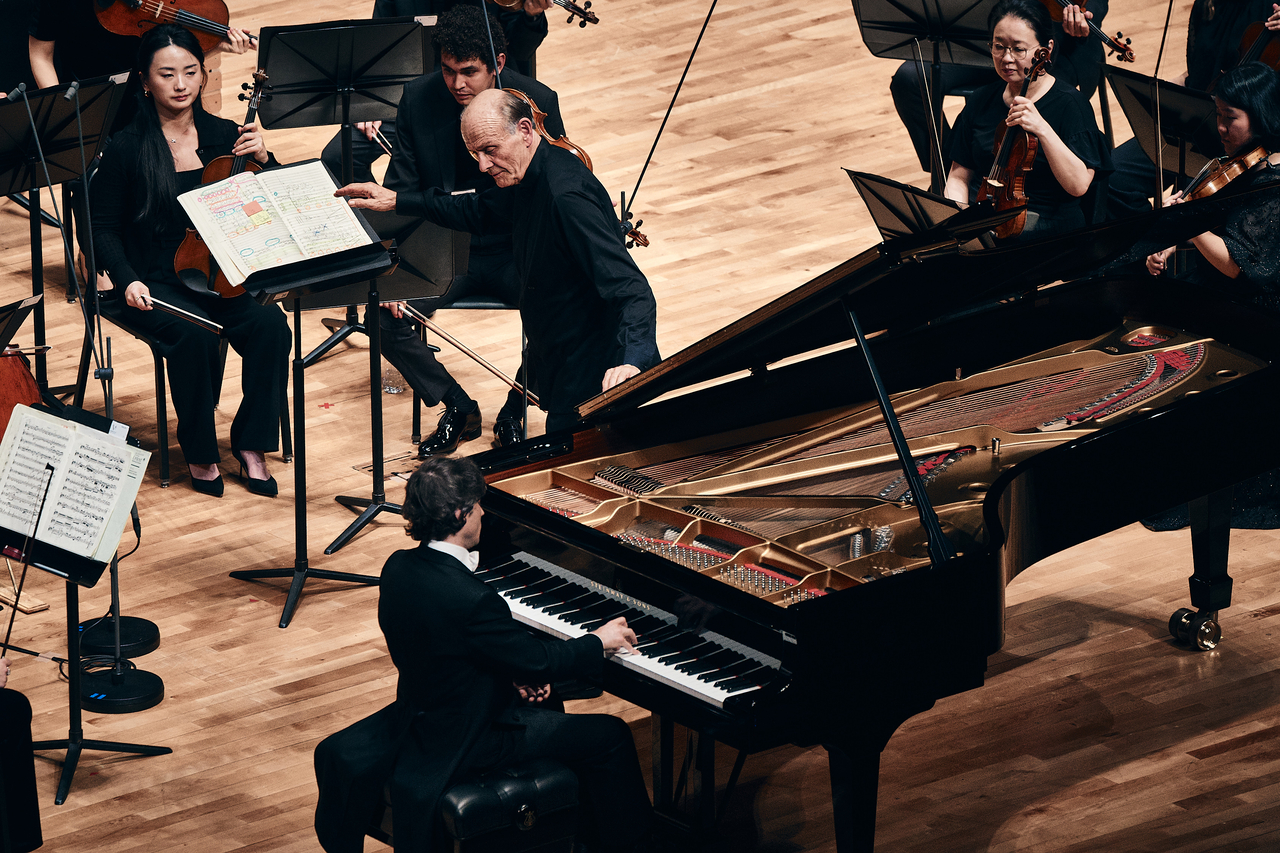
Tuesday night’s performance matched that exhilaration. Working from a heavily annotated score — dense with color-coded markings — the 69-year-old conductor shaped the music with vivid, almost theatrical energy that carried clearly into the hall.
The maestro himself seemed free of everything beyond the stage -- even the early flight awaiting him the next morning -- and the hand condition that has quietly reshaped his life in music.
In fact, that is exactly what he hopes for his audience.
“If even one person in the audience forgets their problems for a few seconds, then the concert was worth it,” he said ahead of the performance. “Music is spiritual medicine — we are here to heal.”
A second life beyond the violin
Now a prominent conductor, his path to the podium was anything but expected. A founding member of the Takacs Quartet, he spent 17 years as its first violinist before a hand condition forced him to step away in the early 1990s. The transition was not immediate -- it took nearly a decade before he reestablished himself as a conductor.
“Conducting saved me,” he said, adding, “I’m a super lucky person that I can still go on stage.”
The condition persists, and still prevents him from holding a baton. Instead, he leads with his hands, his eyes and his breath — emphasizing communication over control.
For his long-awaited Korean debut, Takacs-Nagy turned to the composers closest to him. The program centered on works by Wolfgang Amadeus Mozart and Ludwig van Beethoven — a deliberate choice that reflected both his musical roots and the identity of the orchestra he leads.
“I grew up with this music. It’s in my blood,” he said.
Rather than introducing himself through novelty, he chose familiarity — but not in a conventional sense. For Takács-Nagy, Mozart and Beethoven are not monuments of the canon, but living voices. Their music, he insists, speaks directly because it is grounded in human experience.
“They are not gods,” he said. “They are human beings like us — they had fears, love, depression, enthusiasm.”
That belief shapes the way he conducts. Precision, while necessary, is not the end goal. What matters is whether each note carries meaning.
“The score is like an envelope without the letter,” he said. “We must bring the soul back.”
That philosophy carries into his work with the Verbier Festival Chamber Orchestra, where he draws heavily on chamber music principles.
“No one is a slave,” he said. “Everyone is free, but together.”
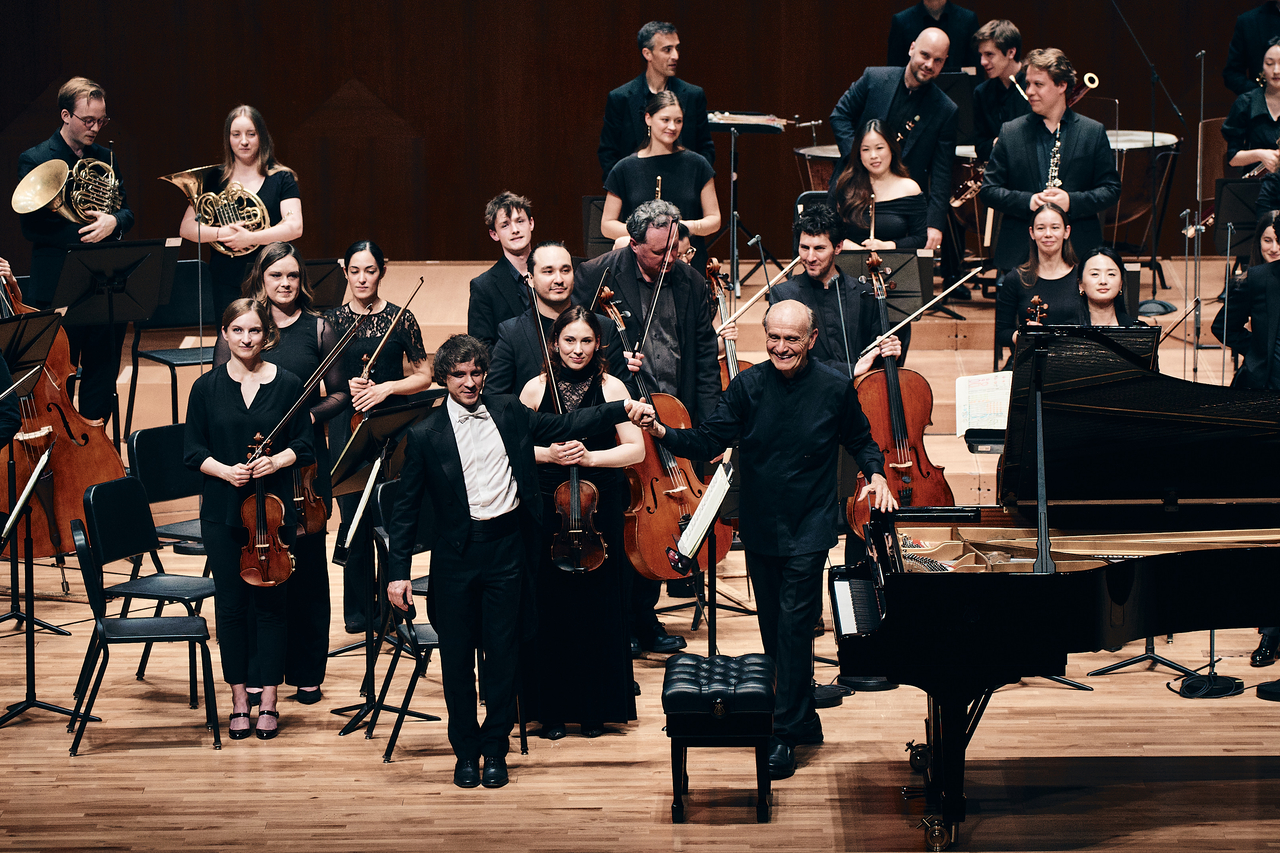
That sense of shared listening was particularly evident in his collaboration with Rafal Blechacz, a Polish pianist who rose to international prominence after winning the International Chopin Piano Competition in 2005. Throughout the performance, Takacs-Nagy remained closely attuned to the soloist, at times exchanging a quiet, knowing smile with him.
“I knew he was free and creative,” he said. “It meant we were accompanying him in the right way.”
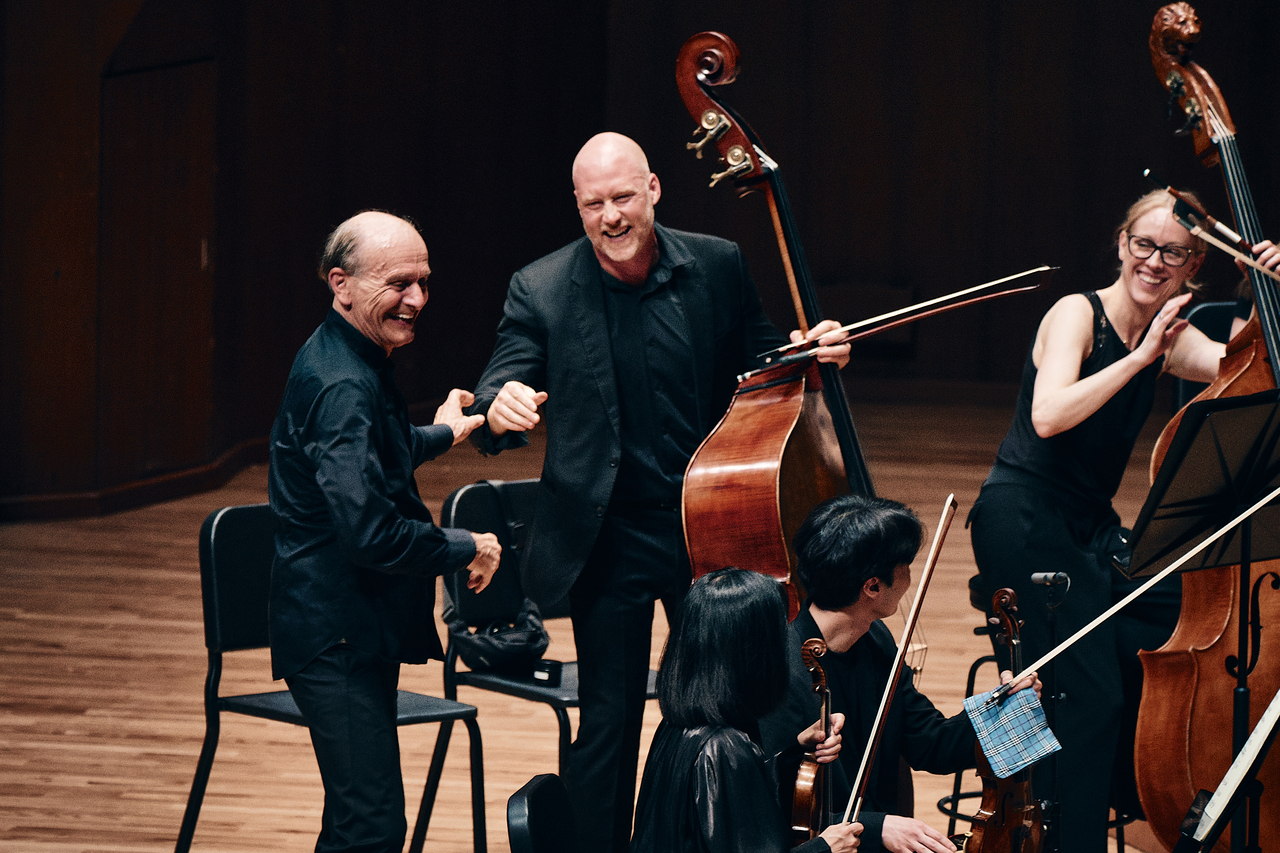
The connection extended to the audience as well. The orchestra offered three encores, including a moment that drew immediate warmth from the hall: players calling out “manse,” the Korean expression for “long live” or “victory.”
“We thought a lot about the encores and it was a gesture to the Korean people,” he said.
"It was an unforgettable evening for me and for every musician of the Verbier Festival Chamber Orchestra," the maestro said.
gypark@heraldcorp.com