Justice Ministry provides victim with legal aid, explains available support programs
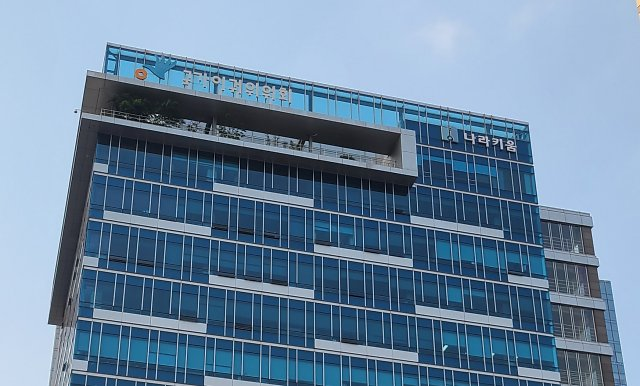
The National Human Rights Commission of Korea on Thursday urged a thorough investigation into the assault on a Thai factory worker, warning the case reflects recurring abuses against migrant workers in vulnerable residency situations.
The case stems from a Feb. 20 incident at a coating plant in Hwaseong, Gyeonggi Province, where a Thai worker suffered serious internal injuries after the company owner allegedly blasted compressed air at the worker’s lower body.
The case drew wider scrutiny after allegations that the worker was denied immediate medical care and later pressured to leave the country.
The commission said the victim had entered South Korea on an Employment Permit System visa, or E-9 visa, later overstayed the visa and was placed at the factory through a labor broker, leaving the worker more vulnerable to abuse.
“This case should not be viewed as an isolated incident at a single workplace, but as an opportunity to confront the reality that human rights violations in workplaces have repeatedly occurred by exploiting migrant workers’ vulnerable status,” National Human Rights Commission Chairperson Ahn Chang-ho said.
“Instability in residency is not only a problem of stay, but can lead to human rights problems that range from labor rights and health rights to legal rights,” Ahn added.
Ahn recommended that authorities investigate not only possible human rights violations related to the assault but also alleged failures to implement workplace safety measures and provide proper medical care.
He also called for medical and psychological support for the victim, as well as measures to ensure stable residency and industrial accident compensation.
The commission further urged relevant authorities to devise measures to prevent future human rights violations against migrant workers, including rights education for business owners.
Meanwhile, Justice Ministry officials visited the victim on Thursday, provided legal counseling and explained available support programs, including state compensation for crime victims, psychological assistance, interpretation and translation services, and legal aid.
According to the ministry, the victim requested psychological counseling, and officials are reviewing whether to provide counseling through a Thai-speaking counselor or a third-party interpreter.
The ministry said it would continue to provide tailored, integrated support based on the victim’s requests.
“In addition to conducting a rigorous investigation into this case, we will actively take necessary measures to support the victim in consultation with relevant agencies and organizations,” Justice Minister Jeong Seong-ho said.
“We will also strengthen prevention and response systems to ensure that foreign workers are not subjected to human rights violations.”
seungku99@heraldcorp.com


![[Legal updates in Korea] New insurance mandate protects firefighters on the job](https://wimg.heraldcorp.com/news/cms/2026/10/01/news-p.v1.20261001.76835f19eb424f18814ac3bb65d896a9_T1.jpg?type=h&h=800)