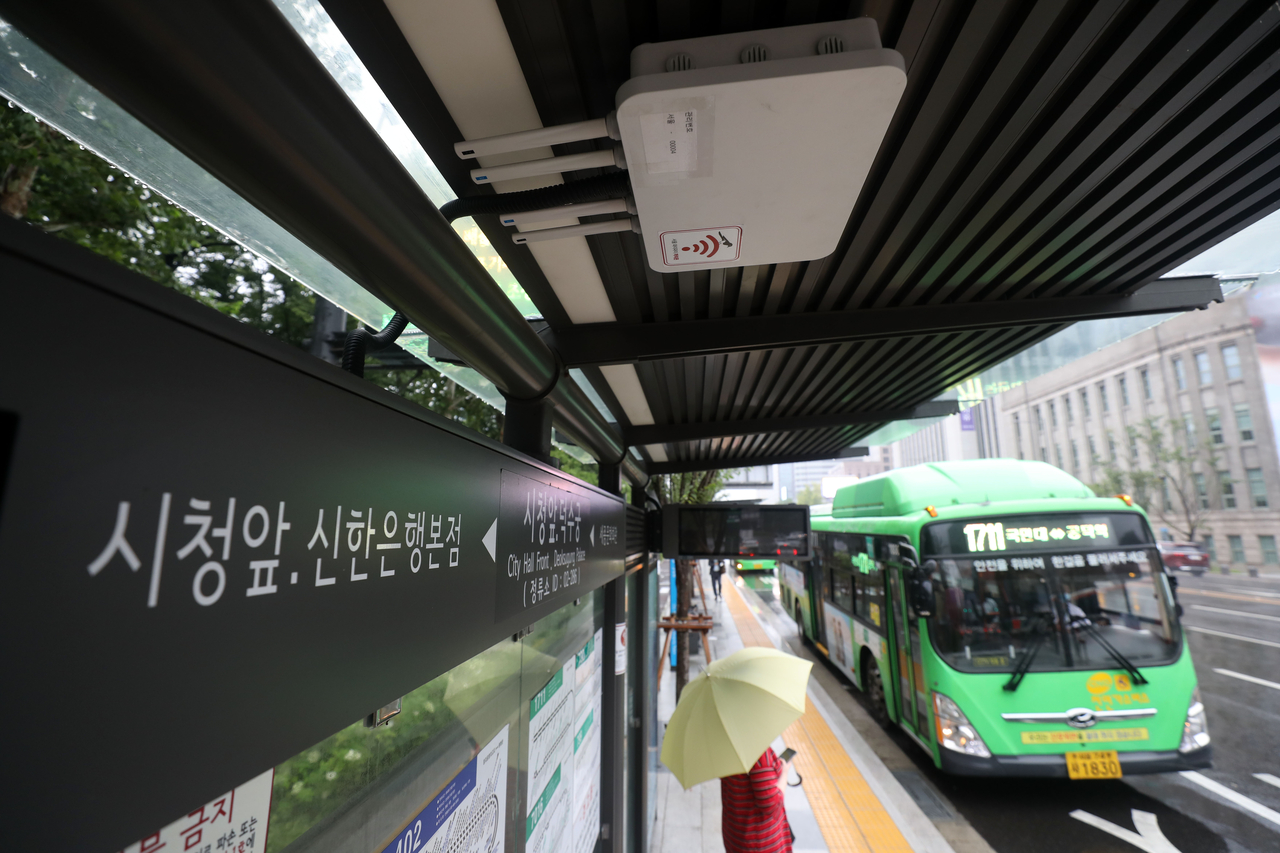
Seoul will replace more than 2,000 public Wi-Fi units this year as it shifts policy from expanding coverage to improving speed and reliability, city officials said Thursday.
The metropolitan government will invest 2.4 billion won ($1.62 million) to upgrade 2,020 aging access points installed at major streets, traditional markets, welfare facilities, district offices and bus stops. Devices that have been in use for more than eight years will be prioritized for replacement to address slow speeds and unstable connections.
“Public Wi-Fi is a key digital infrastructure that guarantees the people’s basic right to communication,” said Kang Ok-hyun, director general of Seoul’s Digital City Bureau. “We will continue to upgrade the system so anyone can access stable, high-quality connectivity without interruption.”
The move marks a pivot from a decadelong push to expand the number of public Wi-Fi installations toward enhancing user experience for residents and foreign visitors.
As part of the overhaul, Seoul plans to introduce Wi-Fi 7, the latest wireless communication standard, which allows devices to use multiple frequency bands simultaneously to boost speed and stability. The upgrade is expected to improve performance in high-traffic environments and support faster transmission of large data.
The city will also expand “data free zones” offering high-quality public Wi-Fi in key tourist areas such as Myeong-dong, Seongsu and Han River parks, as it prepares for an era of welcoming 30 million annual foreign visitors.
Seoul will streamline its Wi-Fi management system, integrating monitoring and maintenance functions -- including those for bus stop networks -- to improve response times to outages and increase operational efficiency.
The city currently operates 35,318 public Wi-Fi units across buses, bus stops, parks, markets and welfare facilities. Average daily users reach 4.21 million, generating an estimated 230.1 billion won in annual savings on communication costs, according to the city.
Officials said the network will be further developed as core digital infrastructure to ensure universal access, rather than remaining a convenience service.
hnpark@heraldcorp.com











