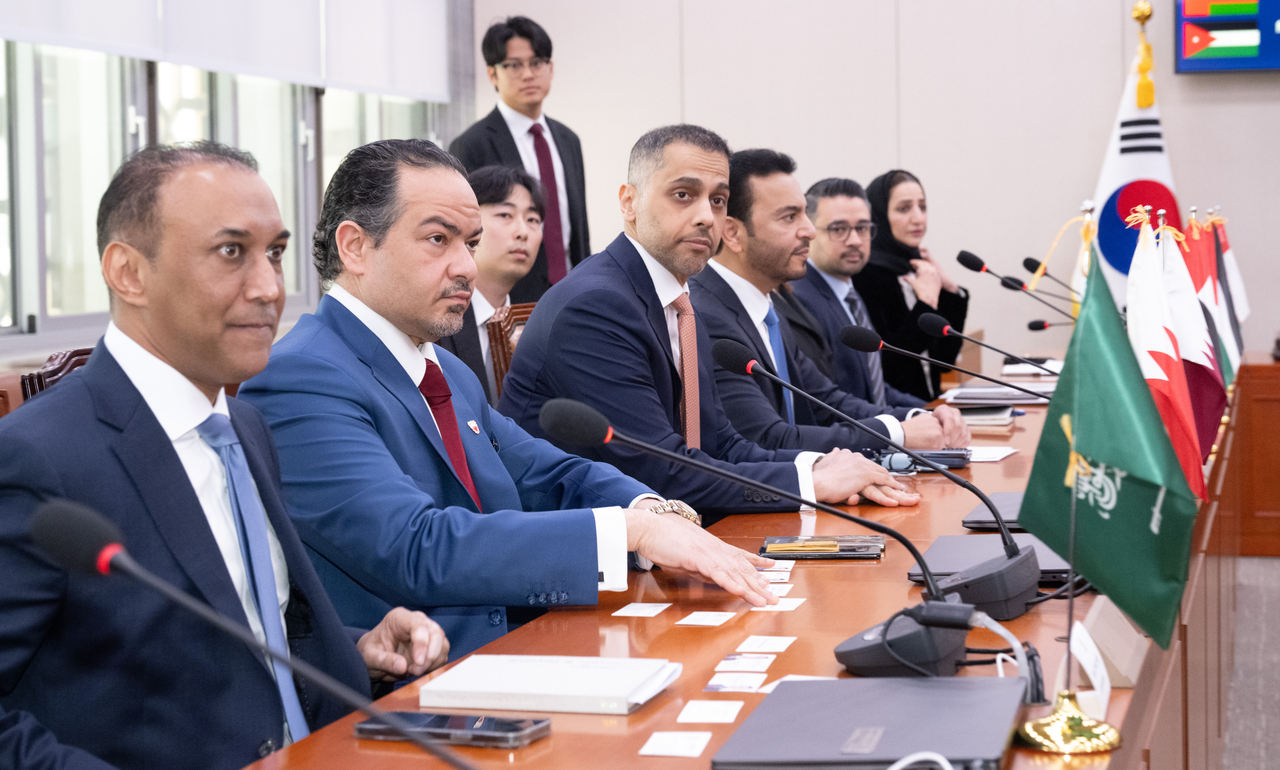
South Korean lawmakers held talks Wednesday with envoys of seven Middle Eastern countries as the country seeks to ensure a stable oil supply through alternative routes amid an energy crisis.
Rep. Kim Seok-ki of the People Power Party, who chairs the Assembly's Foreign Affairs and Unification Committee, told reporters after the closed-door meeting that the ambassadors reaffirmed their commitment to prioritize their countries' stable supply of crude oil to South Korea amid ongoing uncertainties with the blockage of the Strait of Hormuz due to the war in the Middle East.
Kim also said the lawmakers at the meeting requested the safety of some 10,000 South Koreans and South Korean businesses in these countries.
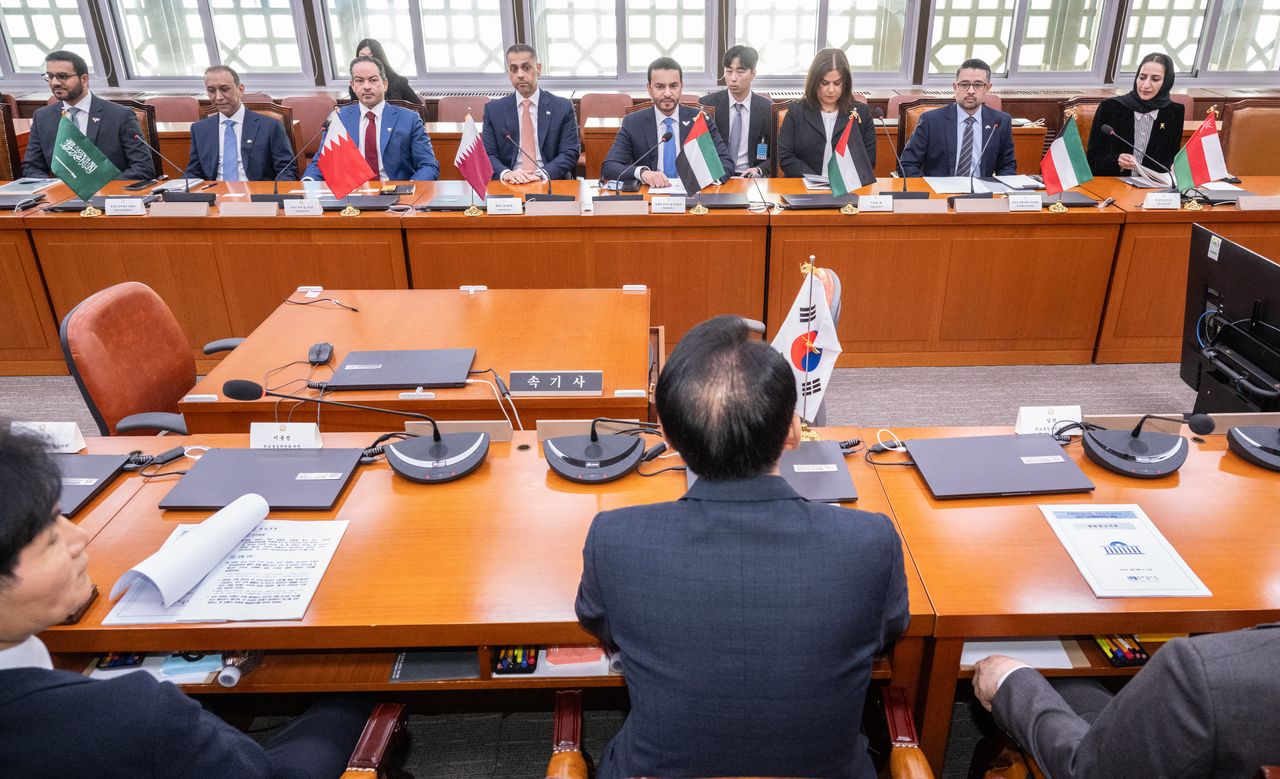
Ambassadors and charge d'affaires of six countries that are member nations of the Gulf Cooperation Council — Bahrain, Kuwait, Oman, Qatar, Saudi Arabia and the United Arab Emirates — as well as nonmember Jordan, visited the National Assembly.
They were received by four South Korean lawmakers at the National Assembly: Reps. Kim Seok-ki and Kim Gunn of the main opposition People Power Party, Rep. Lee Yong-sun of the ruling Democratic Party and Rep. Kim Joon-hyung of the minor liberal Rebuilding Korea Party.
The ambassadors told lawmakers that Iran had inflicted damage on their countries' private-sector infrastructure, residential areas and industrial complexes, although the seven countries were not involved in the conflict, according to the committee chair.
Any plan to toll vessels passing the Strait of Hormuz would be unacceptable, according to the envoys who were quoted by Kim.
According to Kim's office, the Gulf Cooperation Council members' envoys extended a meeting offer via the United Arab Emirates' Embassy in South Korea on March 27, two days after Iranian Ambassador to South Korea Saeed Koozechi met South Korean lawmakers at the National Assembly. An offer from Jordan's ambassador to Korea for a meeting was sent Monday.
consnow@heraldcorp.com