Yang Jun-young takes on both Prince Siegfried and sorcerer Rothbart in 'Swan Lake'
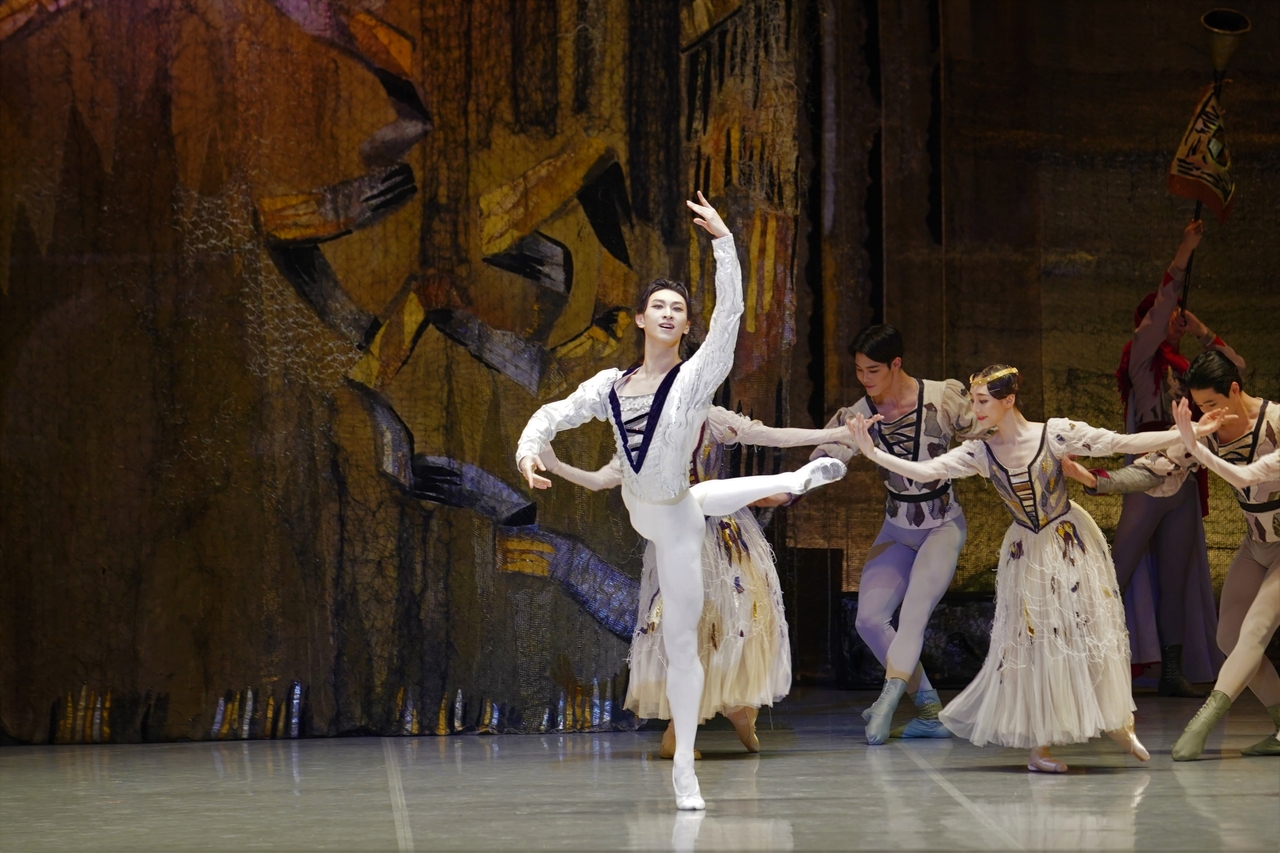
On a moonlit lakeshore, far from the clamor of the court, the prince is alone as love comes to him for the first time — quiet, almost unreal, like the swan before him. In a tender adagio, Prince Siegfried yields almost helplessly, with a pure, unguarded intensity.
Just as their aching exchange draws to a close, a dark figure emerges. Lurking at the edge, the evil sorcerer Rothbart begins to plot how to use their love for his own ends.
This season, Korean National Ballet brings back the beloved classic “Swan Lake,” with one ballerino taking on both roles. Corps de ballet dancer Yang Jun-young makes his debut performing both Prince Siegfried and Rothbart, alternating between them over the course of the week — Siegfried on Wednesday and Friday, Rothbart on Saturday evening.
The 27-year-old was originally cast as Rothbart, stepping into Siegfried only after an injury reshuffled the production — the role arriving as unexpectedly as first love. The part, however, was not unfamiliar: As a child, at his first competition, he had performed the prince’s solo variation.
“Siegfried was always the role I most wanted to dance. I’ve long hoped to take on the full-length version,” Yang said in an interview with The Korea Herald last week.
“Because I was brought in on short notice, even though I had memorized the sequence, it turned out to be more demanding than at first. The prince carries much of the narrative.”
Still, Siegfried came more naturally to him. “I relate to him more. He’s just come of age and has a lot on his mind. I’ve had my own thoughts about love and relationships, and his personality feels closer to me.”
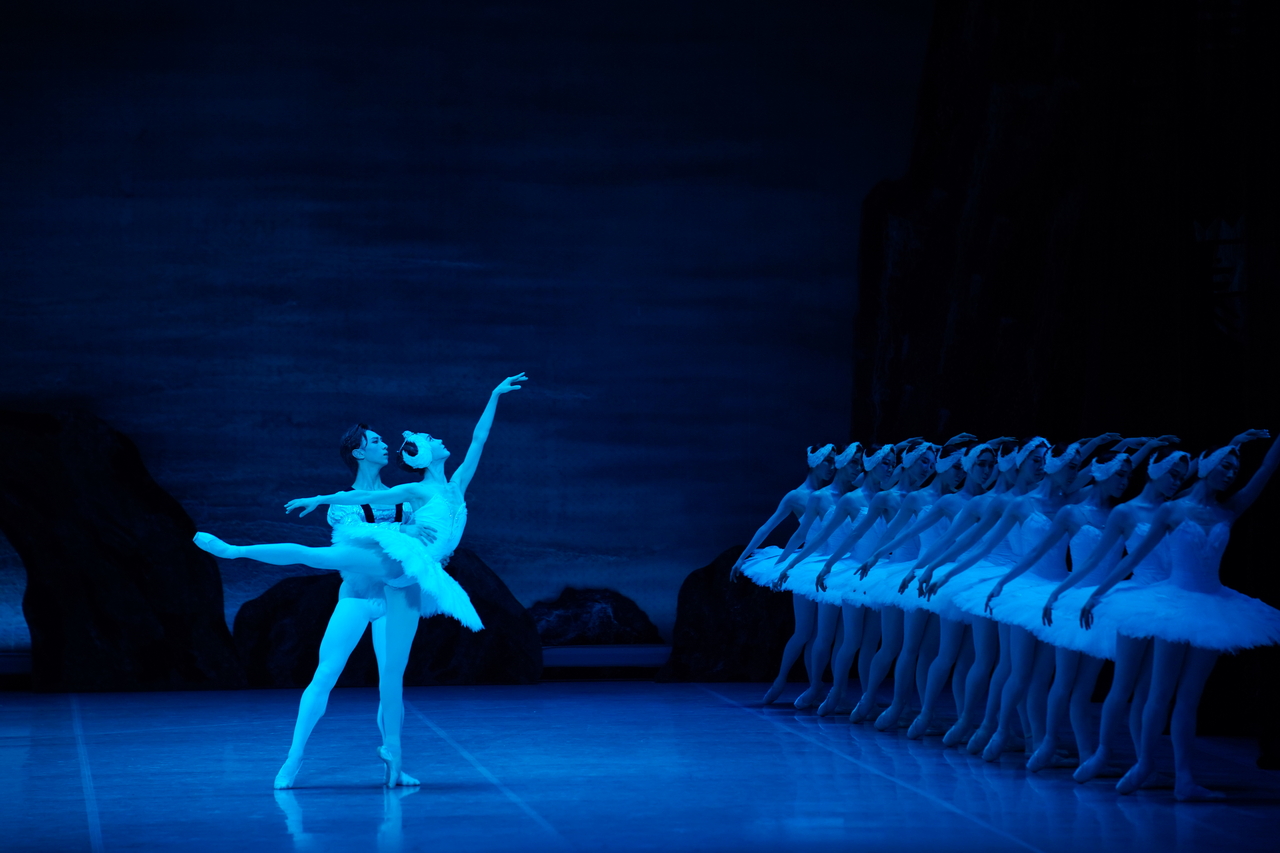
But the role he shares the stage with could not be more different: Siegfried and Rothbart are as far apart as two figures can be, like Odette and Odile.
In preparing the prince, Yang focuses on restraint, remaining within the grammar of classical ballet, with controlled lines and stripping away unnecessary exaggeration.
“I try not to break from the classical framework. It’s important to maintain that sense of nobility, because it defines who Siegfried is.”
Though “Swan Lake” takes its name from the swans, the story is told just as much through the prince. Opening with his coming-of-age celebration, Siegfried remains at the center of the narrative.
“So I think a lot about the relationships between characters: with Odette, with the courtiers, with his mother,” Yang said. “Where I direct my gaze, how I call to someone, whether I meet their eyes. If the prince feels disconnected from everyone else, then he’s not really leading the story.”
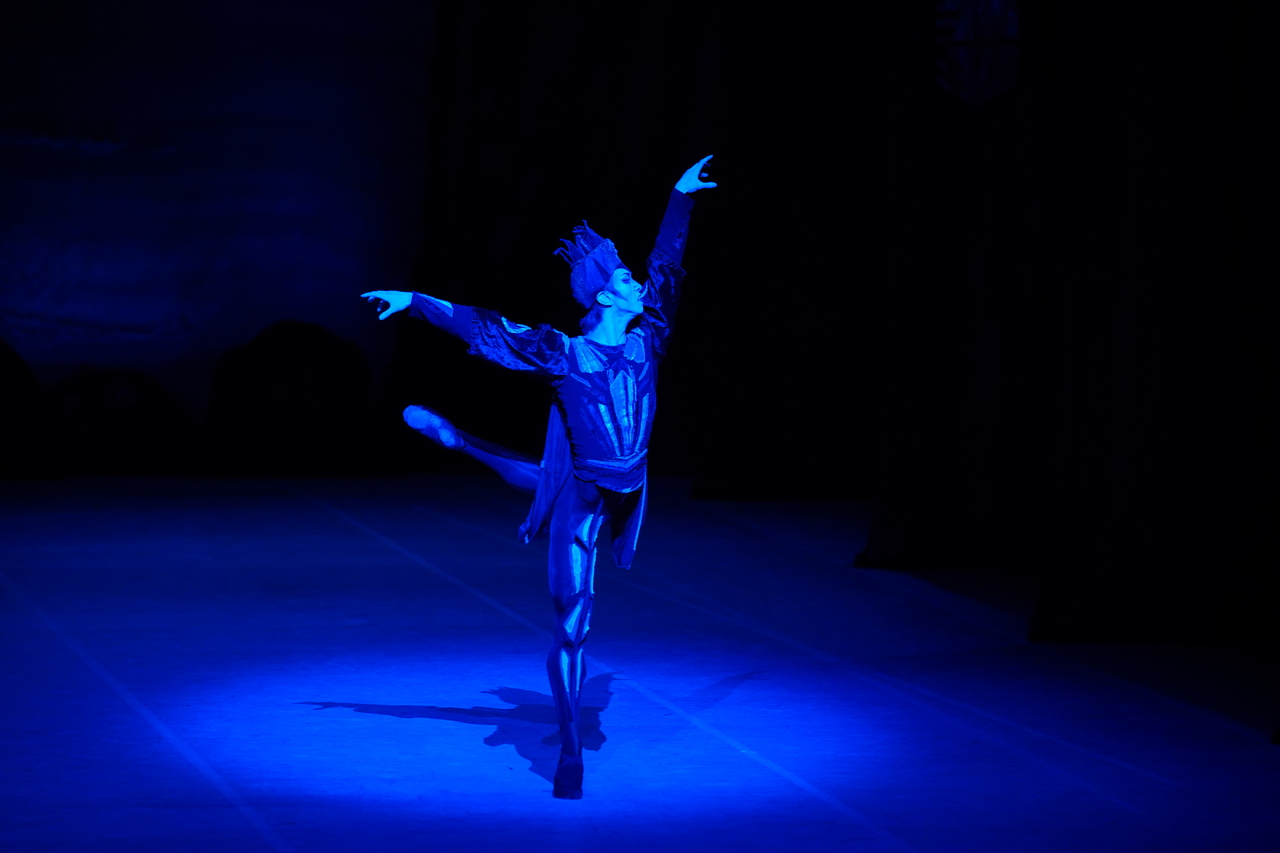
Rothbart, by contrast, required an entirely different approach. Often interpreted as an owl-like sorcerer, the role departs from classical vocabulary, demanding unfamiliar shapes and dynamics. Yang expanded everything: facial expression, scale, height and direction.
“I paid a lot of attention to expression. I wanted something that doesn’t feel entirely human,” he said. “And I try to use a wide range of levels — lower when I sit, higher when I stand. The arms grow large, then suddenly close in, like wings wrapping around the body.”
Despite their opposition, the two roles often share the same stage, and sometimes similar movement set to the same music. At first, that overlap caused confusion. “There were moments I mixed them up. I’d be about to go on as Rothbart and think like the prince, or the other way around.”
But over time, the doubling became an advantage. Entering as Rothbart, he knows exactly what Siegfried has just experienced — what he feels, what he believes, where he stands in the story.
“Performing both roles, you enter the scene already aware of the emotional context, which allows for a deeper immersion and a fuller understanding of the characters,” Yang said.
For Yang, that deepening is the greatest reward.
“I feel I’ve come to understand ballet and dance itself more deeply. The more I perform, the more I see what I hadn’t noticed before and the more I want to improve.”
At the heart of that transformation is a single emotion, which is the very reason he continues to dance. Performing both roles over and over, it is the same emotion Siegfried first encounters on the lakeshore and the one Rothbart seeks to manipulate.
“In the end, I think it all comes back to love,” said Yang. “When you add up everything, the good and the bad, you feel so many emotions doing ballet. If I had to put it into one word, I would always come back to love. Otherwise, I don’t think I could keep doing it.”
hwangdh@heraldcorp.com