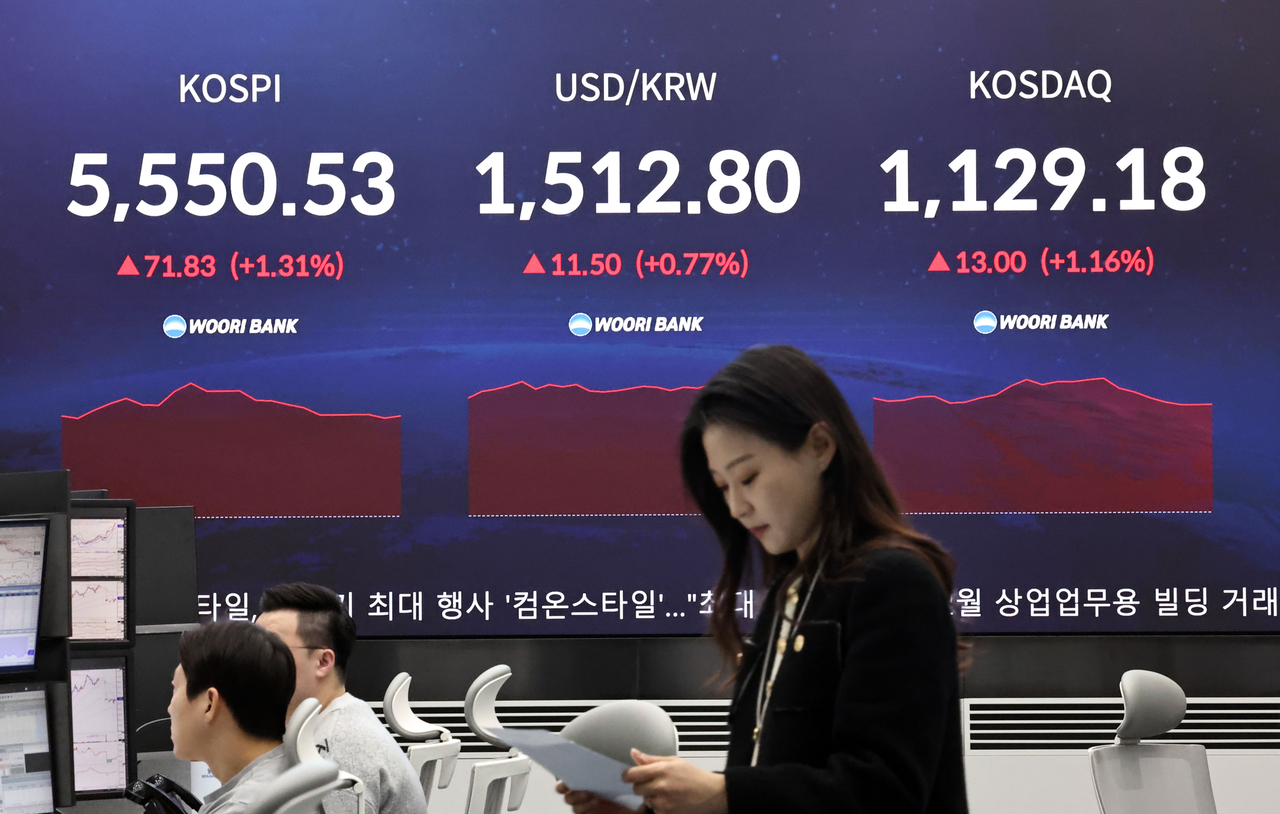
South Koreans opened nearly 60,000 Reshoring Investment Accounts in the first week of the government’s push to bring overseas investment back home, but actual inflows have lagged as investors remain cautious amid market volatility.
Accounts opened at the country’s 10 biggest securities brokerages by equity capital totaled about 57,000 as of the end of March, local reports showed Thursday. Some of the larger firms had attracted more than 10,000 accounts each in a little over a week after the program's March 23 launch.
The tax-incentivized program is part of the government's broader effort to draw retail money out of overseas equities, especially US stocks, which officials have linked to the won's weakness against the dollar.
Capital gains on overseas stock investments are taxed at 22 percent above 2.5 million won ($1,640). But gains transferred into reshoring accounts and reinvested in domestic stocks for more than a year qualify for full or partial exemptions, depending on when the overseas holdings are sold.
Despite the rapid rise in account openings, the actual return of capital remains limited. Korea Securities Depository data showed Korean retail investors' overseas stock holdings stood at $211.22 billion as of Tuesday, little changed from $213.86 billion on March 20, before the program was launched.
Analysts say the won's sharp decline and continued demand for dollar assets are making investors reluctant to bring money home.
"Persistent safe-haven demand, reinforced by external risks such as a prolonged US-Iran war, serves as a factor constraining the RIA's effect in bringing capital back home," KB Securities analyst Lim Jung-eun said. "Market sentiment signals that demand for US equities, or dollar-denominated assets regarded as relative safe havens, is unlikely to weaken soon, making it difficult to judge the policy's actual effectiveness at this stage."
The won's average exchange rate reached 1,489.3 per dollar in March, the fourth-weakest level on record and even weaker than in March 1998 during the Asian financial crisis. It opened Thursday at 1,512.2 per dollar, about 5 percent weaker than at the start of the year.
Others have also pointed to the prolonged slump in US markets, which reduces investors’ incentive to sell at a loss and blunts the appeal of tax breaks when gains are limited. KSD data showed that despite $1.7 billion in net buying of US equities, Korean individual investors’ total holdings in the asset class fell by nearly $9.8 billion, suggesting market losses more than offset fresh purchases.
jwc@heraldcorp.com