Tax incentives aim to curb dollar demand, ease won pressure, though safe-haven appeal remains key variable
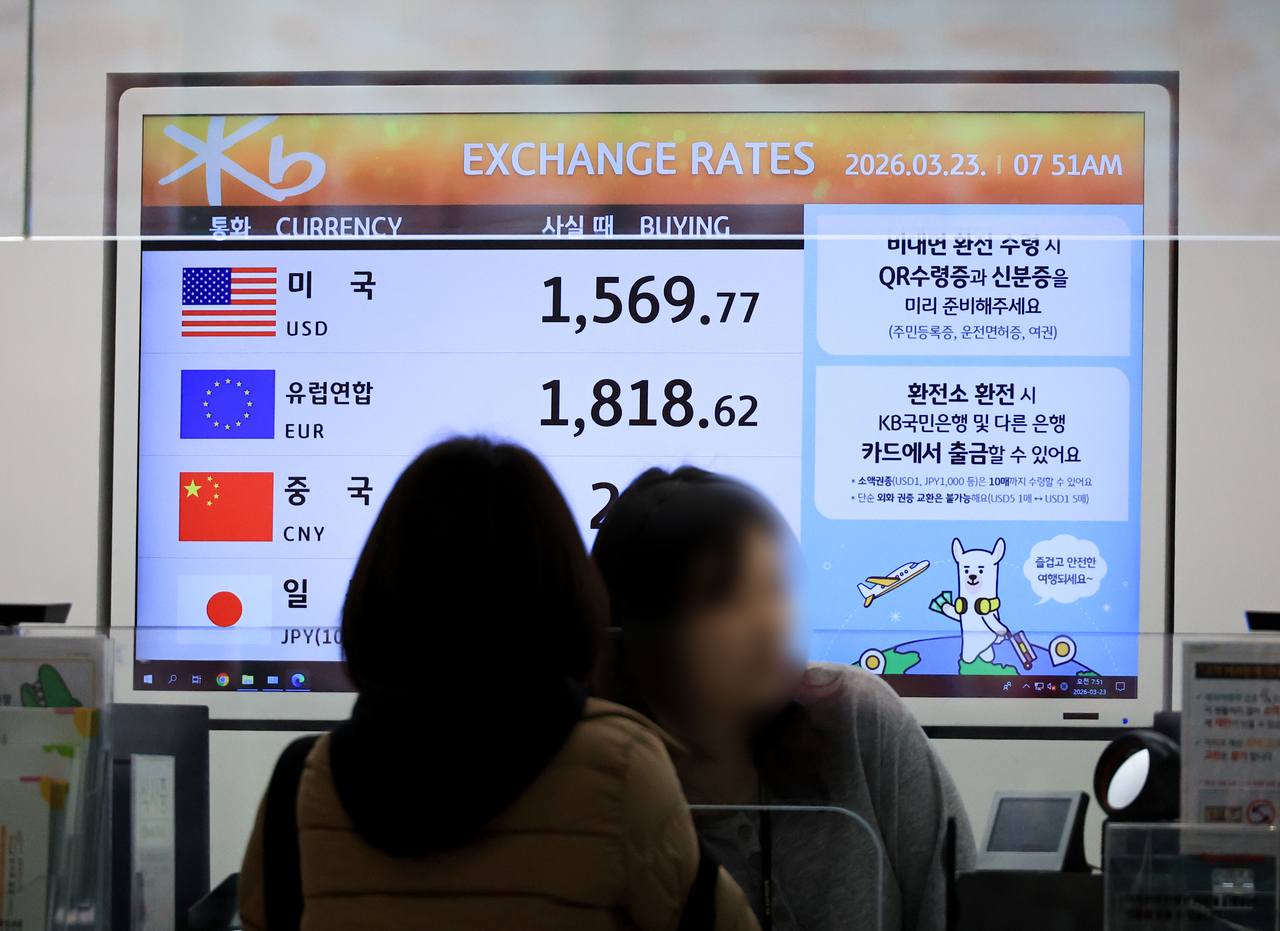
Amid the South Korean won hitting a 17-year low, the country has introduced tax-incentivized reshoring accounts to lure offshore stock investments back into domestic equities, aiming to curb demand for overseas buying and reshape currency flows.
Major securities firms rolled out Reshoring Investment Accounts on Monday, as part of the government’s initiative to encourage retail investors to scale back overseas investments, particularly in US equities, which have been identified as a key source of dollar demand and downward pressure on the Korean won.
Though overseas stock investments are subject to a 22 percent capital gains tax on profits exceeding 2.5 million won ($1,650), the new scheme allows investors to receive tax benefits if they sell overseas holdings worth 50 million won or under and reinvest the proceeds into domestic equities.
Capital gains tax will be 100 percent exempt for sales made by the end of May, 80 percent by the end of July and 50 percent by year-end.
Overseas stock sales made through the reshoring account, when converted to won and held for at least a year, qualify for the tax deduction.
If investors repurchase overseas stocks through other accounts within the same year, the amount of tax deduction will be reduced accordingly.
With the launch of the new accounts, brokerage firms have rolled out promotional campaigns, offering incentives such as discounted trading fees, lower currency conversion costs and investment vouchers to attract investors.
Adding to the momentum, local investors’ appetite for US stocks has begun to cool this month, as the won has recently weakened past the 1,500-per-dollar level.
Korean investors’ net purchases of US stocks totaled just $390.86 million from the start of March through Friday, according to the Korea Securities Depository. This marks a sharp drop from $3.95 billion in February and $5 billion in January.
As of Thursday, holdings of US equities stood at $159.6 billion, down from the record high of $168 billion in January. It marked the first decline since March last year.
Market analysts say the rollout of RIAs could help ease pressure on the won by triggering dollar-selling flows.
“In the case of Indonesia, which implemented a similar measure in 2016, about 12 percent of offshore assets were repatriated,” said Yeom Dong-chan, an analyst at Korea Investment & Securities.
In 2016, Indonesia launched the Tax Amnesty program to encourage capital repatriation by offering reduced tax rates on declared offshore assets, with even greater tax incentives for funds brought back and invested domestically.
He noted that the Indonesian rupiah strengthened during the period despite its broader long-term depreciation.
Lim Jung-eun, an analyst at KB Securities, cautioned that it remains too early to gauge the policy’s effectiveness, as the prolonged US-Iran conflict continues to sustain demand for the greenback, a key safe-haven asset.
“The market projects the demand for US equities, seen as relatively safe dollar-denominated assets, is unlikely to weaken in the near term,” Lim said.
Yet she added that the RIA goes beyond offering a tax benefit, but represents a turning point for reshaping the domestic market’s long-term supply and demand dynamics,
"The RIA’s significance lies not just in providing a short-term tax incentive, but in its potential as a structural tool to influence the direction of capital flows," she noted.
silverstar@heraldcorp.com