AI seen as key to tackling aging, chronic disease challenges
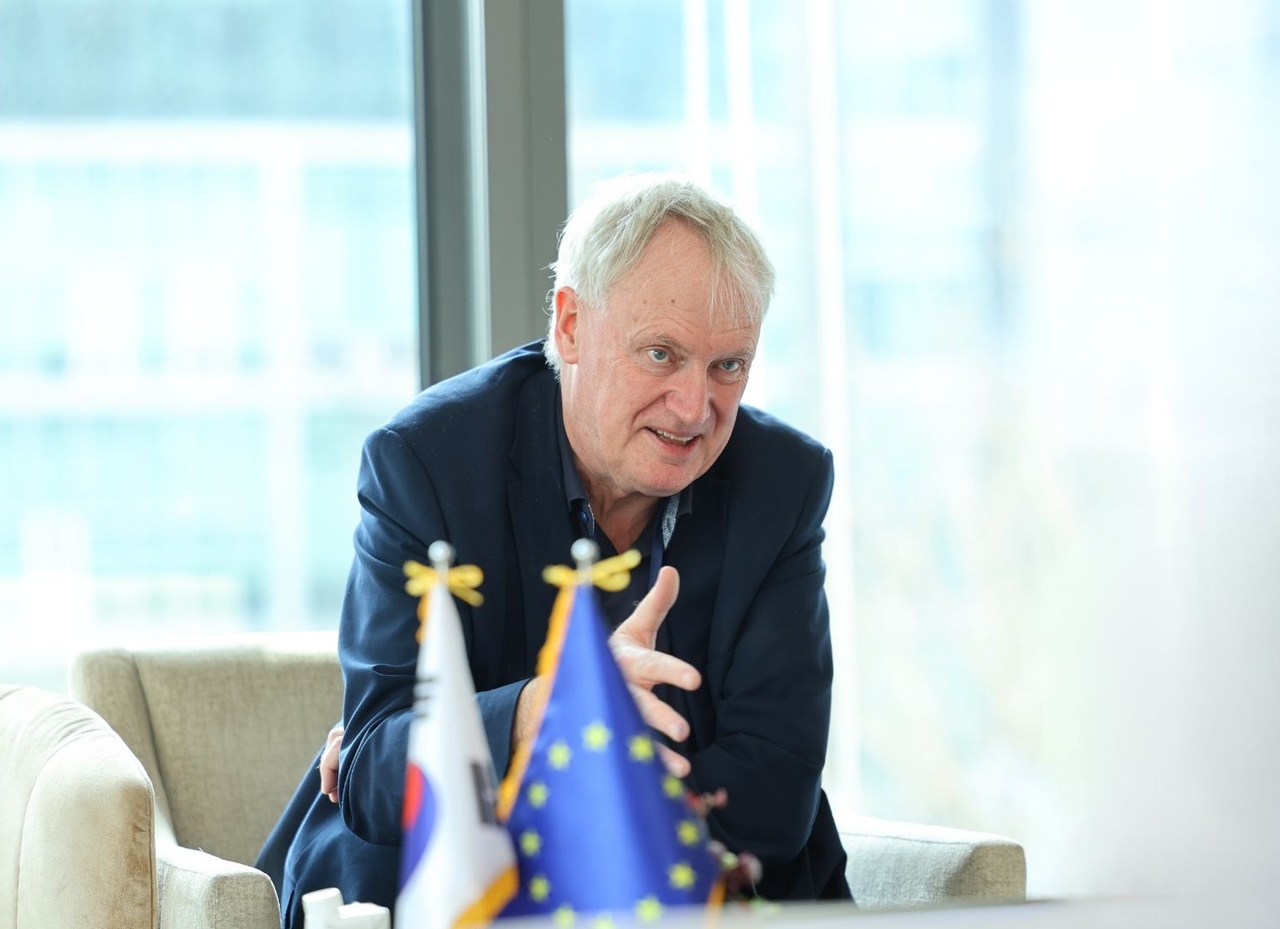
Artificial intelligence could redefine how diseases are diagnosed and treated — and Europe wants South Korea as a key partner in that shift.
The European Union is stepping up efforts to deepen research ties with Korea, with AI emerging as the most promising area of collaboration, according to Luke O’Neill, a member of the scientific council at the European Research Council and a biochemist and immunologist at Trinity College Dublin.
“AI has to be the big one,” he said in an interview with The Korea Herald in Seoul on Tuesday. “It could help diagnose disease faster and speed up drug discovery.”
Interest in AI collaboration is growing as the global research landscape begins to shift, with uncertainty over science funding in the US creating new openings for Europe. “The US used to be the place to go,” he said. “Now that the US has stepped back a bit, that’s an opportunity for Europe.”
Europe is now trying to attract more global talent, with expanded access to Horizon Europe — the world's largest multilateral research and innovation funding program — at the center of that effort.
Korea’s participation as an associated member has opened the door for closer collaboration, allowing Korean researchers to take part in EU-funded projects.
Korea joined Horizon Europe in January last year, becoming the first Asian country and the third from outside Europe to do so. It participates in joint research programs aimed at tackling global challenges and strengthening industrial competitiveness.
For O’Neill, AI is not just another research field but a tool that could reshape how scientists approach complex biological systems.
“Disease is very, very complex,” he said. “And now with AI, you'll really be able to assess it more closely.”
He likened the impact of AI to earlier scientific breakthroughs that changed how researchers observe and understand the natural world. “It’s a bit like when the microscope was invented and we could see germs for the first time,” he said. “Without AI, we may not discover a cure for diseases like Alzheimer’s.”
He pointed to medical research as the area where AI could deliver the most immediate benefits, particularly in improving diagnosis and predicting how patients respond to treatment.
“If human health benefits from AI, people will roll in behind it,” he said.
Beyond AI, O’Neill said Europe and Korea share common challenges, including aging populations and a rising burden of chronic disease, which make collaboration increasingly important.
There are still practical hurdles. Funding systems can be complex, particularly for researchers working across borders. “We’ve got to make it easier for people to apply,” he said.
Still, the basic principle remains straightforward. “All you need is a good idea,” he said. “Bring us your very best idea.”
His advice to young Korean researchers was simple. “Go for it,” he said. “If you want to develop your career as an outstanding scientist, Europe is a great option.”
yeeun@heraldcorp.com