Chinese visitors made up the largest share, followed by Taiwanese, Filipino and Indonesian nationals
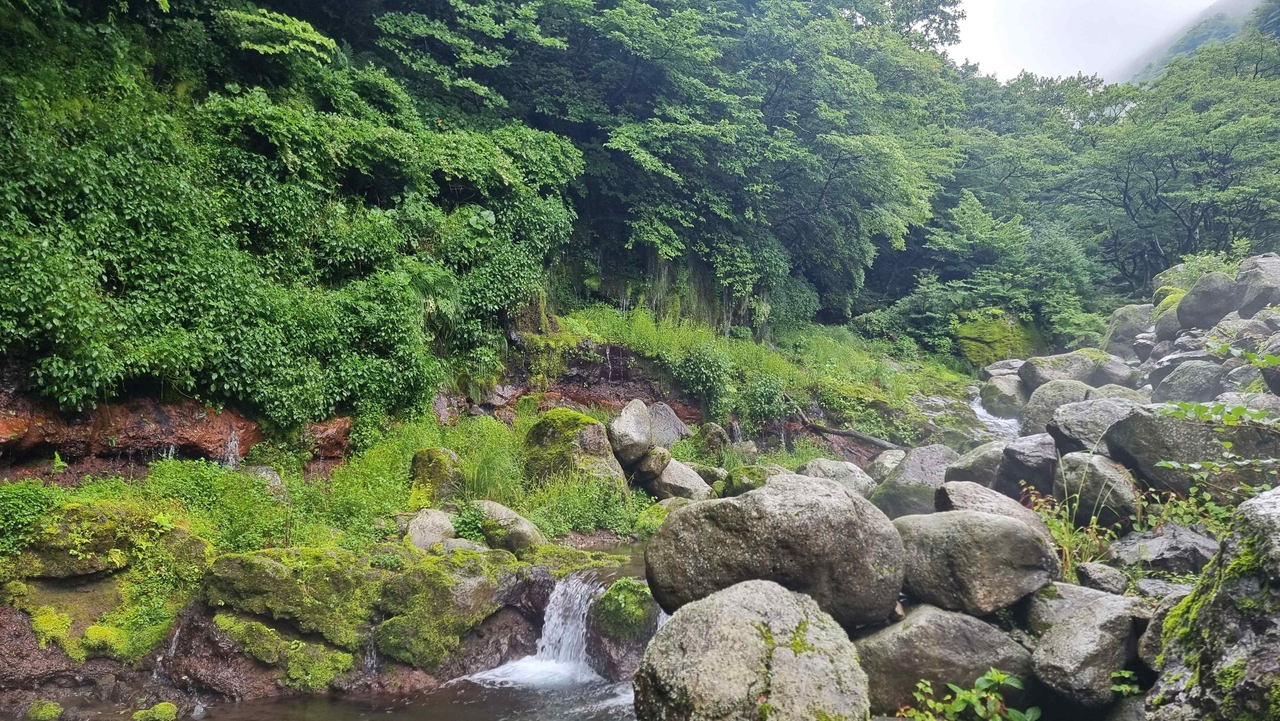
Foreign visits to South Korea’s national parks exceeded 2 million last year, reflecting steady overseas demand for the country’s natural attractions, with many drawn to the iconic peak of Hallasan.
The Korea National Park Service said Wednesday that 2.05 million foreigners visited national parks in 2025, including 1.13 million overseas tourists and about 920,000 foreign residents.
Visits were most concentrated in autumn, followed by spring and summer, while winter saw the lowest turnout, the agency said.
Hallasan National Park on Jeju Island ranked as the most visited site, attracting 271,443 foreign visitors. The mountain, South Korea’s highest, remains a major destination for trekking and sightseeing. Total visits to Hallasan reached 903,999 last year.
Dadohaehaesang National Park, the country’s largest, came next with 141,190 foreign visitors. Spanning coastal areas and nearly 1,700 islands in South Jeolla Province, it is known for its marine environment and scenic views.
Other popular sites included Taeanhaean National Park (134,562) and Hallyeohaesang National Marine Park, both covering coastal and island regions. Among mountain parks, Seoraksan National Park in Gangwon Province drew 111,731 foreign visitors, followed by Bukhansan National Park in Seoul (57,315).
Gyeongju National Park in North Gyeongsang Province recorded 102,166 foreign visitors. Unlike other parks, it centers on historical heritage, as Gyeongju was the capital of the ancient Silla Kingdom (57 B.C. to A.D. 935). The Gyeongju Historic Areas have been listed as a UNESCO World Heritage site since 2000.
By nationality, Chinese visitors accounted for the largest share at around 250,000, or 21.9 percent. They were followed by Taiwanese (130,000), Filipino (90,000), Indonesian (80,000), American (60,000) and Japanese (50,000) visitors.
The park service said it plans to expand services for foreign visitors, including tour programs, short-form video promotions and AI-based multilingual guidance.
“Foreign visits to national parks show that Korea’s natural environment is a key factor in its tourism competitiveness,” KNPS Chairman Joo Dae-young said. “With more precise data analysis, we will expand programs and guidance so the parks can grow alongside surrounding regions.”
minsikyoon@heraldcorp.com


![[Graphic News] Seoul ranks 4th among Asia’s most revisited destinations](https://wimg.heraldcorp.com/news/cms/2026/10/01/news-p.v1.20261001.4ac504a054534238aa1997420394b832_T1.gif?type=h&h=800)