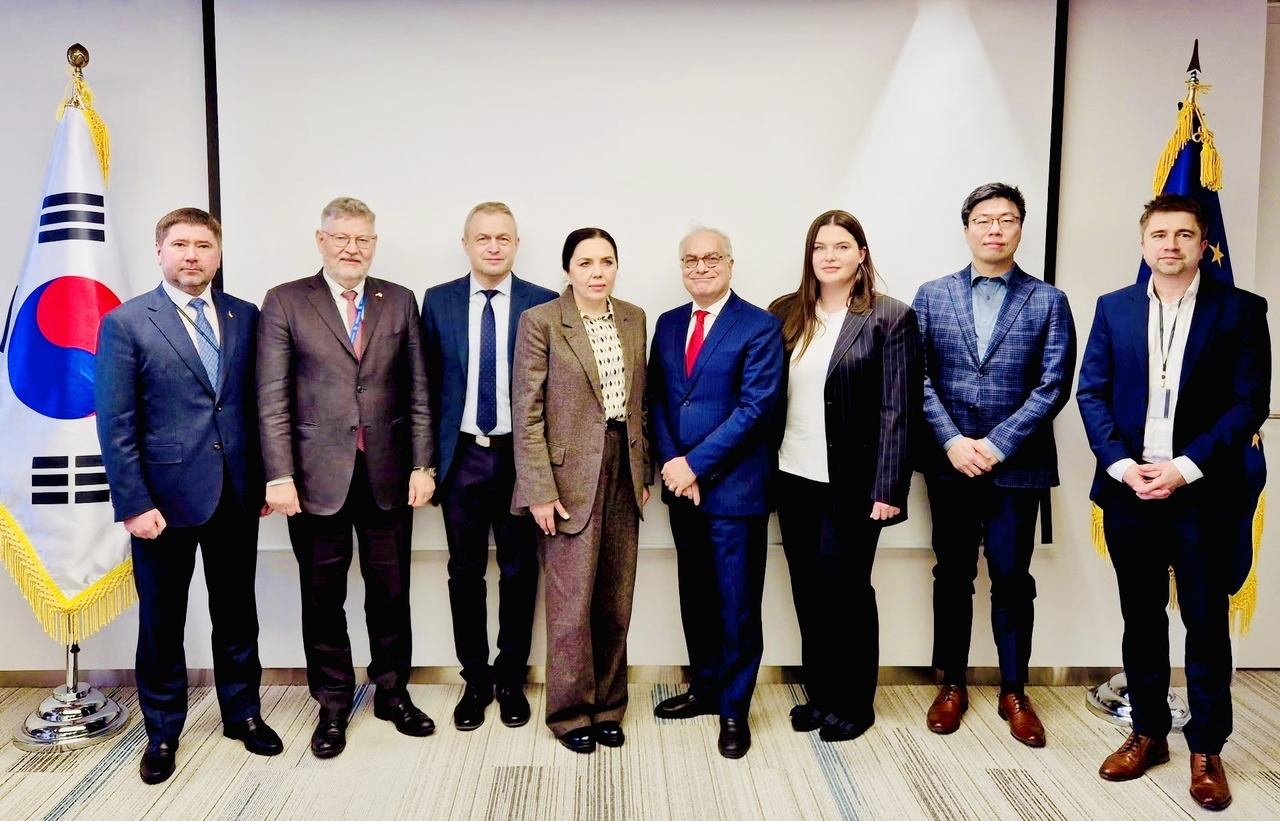
Diplomats and experts in Seoul warned that war in Ukraine is reshaping the global security landscape and raising new risks for the Korean Peninsula, as military ties deepen between Russia and North Korea, at a panel discussion Friday.
They suggested that without closer cooperation between European and Asian democracies such as South Korea, responding to security threats will become increasingly difficult.
Russia's invasion of Ukraine has evolved into a broader geopolitical confrontation, with North Korea supplying weapons and manpower to Russia, while China provides economic and diplomatic backing and Iran contributes drone technology.
These alignments, according to diplomats and experts from Ukraine, the EU and Germany, are accelerating the erosion of international norms.
North Korea is reported to have generated billions from military-related activities while supplying troops, weapons and millions of artillery shells to Russia, supporting its war effort in Ukraine.
The discussion also pointed to shifting global dynamics, including uncertainty surrounding US policy under Donald Trump, which experts argued has focused more on pressuring Ukraine than Russia in peace efforts.
Panelists warned that negotiations could be used by Russia as a tactic to gain time rather than reach a real peace agreement.
"This war is not only about Ukraine, but about whether international law still matters," highlighted Andrii Vieshkin, charge d’affaires at the Ukraine Embassy in Seoul, reiterating Ukraine’s resilience over more than four years.
Vieshkin stressed that while Russia has failed to achieve its strategic objectives, the war remains "brutal, costly and deeply destabilizing," with continued attacks on Ukrainian cities.
He also cautioned that failure to hold aggression accountable could set dangerous precedents globally, including in the Indo-Pacific.
"Security in Europe is closely linked to the Indo-Pacific," he said, reaffirming the bloc’s push for a "just and lasting peace," Ugo Astuto, EU ambassador to Korea, underscored in his remarks echoing interconnected regional security.
"The Russia-North Korea military nexus, in violation of multiple UN resolutions, is also a very serious issue," he said, citing respect for sovereignty, territorial integrity, and the UN Charter as essential for global security.
"The time to end the war is now," Astuto concluded.
According to Joern Beissert, deputy ambassador of the German Embassy in Seoul, growing North Korea-Russia military ties are a concern for the Korean Peninsula.
Beissert said that Germany has sent 55 billion euros ($63.5 billion) of military support and 39 billion euros of civilian support to Ukraine since 2022, and he expects continued cooperation from partners such as South Korea.
"Support for Ukraine also is a contribution to more security on the Korean Peninsula and sends a signal far beyond," he said.
"Otherwise, Russia, North Korea and other countries may draw their lessons from inaction and disunity," Beissert warned, without further elaboration.
Panelists cautioned that the war is transforming modern warfare through drone-centric strategies and rapid-response combat, with Ukraine showing significant innovation, and saw Russia-North Korea ties as a "game-changer" that could alter the strategic balance in East Asia.
sanjaykumar@heraldcorp.com