Seoul's most storied landmark has hosted royal processions, street protests and candlelight vigils. On Saturday, it hosts a historic K-pop comeback.
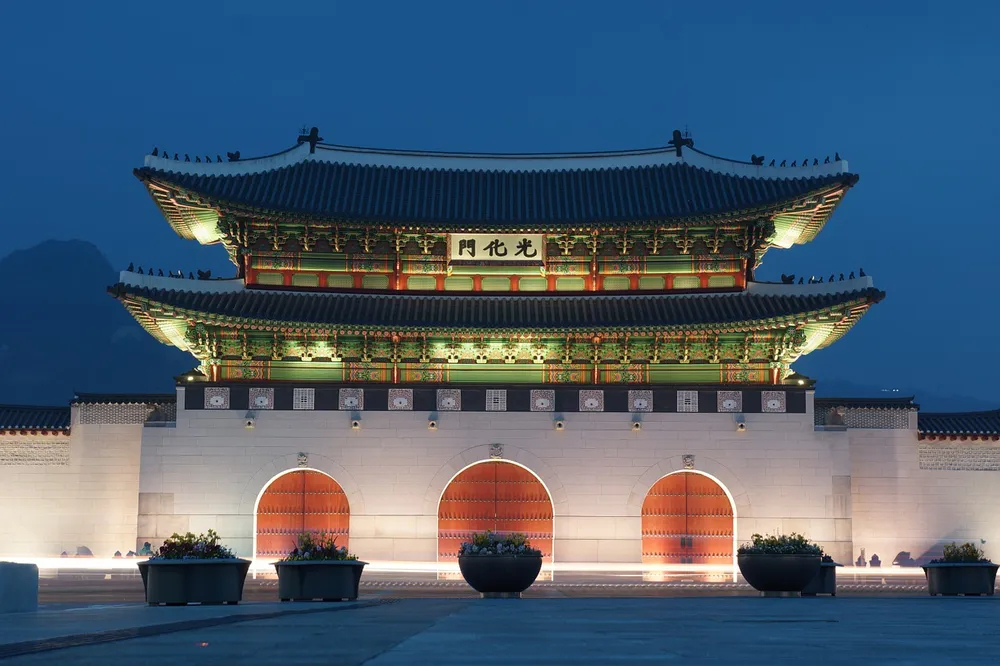
Sometime Saturday, you may find yourself watching a livestream of seven singers performing on a massive outdoor stage in central Seoul, framed by a towering wooden gate and the sweeping tiled rooftops of a palace behind it.
You might wonder: What, exactly, is that thing?
What you're seeing is Gwanghwamun, historically the main entrance to Gyeongbokgung — the grand royal palace of the Joseon era, which ruled Korea from 1392 until the Japanese annexation of 1910.
It is, by most reasonable measures, the symbolic heart of the country. Saturday evening, it serves as the backdrop for BTS's long-awaited return — the choice is not incidental.
The gate dates to 1395, and was constructed in the founding years of Joseon alongside Gyeongbokgung. Its name translates roughly as "spreading the king's virtue far and wide" — a suitably grand mandate for what was meant to be the entrance to the country's grandest palace.
The area south of the gate was not empty, either. Running along what is now a dense stretch of downtown Seoul was Yukjo Street, where the central organs of government conducted official business right at the palace's doorstep.
The palace, however, spent much of the centuries since getting knocked around. The original structure burned in 1592, when Japanese forces invaded during the Imjin War, and sat in ruins for nearly 300 years before being rebuilt in 1865.
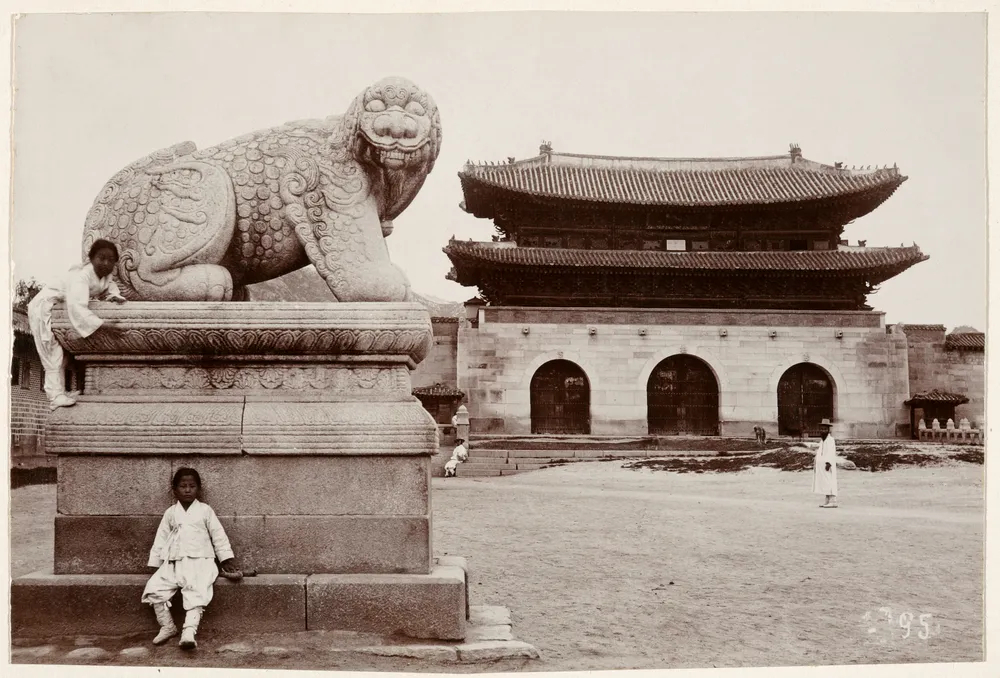
During the colonial period, the Japanese administration relocated the gate in 1927 to clear the sightlines for their new Government-General of Joseon building.
During the Korean War (1950-53), the wooden superstructure burned again, leaving only a stone base. The 1968 reconstruction that followed was a concrete replica, misaligned and bearing a nameplate in the calligraphy of then-President Park Chung-hee.
A proper restoration, completed in 2010, finally returned the gate to its original alignment and materials. A further restoration in 2023 brought the woldae — the ceremonial platform in front of the gate — back, along with a new nameplate in gold and black. Gwanghwamun finally looked something close to its Joseon form again.
Today, it anchors one of Seoul's busiest intersections, hemmed in on all sides by glass office towers and government ministries.
Gwanghwamun Square, the broad pedestrian plaza stretching south from the gate toward City Hall, is a breathtaking open stretch: an urban park dropped into the middle of one of the city's widest thoroughfares, bookended by statues of Admiral Yi Sun-sin and King Sejong, surrounded by traffic that barely stops.
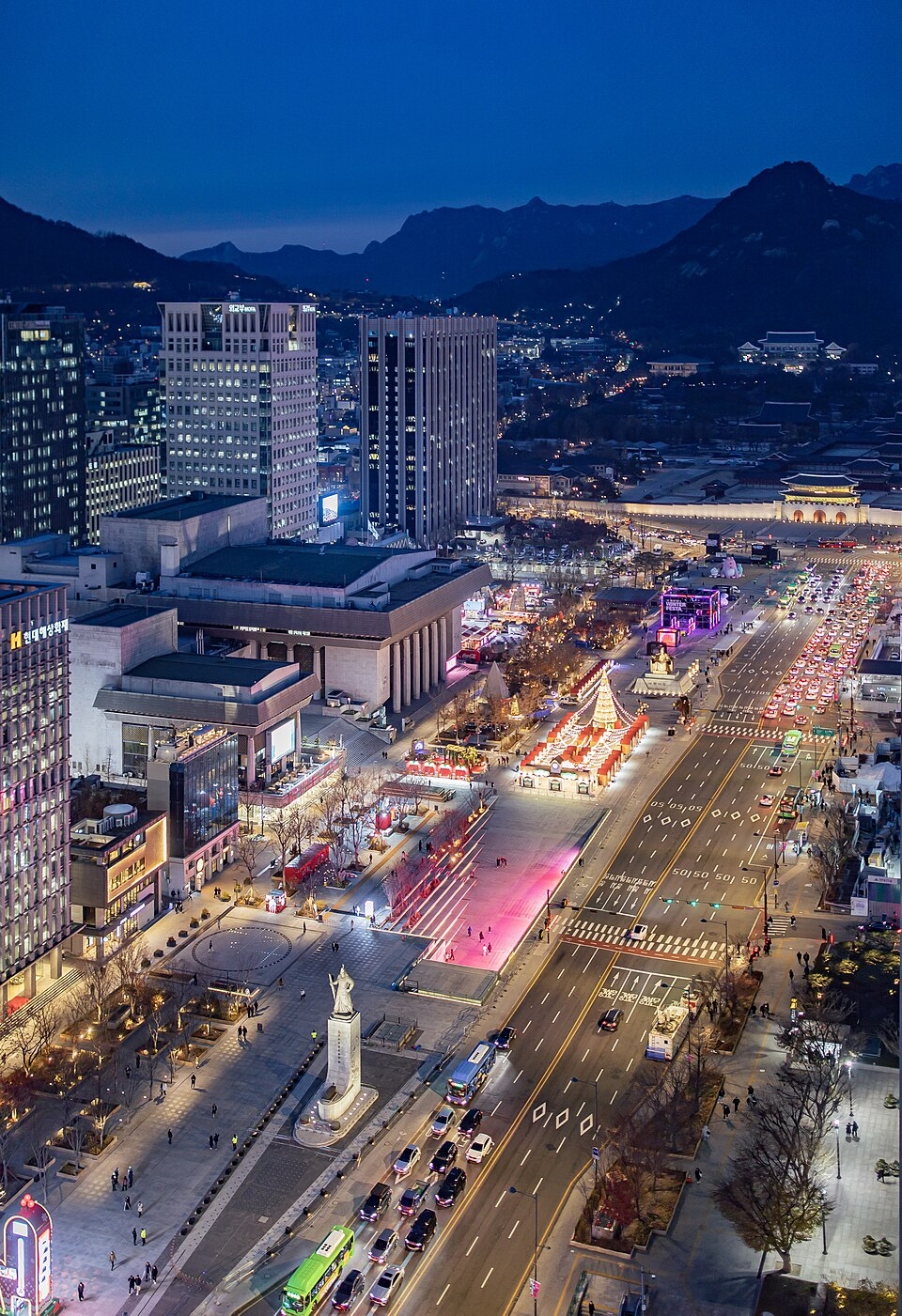
The square has become a cultural and political hub of Seoul. It has hosted World Cup celebrations and various political protests, including, most recently, mass demonstrations calling for the impeachment of two presidents — Park Geun-hye in 2016 and Yoon Suk Yeol in 2024 — each drawing hundreds of thousands.
On a normal day, commuters and tourists traverse the square by the tens of thousands. Saturday is something else entirely.
An estimated 260,000 people are expected in the area, with BTS set to emerge from inside Gyeongbokgung, pass through the gate, and make their way to a stage on the northern end of the square. The path retraces, at least symbolically, a procession that the Joseon kings once made in the other direction.
moonkihoon@heraldcorp.com

![[Graphic News] Gen Z turns to AI for personal advice](https://wimg.heraldcorp.com/news/cms/2026/10/07/news-p.v1.20261007.3c930a14429e439cb4afe08471621608_T1.gif?type=h&h=800)