South Korean automaker Kia plans to roll out 13 electric vehicle models by 2030 and broaden its manufacturing presence across major global markets, according to the company’s CEO on Friday.
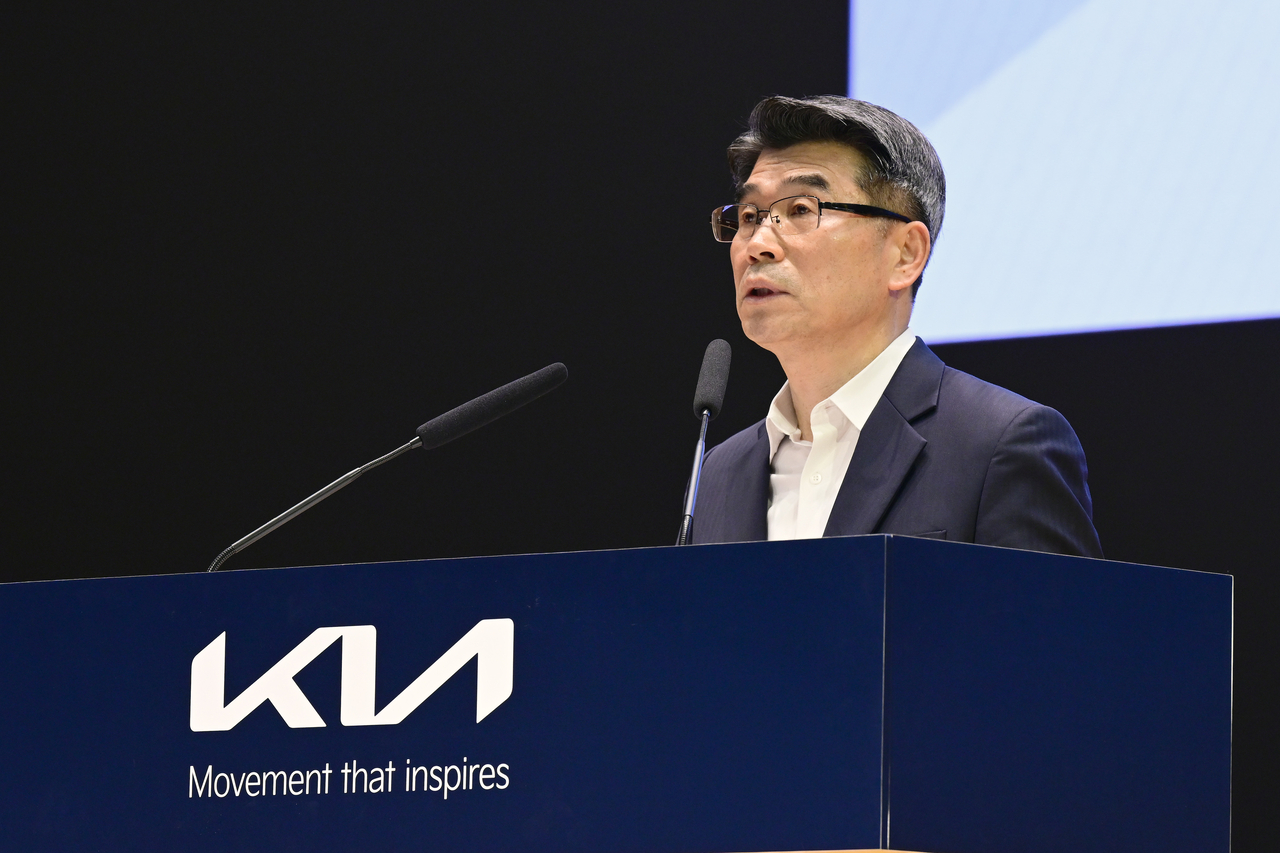
Speaking at Kia’s annual general meeting in Seoul, President and CEO Song Ho-sung outlined the carmaker’s vision to lead the mass adoption of EVs, and overcome the industry’s current demand slowdown, often referred to as the “EV chasm.” The company's three key strategies include strengthening its EV lineup, expanding charging infrastructure and diversifying its manufacturing base across global markets.
“We will strengthen our EV competitiveness by launching a total of 13 EV models by 2030 that will meet diverse customer needs and enhance product competitiveness,” Song told shareholders.
He also added that Kia will diversify EV production bases beyond the Korea plant, which is a global hub for EV development and manufacturing, to better respond to specific characteristics of key markets in Europe, the US and emerging economies.
In addition to its EV push, Kia is betting on “Platform Beyond Vehicle” or PBV, its modular electric vehicle platform built on a flexible chassis that allows for a wide range of applications, including passenger transport, logistics, retail and leisure.
Song said Kia will expand its PBV lineup, beyond the PV5 launched last year, with the PV7 set for 2027 and the PV9 scheduled for 2029. The vehicles will be produced at the company’s dedicated PBV facilities, including the EVO Plant in Hwaseong, Gyeonggi Province.
Song said Kia will work with partners to develop a range of customized models, including open-bed trucks, cargo vans and camping vehicles.
Song also discussed Kia’s plan to introduce software-defined vehicles by 2027, integrating artificial intelligence-based user experiences and connectivity into its models.
Kia will collaborate with Motional, Hyundai Motor Group’s autonomous driving joint venture, as well as software affiliate 42dot, to secure key self-driving capabilities.
Despite prolonged uncertainty amid US tariffs and geopolitical issues, Song reaffirmed the company’s commitment to electrification.
“Upcoming geopolitical shifts and regulatory barriers will also serve as opportunities for Kia to expand its market position, given its competitiveness in eco-friendly vehicle models and its capabilities to restructure its business and production systems flexibly,” said Song.
sahn@heraldcorp.com