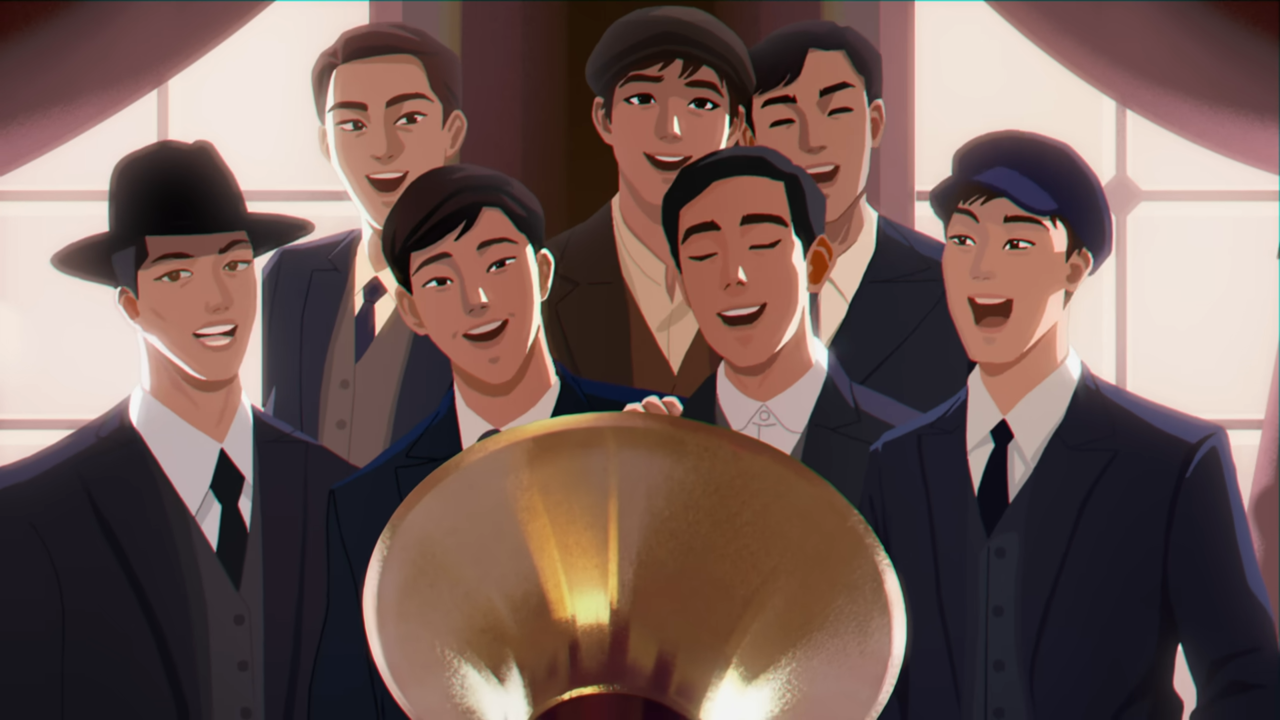
Howard University is at the center of a heated debate after BTS featured the historically Black college in the teaser for its upcoming album, drawing criticism over the animation's depiction of race and whitewashing.
The one-minute video for “Arirang” was released March 13 on the group’s official YouTube channel.
The teaser opens with the seven BTS members gathered around a gramophone. The scene shifts to 1896 at Howard University, where seven Korean students are depicted recording “Arirang.” The narrative continues through BTS’ 2013 debut, tracing how the song’s resonance carries into their global fandom today.
The episode draws on a May 8, 1896, article in The Washington Post, “Seven Koreans at Howard,” which described young men from elite Korean families who unexpectedly traveled to the United States to study.
At the time, opportunities for international students in the US were limited, as many Northern universities maintained informal racial barriers. Howard University, founded in 1867 as a Historically Black College and University (HBCU), admitted students who faced discrimination elsewhere.
That same summer, American ethnologist Alice C. Fletcher invited several of the students to her Washington home, where they produced what are believed to be the first known recordings of Korean voices and music in the United States.
According to the Library of Congress, Ahn Jeong-sik, Lee Hee-cheol and Son Rong recorded six wax cylinders over two days, including “Love Song: Ar-ra-rang,” the earliest known recording of “Arirang,” often regarded as Korea’s unofficial national anthem.
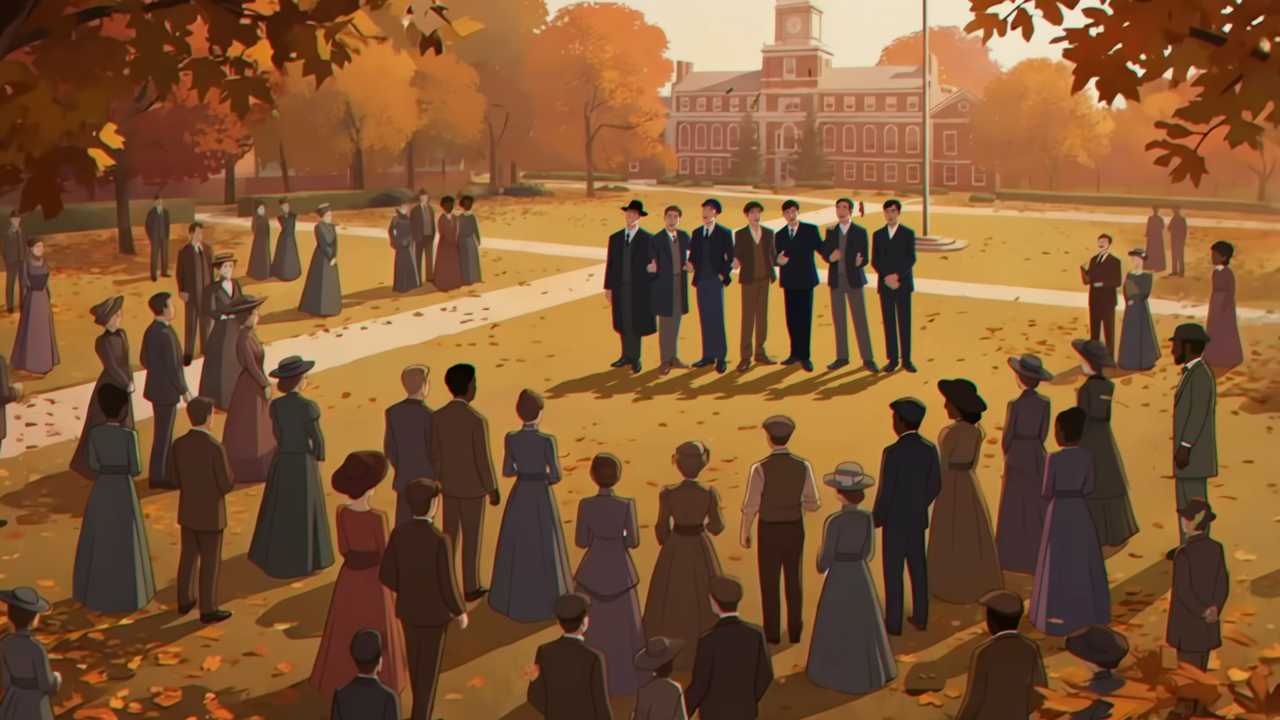
The controversy centers on how Howard University is depicted, particularly in campus and audience scenes. In the animation, most figures appear white, with Black figures pushed into the background.
The portrayal has drawn backlash on social media: some users say racism is a recurring problem in K-pop, while others accuse the genre of ignoring Black supporters. The video has also been condemned for distorting history.
Others have defended the teaser, emphasizing that the video is a creative animation, not a documentary. Users have also noted that the full album concept has yet to be revealed and argue that responsibility lies with the production team rather than BTS.
A disclaimer in the video states that the work is "a modern reimagining" inspired by historical records that "deviates from actual historical events and does not serve as a formal evaluation or interpretation of any historical event or person."
hwangdh@heraldcorp.com

![[Graphic News] S. Korea ranks 9th in noodle consumption](https://wimg.heraldcorp.com/news/cms/2026/09/29/news-p.v1.20260929.e3945338add94d57ab3f00f8e6781416_T1.gif?type=h&h=800)