Lack of clarity in prolabor legislation dims investment outlook even as business cooperation thrives, ECCK chair says
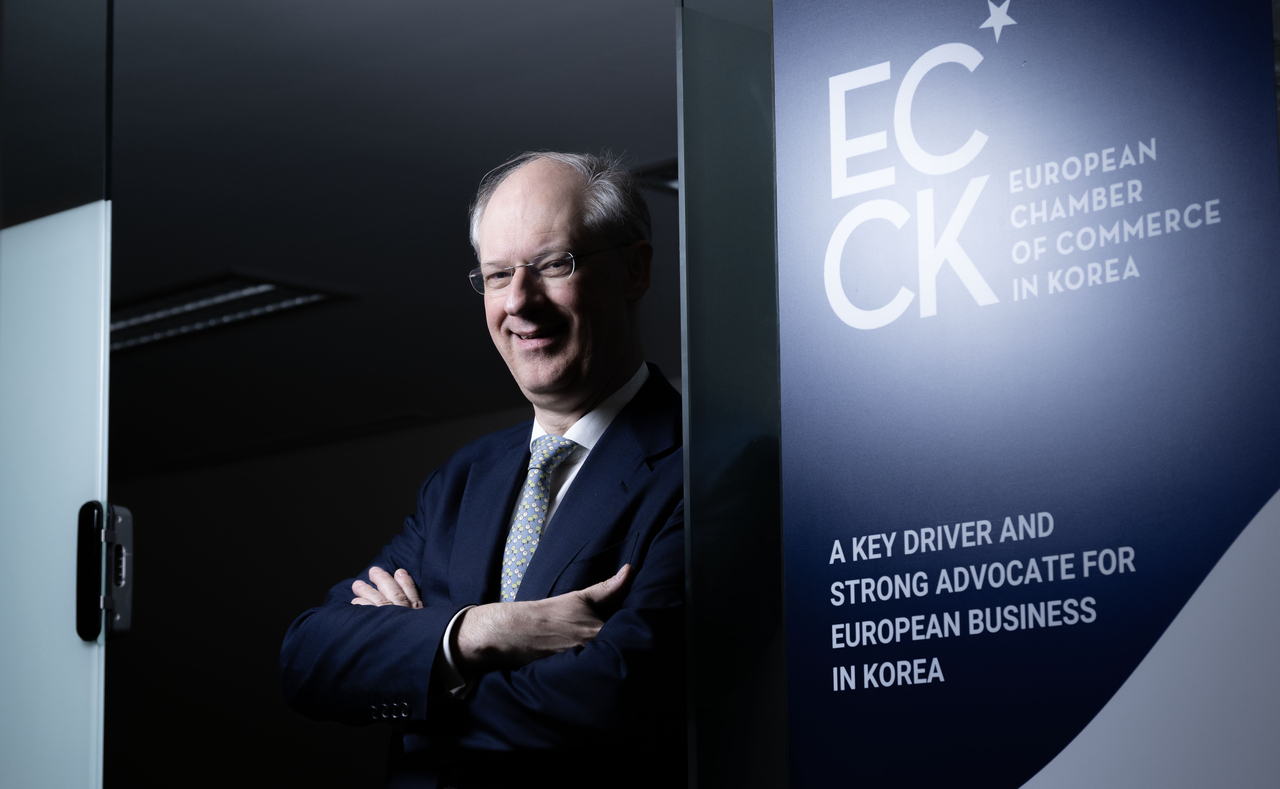
A single date — March 10th — may come to redefine the landscape of South Korea's labor relations, when the amended Trade Union and Labor Relations Adjustment Act, known as the "Yellow Envelope" bill, took effect.
For the European Chamber of Commerce in Korea, the law's enactment confirmed what it had long feared: collective bargaining rights now extend beyond a direct employment contract, reordering how companies must think about their entire supply chain.
“The uncertainty regarding the new law could lead to unnecessary labor disputes being brought into the judicial sphere," said ECCK Chairperson Philippe Van Hoof during an interview with The Korea Herald on Tuesday. “It is potentially slowing down decision-making and increasing legal risk.”
The ECCK, representing around 400 companies from the European Union, European Free Trade Association and the United Kingdom, warned that such unpredictability could chill long-term investment decisions.
In particular, Van Hoof flagged the ambiguity surrounding who qualifies as an "employer" for collective bargaining, as broad obligations across layered networks of contracts and subcontractors create legal exposure that is hard to predict.
"Value chain management becomes very difficult if you do not know who can be an employer or not,” he said. The ECCK raised these concerns with the relevant ministry as early as July 2025, and continues to press for practical guidance, without which companies will be left operating without a reliable map.
Another source of unease stems from two legislative frameworks moving at uneven speeds. Amendments to the Commercial Act have tightened directors' legal responsibilities, yet parallel legislation governing breach of trust liabilities, which would narrow their broad criminal exposure, remains stalled.
"This institutional time gap creates uncertainty for corporate management," Van Hoof said, adding that a shift toward clear civil liability over broad criminal exposure would ultimately bolster Korea's appeal as an investment destination.
Van Hoof said that the Korean government has been willing to lend an ear, though practical delivery remains a bit slow.
At a ministerial roundtable in February, he shared such concerns with the ministers of industry and labor alongside other foreign chambers of commerce. Both ministers responded constructively, agreeing to establish a dedicated hotline through the two ministries, giving ECCK members a direct line to seek official interpretation when facing uncertainty in the field.
Van Hoof described the move as "a very positive signal to foreign investors seeking greater clarity and predictability." The chamber has since informed its members that the line is open, though no formal European cases have yet been submitted.
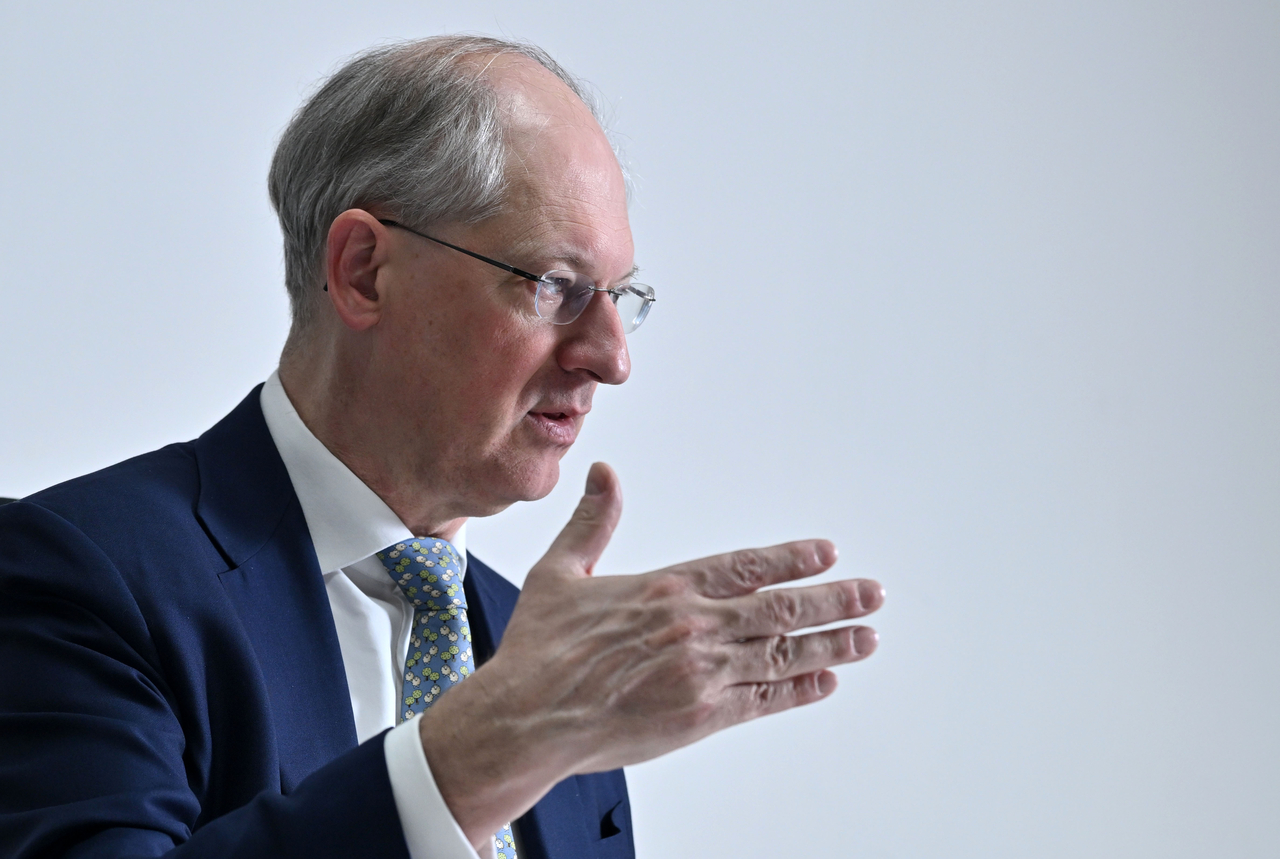
Regulatory concerns aside, the ECCK's broader assessment of Korea as a business destination is firmly favorable.
Korea's technological capabilities, world-class infrastructure and skilled workforce have made it an increasingly attractive site for European research and development operations, with EU investment stock in Korea surpassing 50 billion euros ($ 57.6 billion) in 2024 and Korean investment in Europe exceeding 40 billion euros.
The figures reflect a deepening interdependence built across 15 years of the EU-Korea Free Trade Agreement, two decades of the EFTA-Korea deal and a newly signed UK-Korea FTA, Van Hoof noted.
Van Hoof also weighed in on what would make Korea more attractive, arguing that closer alignment between domestic regulations and international standards would strengthen its appeal as an investment hub. He highlighted three areas for improvement as well in relation to youth employment: spoken English proficiency among young professionals, deeper technology exchange frameworks and early overseas management experience.
On the path forward, the ECCK sees considerable opportunity in the growing architecture of EU-Korea cooperation.
Korea recently became the first Asian country to join Horizon Europe, the EU's flagship research and innovation program, opening joint pathways in biotechnology, semiconductors and aerospace. Climate cooperation looms equally large, with the EU Green Deal and Korea's energy transition strategy converging on clean energy supply chains.
"Europe is the third way for Korea, and Korea is the third way for Europe," Van Hoof said. Fostering that relationship at every level, government and company alike, remains at the core of what the ECCK is here to do, he added.
minmin@heraldcorp.com