Medical school quota hike apparently prompting admitted students to forgo enrollment
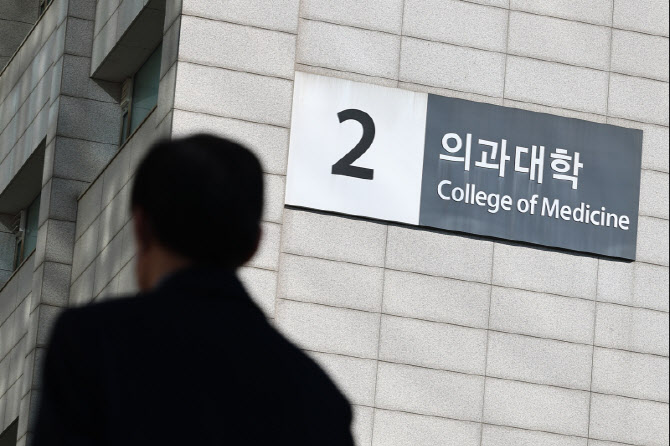
The number of unfilled freshman seats at South Korea’s top three universities has tripled over the past six years, apparently driven by continued preference for medical schools and last year’s expansion of medical school admission quotas, data showed Saturday.
According to an analysis by Jongro Academy based on the state-run Higher Education in Korea university information disclosure system, freshman vacancies at Seoul National University, Yonsei University and Korea University rose from 21 in both 2020 and 2021 to 30 in 2022, 24 in 2023, 42 in 2024 and 61 in 2025.
Vacancies refer to seats left unfilled after admitted students decline enrollment. The number of departments with unfilled seats also increased from 14 to 41 during the same period.
Among the three elite SKY universities, Korea University recorded the largest number of vacancies. A total of 43 seats remained unfilled across 25 departments, including 29 in natural science tracks and 14 in humanities programs. Vacancies were particularly notable in engineering and science-related majors: engineering, electrical and electronic engineering, biological sciences, mechanical engineering and materials science.
Seoul National University reported 13 unfilled seats across 12 departments. Of these, 10 were in natural science tracks, including the College of Nursing, the Department of Plant Science, the Department of Food and Animal Biotechnology, the Department of Materials Science and Engineering, the School of Earth and Environmental Sciences, the Interdisciplinary Program in Advanced Convergence Technology, the Department of Computer Science and Engineering, and the Department of Chemistry. A small number of vacancies were also recorded in humanities programs, including business administration.
Yonsei University had five unfilled seats, down from 18 the previous year, across four departments. Vacancies occurred in business administration, economics, electrical and electronic engineering and nursing. However, the decline is largely attributed to the university’s decision to hold an additional exam for its essay-based early admission track, which followed a controversy over a leaked test paper. Analysts noted that this track offsets potential vacancies, resulting in the selection of 97 additional successful applicants.
The rise in freshman vacancies was largely attributed to a strong preference for medical schools, compounded by the expansion of medical school quotas to 4,610, which is an increase of 1,497 from the previous year. Analysts said many students admitted to both SKY universities and medical schools ultimately chose to enroll in medical programs.
The head of Jongro Academy, Lim Sung-ho, said, “With the strong preference for medical schools continuing, vacancies at SKY universities are likely to persist going forward.” His comment suggests that the accumulation of medical school quotas prompted many successful applicants in natural science tracks to shift toward medical and pharmaceutical programs.
The outlook for prospective college admissions remains uncertain. Medical school quotas are set to increase with the introduction of the regional doctor system in the 2027 admissions cycle, though the full implementation of the integrated liberal arts–science admissions system from 2028 could widen vacancies beyond natural science tracks to include humanities programs as well.
Some observers also warn that the decline in the school-age population is adding to vacancies at SKY universities.
Amid such concerns, some analysts have called on universities to reconsider measures involving additional admissions rounds to help maintain financial stability.
soeunshin0156@heraldcorp.com