South Korea will secure oil supplies from the United Arab Emirates and the two countries will resume limited commercial flights to evacuate South Korean nationals stranded in the UAE, amid the widening conflict in the Middle East.
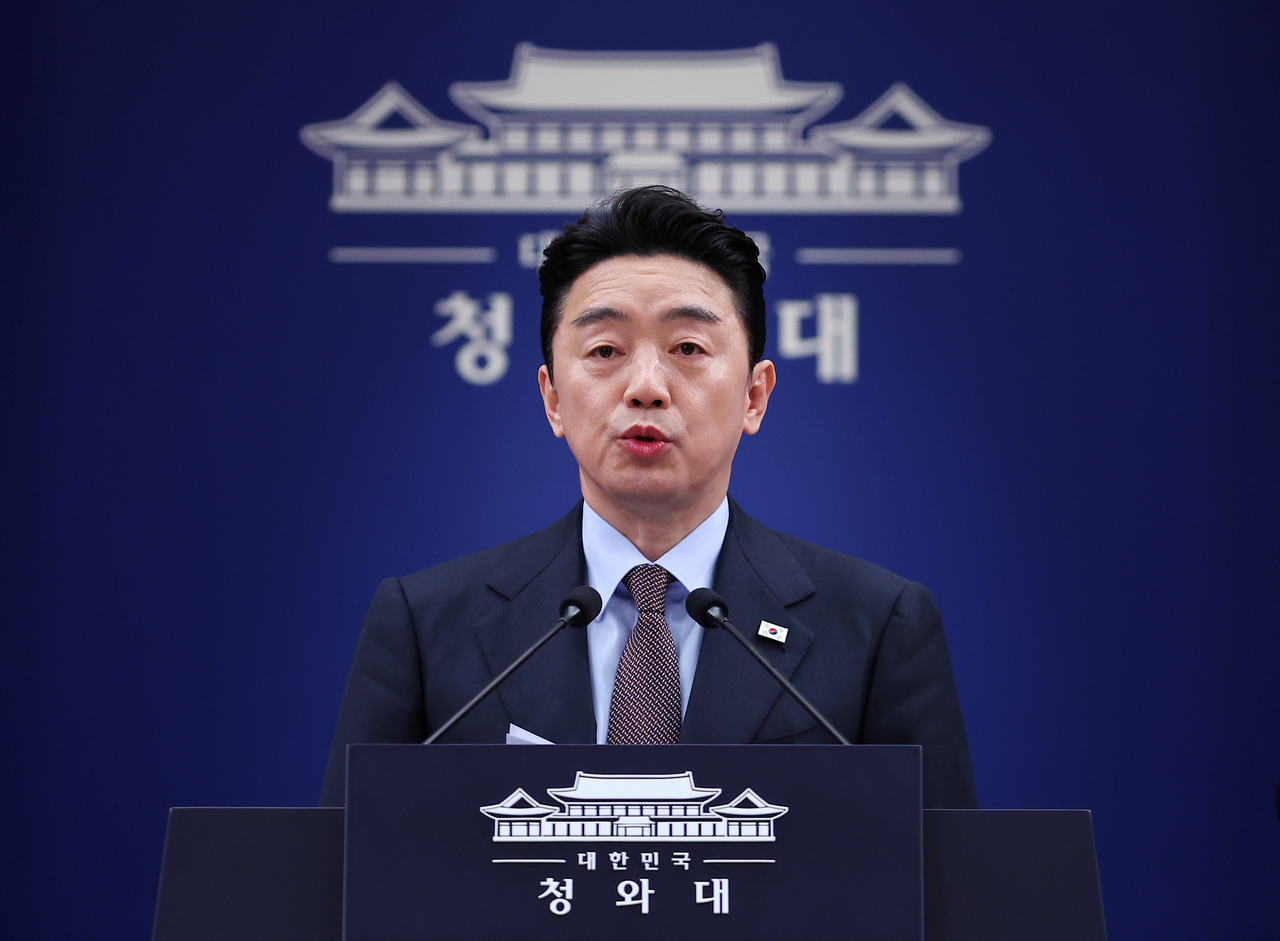
Presidential chief of staff Kang Hoon-sik on Friday announced that the two countries had agreed on South Korea’s emergency procurement of more than 6 million barrels of crude oil from the UAE.
“The emergency import of more than 6 million barrels of UAE crude oil — more than twice our country’s daily consumption — will contribute not only to stabilizing energy supply and demand, but also to calming oil prices, which have recently been reacting excessively,” Kang said during a briefing that was broadcast live. “This emergency import of UAE crude oil is the fruit of strategic economic cooperation between the two countries.”
Kang underscored, “Just as our Korean-made air defense system Cheongung protects the UAE’s security, UAE crude oil is contributing to our country’s energy security.”
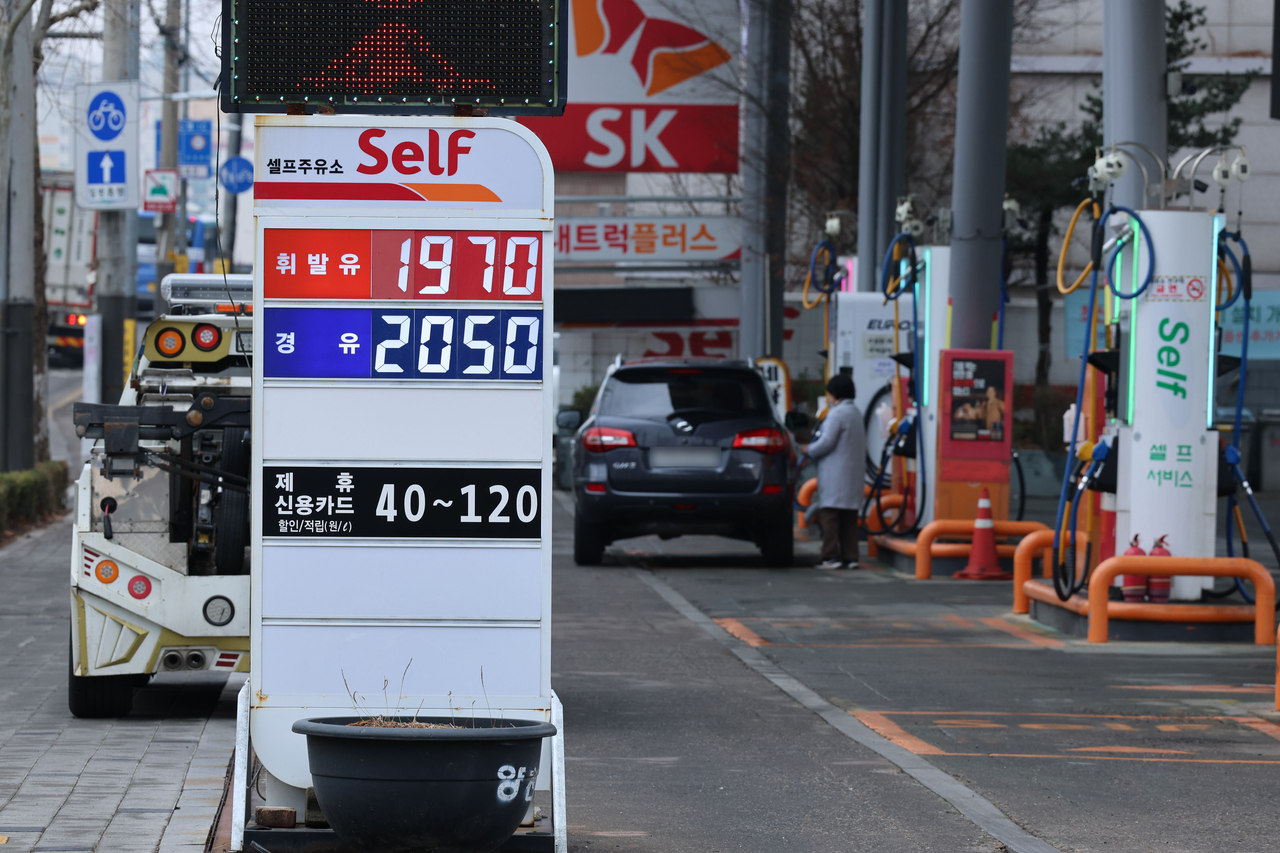
Because around 70 percent of South Korea’s crude oil imports pass through the Strait of Hormuz — which has been effectively blocked by Iran — the South Korean government on Thursday at 3 p.m. issued a Level 1 “attention” alert for a resource security crisis.
According to Kang, two Korean-flagged oil tankers capable of transporting 2 million barrels each will be immediately berthed at an alternative UAE port that does not require passage through the Strait of Hormuz.
Approximately 4 million barrels of crude oil currently stored in the port by the UAE’s state-owned oil company will be loaded, allowing the vessels to return as soon as possible.
Kang said the South Korean government “plans to continue expanding crude oil imports through alternative ports in addition to these two tankers.”
"We have also received a commitment (from the UAE) that 2 million barrels from the jointly stored reserves that the UAE maintains in South Korea can be provided at any time if we request it," Kang said.
Currently, South Korea has in its stockpile the equivalent of 208 days of oil, or about seven months, in accordance with International Energy Agency standards.
Against this backdrop, Kang explained that "there is not a high concern that an energy supply crisis will occur in the short term."
“However, we are simultaneously expanding alternative supply measures and seeking additional ways so that a supply crisis does not arise if the situation becomes prolonged.”
Flights resumed from UAE
Kang also announced that South Korea and the UAE had agreed to resume commercial flights departing from the UAE late Thursday night to help bring home South Korean nationals stranded in the region.
The first commercial flight since the war began — triggered by joint strikes by the United States and Israel on Iran on Feb. 28 that led to the closure of UAE airspace — departed Dubai carrying 372 South Korean nationals and landed at Incheon International Airport around 8:25 p.m. Friday.
Kang added that an Etihad Airways passenger flight departing from Abu Dhabi is also expected to resume operations from Saturday.
“We will continue consultations with the UAE, including the possible deployment of additional chartered flights by Korean Air, so that we can bring all of our citizens home as quickly as possible,” Kang said.
Kang explained that the agreement was clinched after he initiated consultations with his UAE counterpart, Khaldoon Khalifa Al Mubarak, chair of Abu Dhabi’s Executive Affairs Authority. The foreign ministers of the two countries also held a phone call Thursday.
President Lee Jae Myung ordered officials during an extraordinary Cabinet meeting on Thursday to address issues arising from the widening conflict in the Middle East in coordination with countries friendly to South Korea in the region.
As of press time, Kang said that about 18,000 South Korean nationals, including around 4,900 short-term visitors, were in 14 Middle Eastern countries. Of these, roughly 3,500 short-term travelers have been stranded in the UAE and Qatar because of flight cancellations and are still waiting to return home.
Kang said flights from Abu Dhabi and Dubai could carry about 1,000 people at a time, adding that with more chartered flights being arranged, he expected the effort to bring home stranded travelers to be completed over several days.
Asked why the Lee administration ruled out the option of deploying military aircraft, Kang said “in reality, military aircraft pose a more complicated option.”
“Every time a military aircraft flies and passes through a country’s airspace, it requires the full cooperation of that country,” he said.
Asked whether the UAE and other Middle Eastern countries had requested additional Korean-made air defense systems, such as the Cheongung II midrange surface-to-air missile system, Kang said, “Requests for cooperation related to air defense weapons have come from several countries, and the UAE is among them.”
dagyumji@heraldcorp.com