Koreans in Israel and Gulf states describe air raid sirens, drone strikes and disruptions to daily life as regional tensions escalate
Gal Young-hea, a 70-year-old Korean resident of Be’er Sheva, Israel, now spends her day counting how many times she heads to the bomb shelter as air raid sirens warn of incoming missiles.
“When the sirens sound now, I just think about how long it will take me to reach the shelter,” she said.
Missile alerts have become a regular part of daily life as tensions escalate following US and Israeli airstrikes on Iran. Tehran has retaliated by launching missiles and drones toward Israel and nearby countries hosting US military bases.
Nearly 18,000 South Koreans lived across the Middle East as of 2025, according to the Overseas Koreans Agency, including many in countries affected by the expanding conflict.
The South Korean government on Tuesday repatriated 66 Koreans from Israel and 24 from Iran via land routes to Egypt and Turkmenistan. Authorities also announced Thursday that police personnel would be dispatched to help facilitate the departure of Korean nationals.
However, the majority of Koreans remain in the region.
Uncertainty across the Gulf

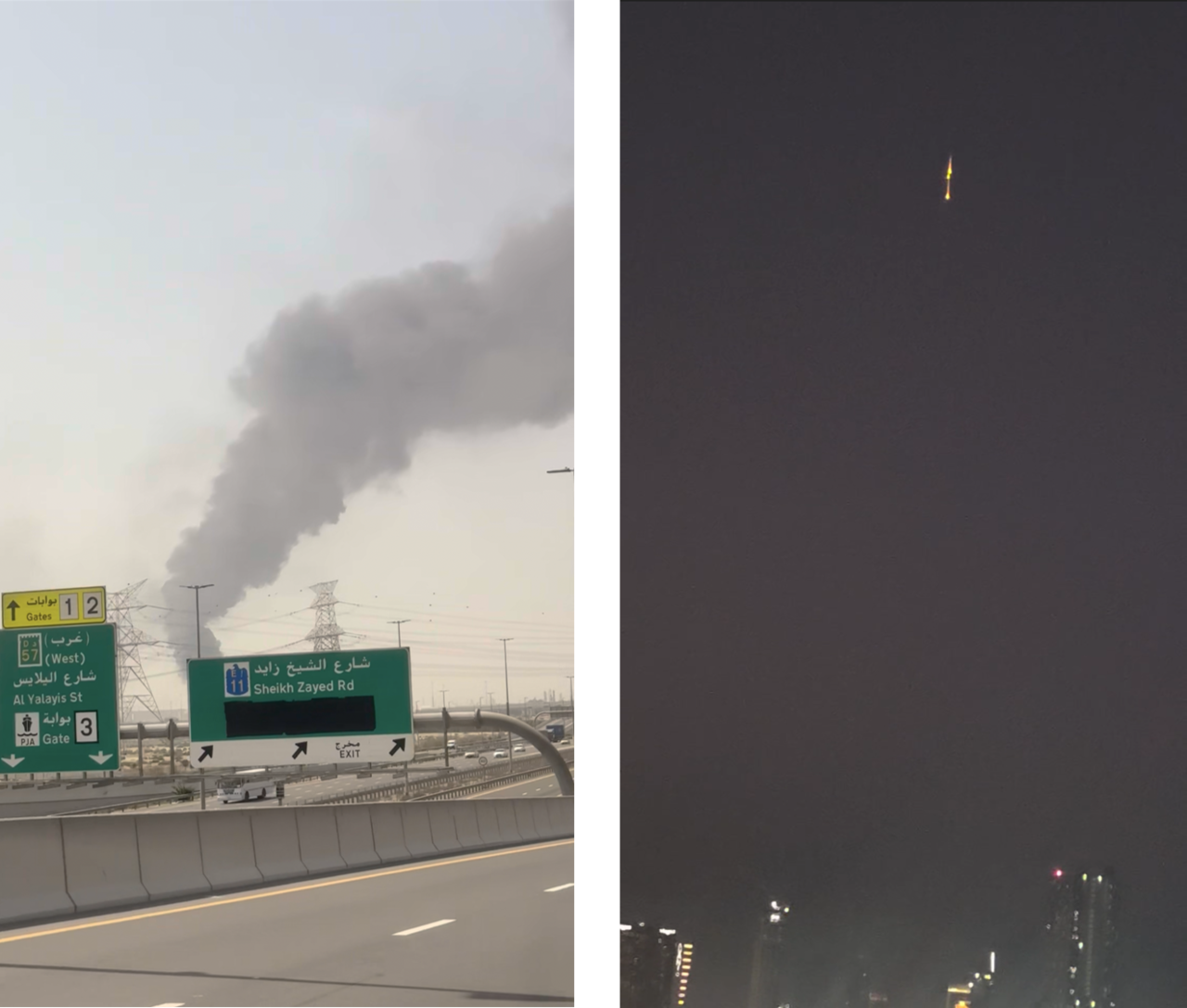
“Just yesterday, they kept firing missiles, and I could hear the explosions. The vibrations shook my windows,” said Kim, an office worker in his 20s based in Dubai, United Arab Emirates.
After the US and Israel conducted airstrikes across Iran, the Islamic Republic retaliated by firing missiles and launching drone attacks toward nearby Arab countries hosting US military bases, including the United Arab Emirates, Saudi Arabia, Kuwait, Bahrain, Iraq and Qatar.
Kim said he went to the office at 8 a.m. Monday, but was sent home an hour later after an explosion was heard nearby. In KakaoTalk group chats between the local Korean community, many residents have been discussing whether to leave the UAE for Oman.
“There are also private cars that take you to the border for money now,” Kim said.
“Over 90 percent of the people here are foreigners, so the streets are rarely empty even during Ramadan,” Kim added, noting the notable shift in the atmosphere in Dubai. “But after the incident, one of Dubai’s main roads, Sheikh Zayed Road, was empty during rush hour.”
Similar concerns are spreading elsewhere in the Gulf.
Oh Jae-woo, a 40-year-old businessperson and vice chair of the Korean Association of Bahrain, said it was the first time in his 20 years living in Bahrain that he had witnessed missile or drone attacks.
“Some Koreans are scared, which is why some are fleeing to Saudi Arabia,” Oh said.
Oh said he personally saw Bahraini forces intercept Iranian missiles, while air raid sirens sound every two to five hours.
“My children’s school has transitioned to online classes. The hotel I run is closed for Ramadan and my restaurant is still open, but customers are no longer coming,” Oh said. “It’s mostly delivery now.”
Both Kim and Oh said they had seen residents hoarding food at supermarkets.
South Korean embassies in the UAE and Bahrain have not announced evacuation plans, though both men said they had received information about nearby shelters.
Meanwhile, South Korea said Thursday it would dispatch police on Friday to help facilitate the evacuation of Koreans in the region.
"Through coordination with the Ministry of Foreign Affairs, we will dispatch six officers at 12:10 a.m. on Firday as part of the government's emergency response team," the National Police Agency said in a statement.
The team, which includes local experts, will be sent to Oman and the UAE to provide administrative support to Koreans who wish to deaprt, it added.
A new norm in Israel

In Israel, the air raid sirens have transformed everyday routines.
Gal said sirens had sounded again just moments before her phone call with The Korea Herald.
“Because most missiles nowadays are long-range missiles, they ring the siren in all towns along the direction of the missile’s trajectory. Then, when they can more accurately pinpoint the target, they evacuate that area,” she said.
Following the attacks on Iran, Tehran fired several rounds of missiles into Israel, killing at least 11 people.
Gal said she was relieved that Be’er Sheva had not been hit directly, though nearby areas experienced casualties after a large explosion.
“It feels like I have been stripped of my freedom,” Gal said. “Even if I want to do something, I have to think twice. And the airspace is closed, so I really can’t plan anything.”
“It has become normal not to leave the house. Most restaurants and stores, except essential ones, are now closed.”
She said many residents have become accustomed to living with frequent alerts.
“I asked a local elderly person if there was anything I could do to help, and they said this too will pass,” she said. “It’s quite sad, but this has become everyday life.”
Authorities have advised residents to prepare at least three days’ worth of supplies in case the situation escalates further.
Why they stay
Gal was not among the 66 Koreans evacuated earlier this week. Those departures accounted for less than 15 percent of the 489 Koreans living in Israel.
She said many long-term residents believe the situation will eventually calm down.
“Some people stay with the hope that this will all end soon,” she said. “For others, it is difficult to leave everything behind when their livelihood is here.”
Kim and Oh expressed similar views about staying despite the risks.
“I don’t think fleeing to Saudi Arabia is necessarily safer than staying here,” Oh said. “And I have my employees here, whom I cannot simply leave behind.”
“My parents are here, and I work here, so I don’t think I will return anytime soon,” Kim said.
As of Wednesday, four Koreans had departed from Bahrain and Iraq with assistance from Korean embassies.
seungku99@heraldcorp.com