Iranian diaspora debates whether war can bring change to Iran’s political future
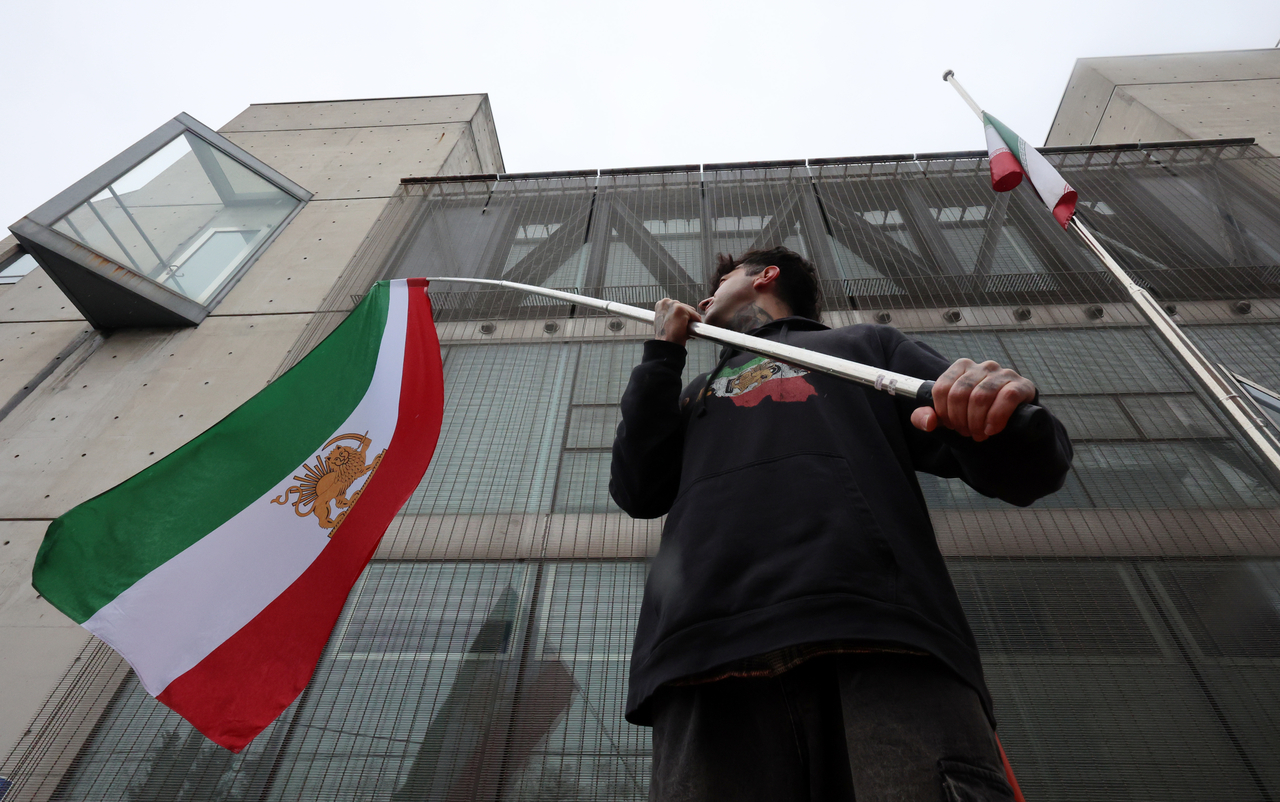
In Seoul, Iranians gathered in two very different crowds — some singing and dancing in a Seongdong-gu bar to mark the death of Supreme Leader Ali Khamenei, others chanting outside the US Embassy to protest the bombing of Tehran.
Their split captures a broader dilemma running through the Iranian diaspora over whether the war can end the dictatorship and whether it can ever deliver democracy.
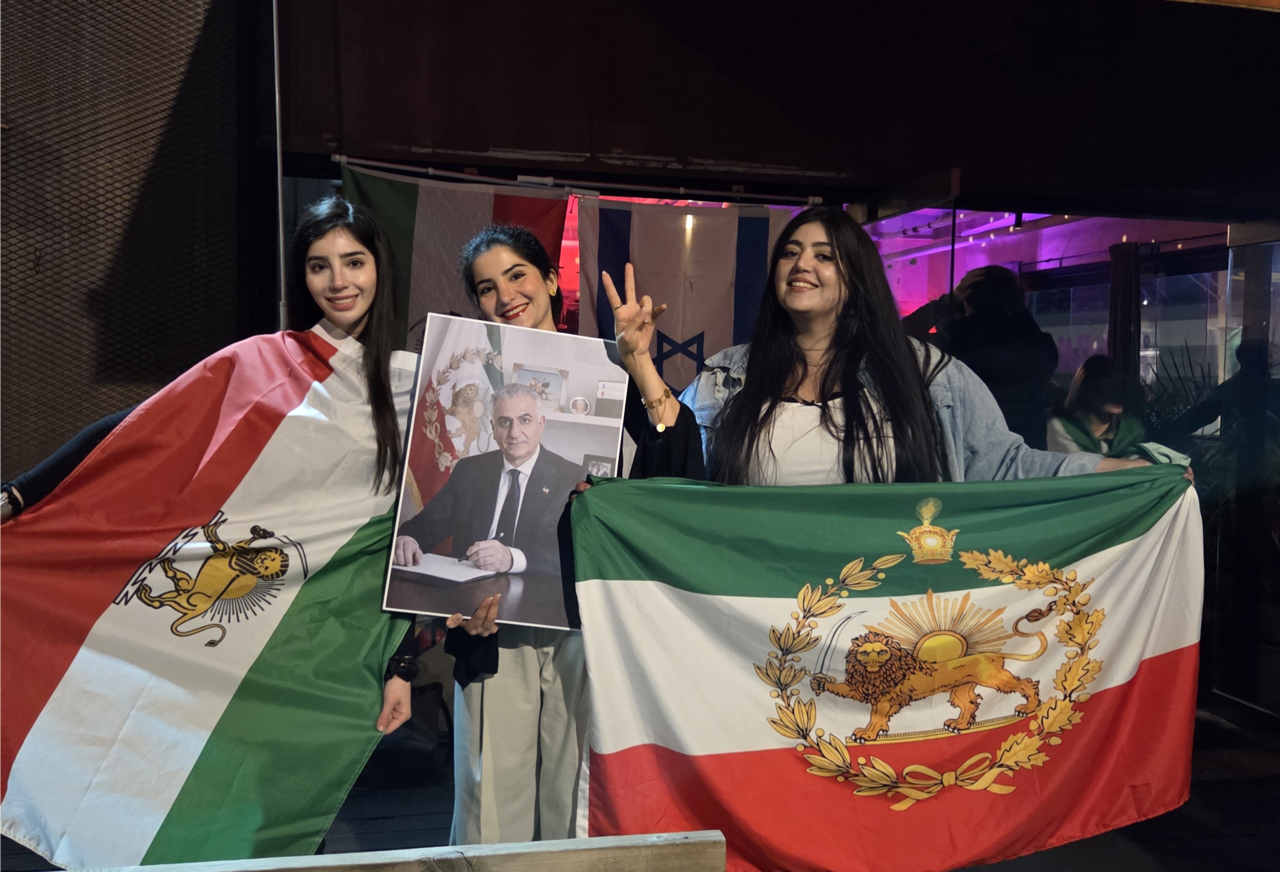
More than 100 Iranians gathered at a bar in Seongdong-gu on Sunday after the downfall of Iran’s supreme leader. The gathering continued into the early hours of Monday morning, with crowds singing, dancing and chanting slogans expressing support for Israel and the US.
“We were tremendously happy,” said 35-year-old Iranian research manager Sanaz, who moved to Korea in 2019. "It is time for us to be brave and show this bravery to the people inside Iran."
For the Iranians at Sunday's gathering, the US and Israeli attack on Tehran and the death of Khamenei warranted celebration. To them, it marked the beginning of a new era.
But even among Iranians in South Korea, celebrations have been shadowed by fear over the human cost of a widening war.
“I used to contact my family through social media, but now all communications are closed,” a 30-year-old Iranian university student told local media. “After the US’ first airstrikes, I received one message from my family saying they were safe, but I have been unable to reach them since.”
South Korea was home to more than 1,300 Iranians as of 2024, according to the Korean Statistical Information Service. As US and Israeli airstrikes continue, many Iranians living in Korea say they are worried about developments back home.
War and democracy
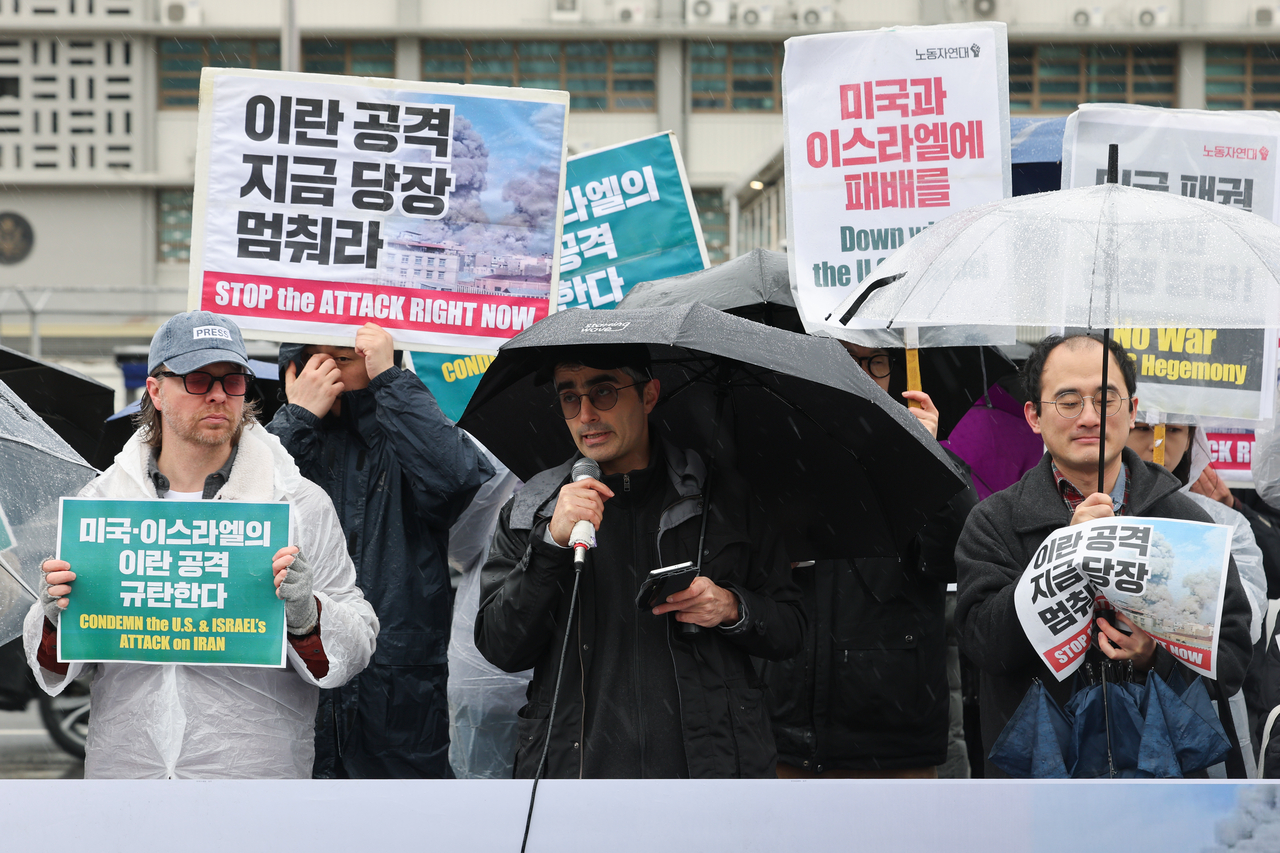
“I am against war,” said Iranian filmmaker Komeil Soheili, who has lived in Korea for seven years. “I am against the dictatorship in Iran, but that does not justify war.”
He held a rally in front of the US Embassy in Seoul on Monday, condemning the bombing of Tehran.
“I say it clearly and loudly: no to war, no to foreign intervention and definitely free Iran. Free all political prisoners in Iran. No to war, and yes to democracy,” he said.
“These are real bombs dropping on real people,” he added.
“Personally, I cannot celebrate at this moment, because I believe we are in the middle of a war and many civilians have died,” he continued. “The civilians who died were also Iranian.”
“I do not believe bombs will create democracy.”
At the same time, Soheili said he understood why some Iranians would feel relief.
“This is the moment that many people were waiting for,” he said.
Diaspora's diverse reactions
Meanwhile, Siavash Saffari, an Iranian professor at Seoul National University’s Department of Asian Languages and Civilization, said he believed the celebrations were “temporary reactions.”
“I am aware some Iranians are hopeful and happy that this attack may bring an end to Iran’s current regime, especially since it was very oppressive, killing its own people and destroying the country’s economy,” Saffari said during another rally held in front of the US Embassy on Monday.
“The country may fall into chaos. Many Iranians are actually very concerned about the future,” he added, noting that celebrations among some Iranians could be short-lived.
However, for some Iranians like Sanaz, the reaction is far from temporary.
“We are so happy because we waited a long time for this, almost 47 years,” Sanaz said. “Many people inside Iran have also told me that we need this war and the full elimination of the Islamic Republic.”
She said the US and Israeli attacks felt like a form of relief because “we cannot defeat them with our bare hands.”
Others who did not attend Sunday's party shared similar views.
"Nothing is concrete, but I am thinking of holding a rally in front of the Israeli Embassy to express our gratitude," said Park Sima, a Korean of Iranian descent who moved to Korea in 1979 and was naturalized in 1990.
"With the help of US and Israel, we will be able to bring forth real change and halt the regime's massacre of Iranian citizens," Park said.
Shared hope
Despite the different reactions, both groups framed their hopes in the same terms: a democratic Iran and a future that does not demand more civilian deaths as its price.
“We want a peaceful transition of power,” said Soheili. “We are in the worst situation, with thousands of bombs being dropped around Iran.”
“For now, I say no to war. But among most Iranians I know — those I have met in my life and those living in Korea — I can say we want a democratic Iran.”
Sanaz and Park echoed similar views.
“We will reach the ballot box to form a secular democratic government,” said Sanaz. “This is the final goal.”
seungku99@heraldcorp.com