Ottawa may divide $44b fleet renewal between Hanwha Ocean-led Korean bid, Germany’s TKMS
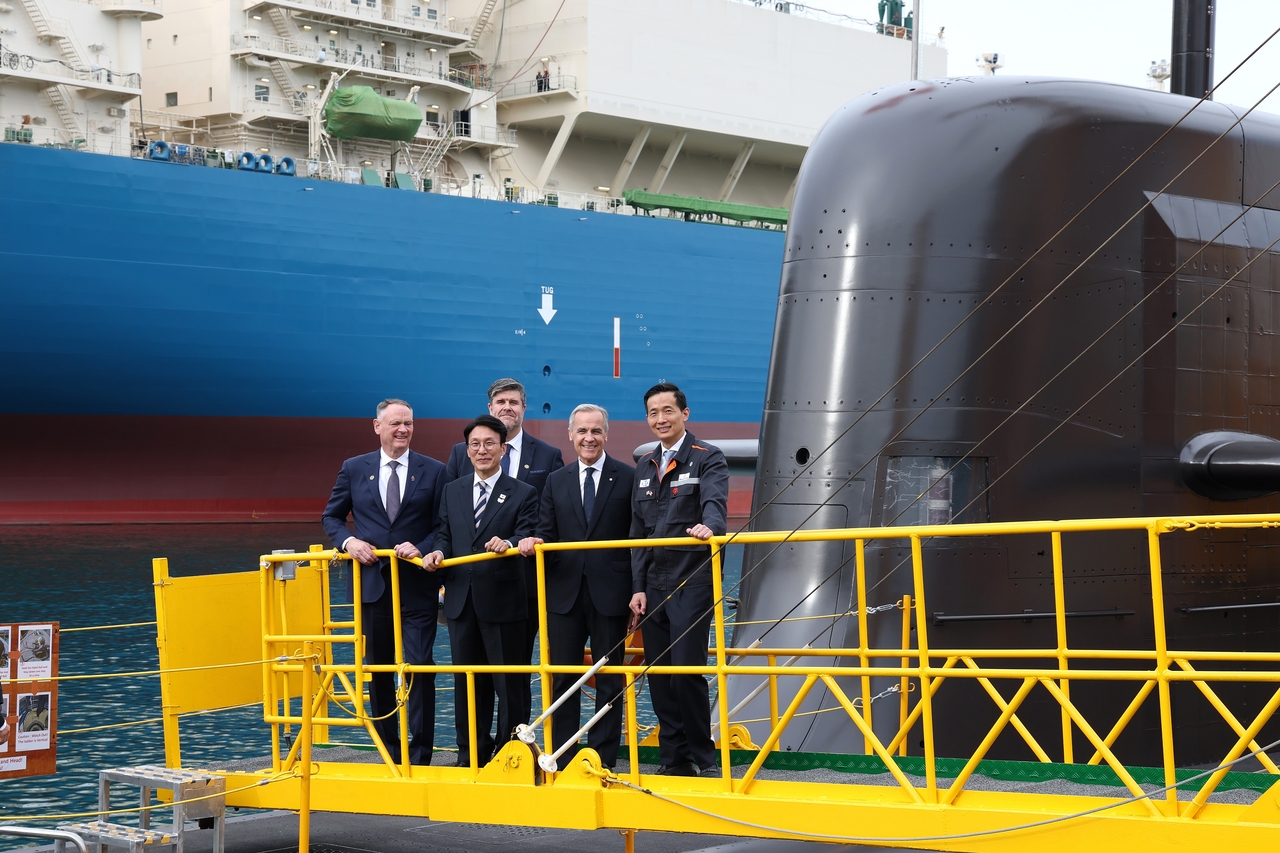
Canada is considering splitting its multibillion-dollar submarine procurement between South Korea and Germany, according to a media report, in a move apparently aimed at securing both advanced naval capabilities and economic investment from the two rivals.
Canadian newspaper The Globe and Mail reported Tuesday, citing senior government sources, that the Canadian Patrol Submarine Project -- a planned purchase of up to 12 new diesel-powered submarines to replace the country’s aging fleet -- could be divided between the two contenders, South Korea’s Hanwha Ocean-led consortium with HD Hyundai Heavy Industries and Germany’s Thyssenkrupp Marine Systems.
The report added that Canada could order six submarines from each of the bidders. TKMS’ Type-212CD submarines would be deployed along Canada’s Atlantic Coast, while Hanwha Ocean’s KSS-III Batch-II submarines could be stationed on the Pacific coast for operations across the broader Indo-Pacific region.
The sources said the Canadian government will evaluate the bids, including whether splitting the contract could better serve its economic and defense needs, before making a final decision.
If the project is divided, “Canada would reap industrial benefits from both bidders, including possible investments in this country’s auto industry,” according to the report.
Hanwha Ocean said it has not received a proposal regarding a split contract and that it will follow the Canadian government’s decision.
“The procurement policy and methods are entirely at the discretion and authority of the Canadian government,” said an official of Hanwha Ocean. “We will proceed according to the government’s announcement.”
The CPSP is one of Canada’s largest defense acquisitions in recent decades, with the contract valued at around 60 billion Canadian dollars ($44 billion). Should South Korea secure the deal, it would mark the largest single export order in the country’s defense industry history.
The two companies submitted their final proposal ahead of the deadline Monday, with the decision expected to be announced as early as June.
As Canada is seeking not only warships, but also broader industrial investment, the level of industrial commitment offered by each competing country will factor in when determining the outcome.
Canada had initially pushed for South Korea and Germany to include commitments to build automobile manufacturing plants in the country -- from Hyundai and Volkswagen, respectively. However, according to media reports, neither country’s proposal contains an offer to establish such a facility on Canadian soil.
Instead, Hyundai Motor has proposed building hydrogen fuel-cell infrastructure in Canada as part of the bid, according to Hanwha Defense Canada CEO Glenn Copeland in an interview with Bloomberg last week.
Hanwha Group has also signed a series of memorandums of understanding with Canadian firms spanning steel, artificial intelligence and space technologies, pledging investments and jobs if it wins the contract. They include investment of 345 million Canadian dollars to Algoma Steel to build a new steel beam mill in northern Ontario, as well as a plan to establish a shipbuilding training center.
The South Korean government has stepped up efforts to support the bid, which has effectively evolved into a government-to-government deal. Seoul dispatched a high-level delegation to Canada in January led by presidential chief of staff Kang Hoon-sik, along with executives from major shipbuillders and other companies. Industry Minister Kim Jung-kwan is also set to visit Canada on Thursday to meet with Canadian counterparts and lend support to the bid.
sahn@heraldcorp.com


![[Survive&Thrive] Tips for getting around Seoul by subway (2)](https://wimg.heraldcorp.com/news/cms/2026/10/08/news-p.v1.20261006.1e7dee51d7f64cdba1a20b897d88cee6_T1.jpg?type=h&h=800)