Major banks roll out emergency support programs as government reviews 100 trillion won market stability plan
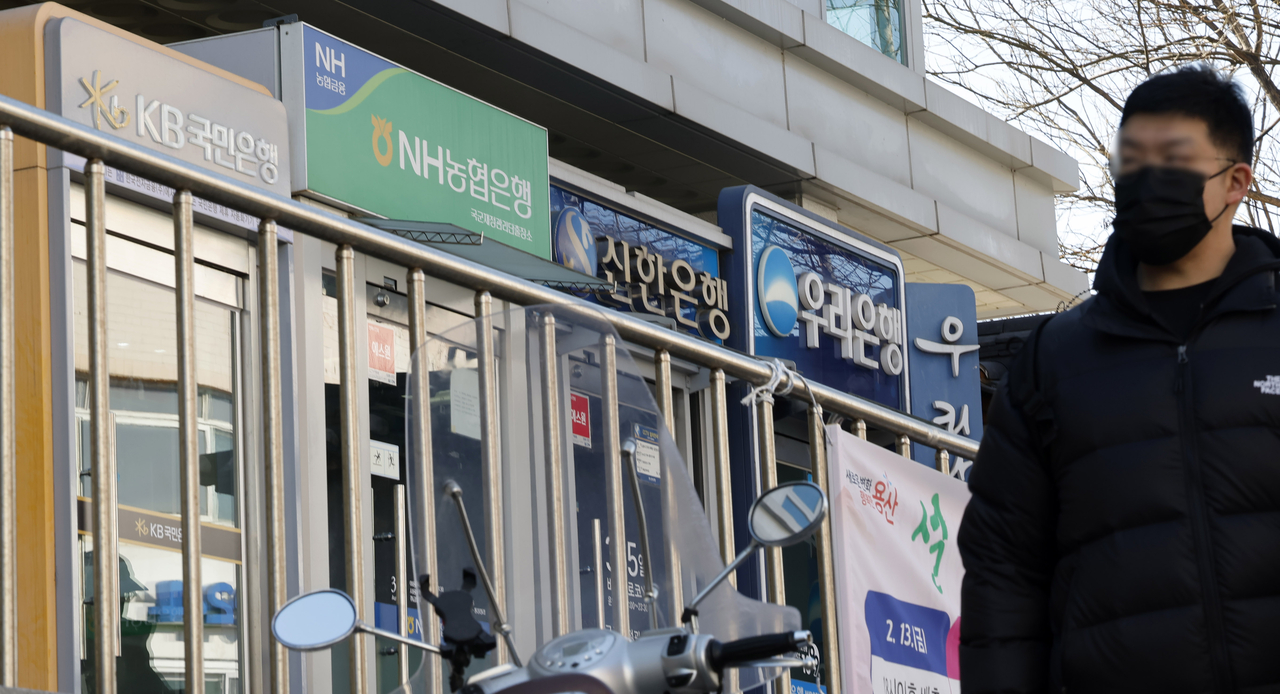
South Korea’s financial sector is preparing for potential fallout from escalating conflict in the Middle East, with major banking groups rolling out emergency support programs for companies exposed to rising geopolitical risks while authorities step up monitoring of financial markets.
Hana Financial Group said Monday it will provide a 12 trillion won ($8.2 billion) financial support package through Hana Bank for companies vulnerable to disruptions linked to the conflict, including emergency liquidity support of up to 500 million won for firms operating in the Middle East and those with export-import exposure to the region. The program also includes loan maturity extensions, repayment grace periods and interest rate cuts of up to 1 percentage point.
Separately, the group said it will work with government agencies to provide essential goods and relief packages to Korean residents in the Middle East.
“Hana will mobilize all its capabilities to help Korean residents and companies affected by the unexpected geopolitical turmoil regain stability as quickly as possible,” Chairman Ham Young-joo said.
Other major banking groups have launched similar monitoring and support measures as tensions ripple through global markets.
Shinhan Financial Group said it has activated an internal monitoring system involving key executives to track financial market developments and potential impacts on the group. The company said it has identified no direct damage so far and will maintain its crisis management level at “caution,” holding weekly meetings to monitor market conditions.
KB Financial Group said its chairman and subsidiary chiefs are jointly monitoring exchange rates, interest rates and oil prices in real time to assess potential disruptions.
Woori Financial Group moved earlier, announcing Sunday that it had activated an emergency response system led by Chairman Yim Jong-yong. In addition to strengthening market monitoring and financial support for companies, Yim ordered tighter cybersecurity checks across affiliates to guard against possible cyberattacks that could exploit the instability.
The coordinated response from financial groups comes as authorities move to contain potential spillovers into the broader economy.
Financial regulators convened an emergency meeting Sunday after US and Israeli strikes on Iran sharply escalated tensions in the Middle East. The regulators activated a financial market emergency response team and said they are prepared to deploy market stabilization programs exceeding 100 trillion won if necessary.
“The situation in the Middle East remains highly uncertain, and if tensions persist, the impact could spread to domestic financial markets and the real economy,” said Financial Services Commission Chairman Lee Eog-weon, who chaired the meeting, calling for heightened vigilance.
The response team, which includes officials from the FSC, the Ministry of Economy and Finance, the Bank of Korea and the Financial Supervisory Service, will conduct round-the-clock monitoring of market conditions and share assessments across agencies.
Global markets have already reacted to the geopolitical shock. Brent crude settled at $72.48 a barrel on Friday, up 2.5 percent, while futures traded higher around $78 on Monday, Seoul time, as investors priced in risks to energy flows through the Persian Gulf. US benchmark West Texas Intermediate futures briefly jumped more than 8 percent to $72 in early trading before easing to around $70.7, still up about 5.5 percent.
The surge in oil prices pushed investors toward safe-haven assets and strengthened the US dollar. Gold futures briefly rose above $5,400 and were trading near $5,374 on Monday afternoon, up 2.4 percent.
The Korean won also came under pressure. In offshore trading Monday afternoon, the currency weakened to around 1,456 per dollar from Friday’s onshore close of 1,424.5, returning above the 1,450 level for the first time in more than a week as rising energy prices and global risk aversion boosted demand for the greenback.
Investors are now watching how the geopolitical shock could affect Korea’s equity market when trading resumes Tuesday after a public holiday. The Kospi fell 1 percent on Friday to 6,244.13, halting the benchmark’s recent rally as foreigners stepped up net selling. During Korea’s market closure, major Asian equities also came under pressure from Middle East tensions, with Japan’s Nikkei 225 dropping as much as 2.7 percent in earlier trading while Chinese markets also weakened.
jwc@heraldcorp.com

![[Graphic News] Chuseok table costs return to W300,000 range](https://wimg.heraldcorp.com/news/cms/2026/09/22/news-p.v1.20260922.9219066dd6344dc9afdb6d186274c209_T1.gif?type=h&h=800)