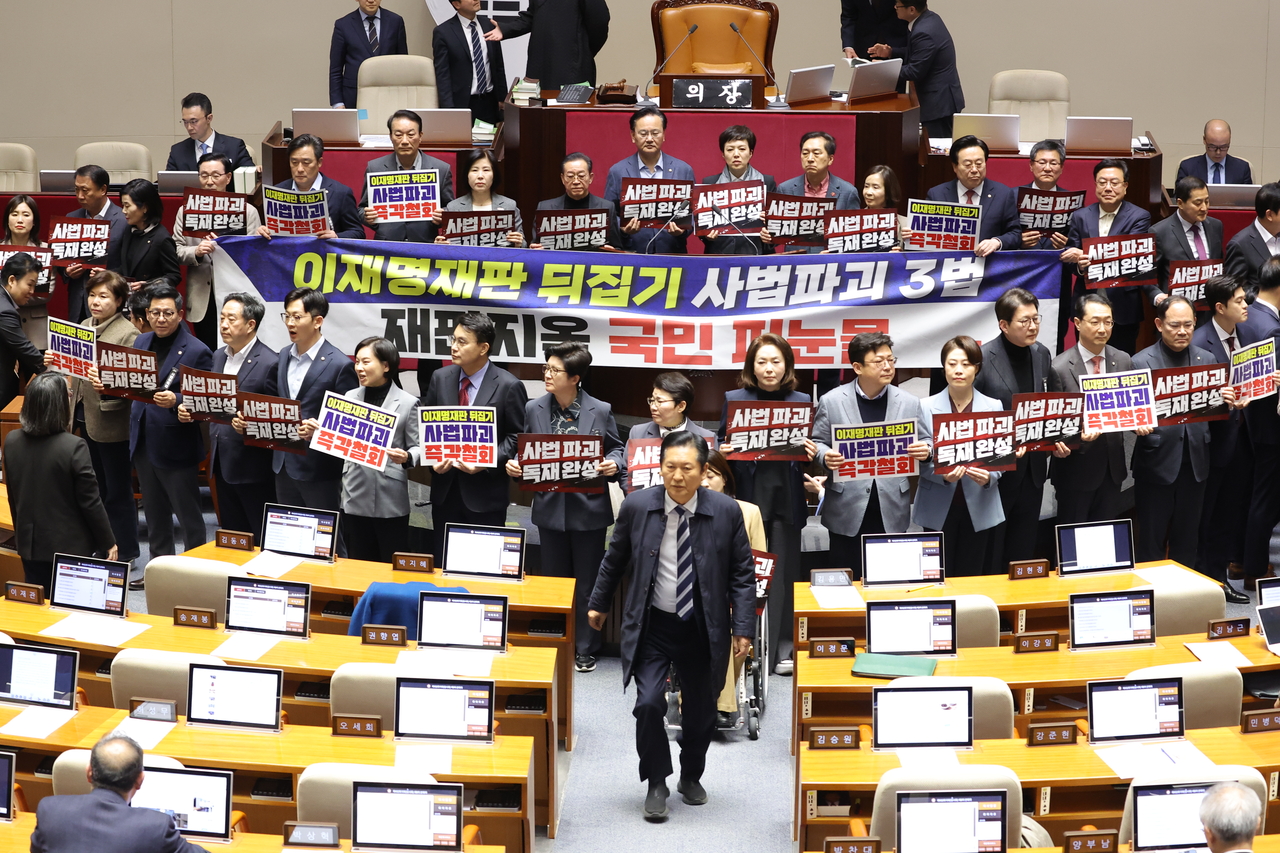
A revision of the Constitutional Court Act passed the National Assembly on Friday, after liberal parties ended the opposition's filibuster against the contentious bill that has been criticized for potentially upending the current three-tier court system.
The revision, aimed at allowing a ruling finalized at the Supreme Court to be appealed again in the Constitutional Court, passed the plenary session in a 162-63 vote.
This came shortly after the opposition-led filibuster ended in a cloture with over three-fifths of the National Assembly lawmakers voting in favor, about 25 hours after the filibuster was initiated.
The revision is the second of three bills sponsored by the ruling Democratic Party of Korea in its latest push for a legislative package designed to weaken the judicial power in South Korea.
On Thursday, a bill to revise the Criminal Act to criminalize the intentional misapplication of criminal law by a court judge, prosecutor or police officer passed the ruling party-controlled parliament.
Violators will be subject to up to 10 years of imprisonment and a 10-year suspension from duty. An opposition-led filibuster fell short of blocking the bill's passage, as in previous attempts.
The last of the three bills, which is a revision to the Court Organization Act to increase the number of the Supreme Court's justices from 14 to 26, is next in line for passage. The bill is likely to be put to a vote on Saturday, as the People Power Party is expected to initiate yet another filibuster against this bill.
Meanwhile, hours before the passage Friday, Park Young-jae, minister of the National Court Administration, offered his resignation from the post to Supreme Court Chief Justice Jo Hee-de in a show of protest against the Democratic Party's push for judicial reform.
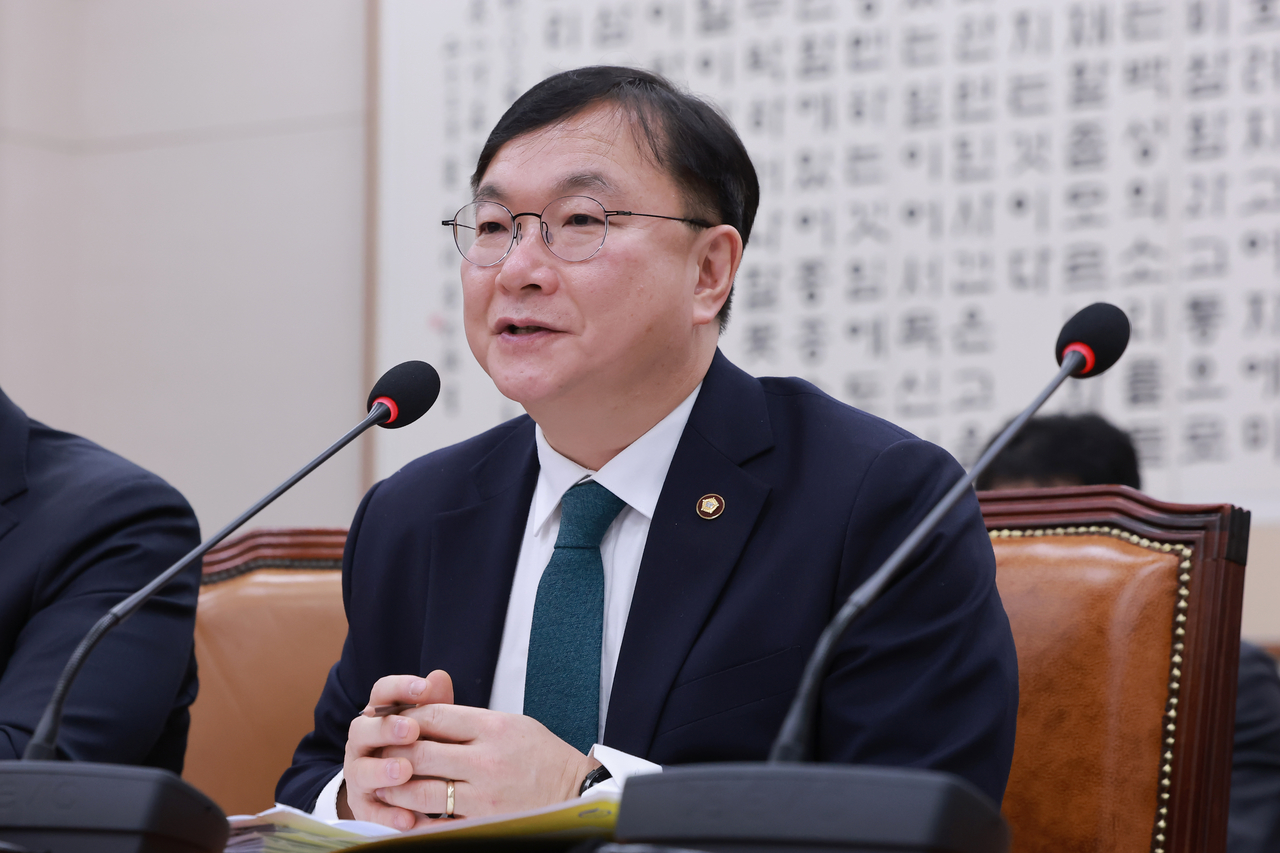
Park, who has been a vocal opponent to the Democratic Party's push, said Friday his resignation would "help the nation and the judicial branch."
Earlier Wednesday, Park said in an emergency meeting of court chiefs he convened to evaluate the impact of the reform bills that the reform could "directly impact citizens pursuing their rights through the courts."
The Supreme Court has been under fire from the Democratic Party after the court in May 2025 found Lee Jae Myung, who was then a candidate for president, guilty of making false claims before the public in violation of the Public Official Election Act and remanded the case to a lower court. If the ruling had been finalized before the presidential election in June 2025, the eventual President Lee would have been stripped of his right to be elected as a public official.
consnow@heraldcorp.com