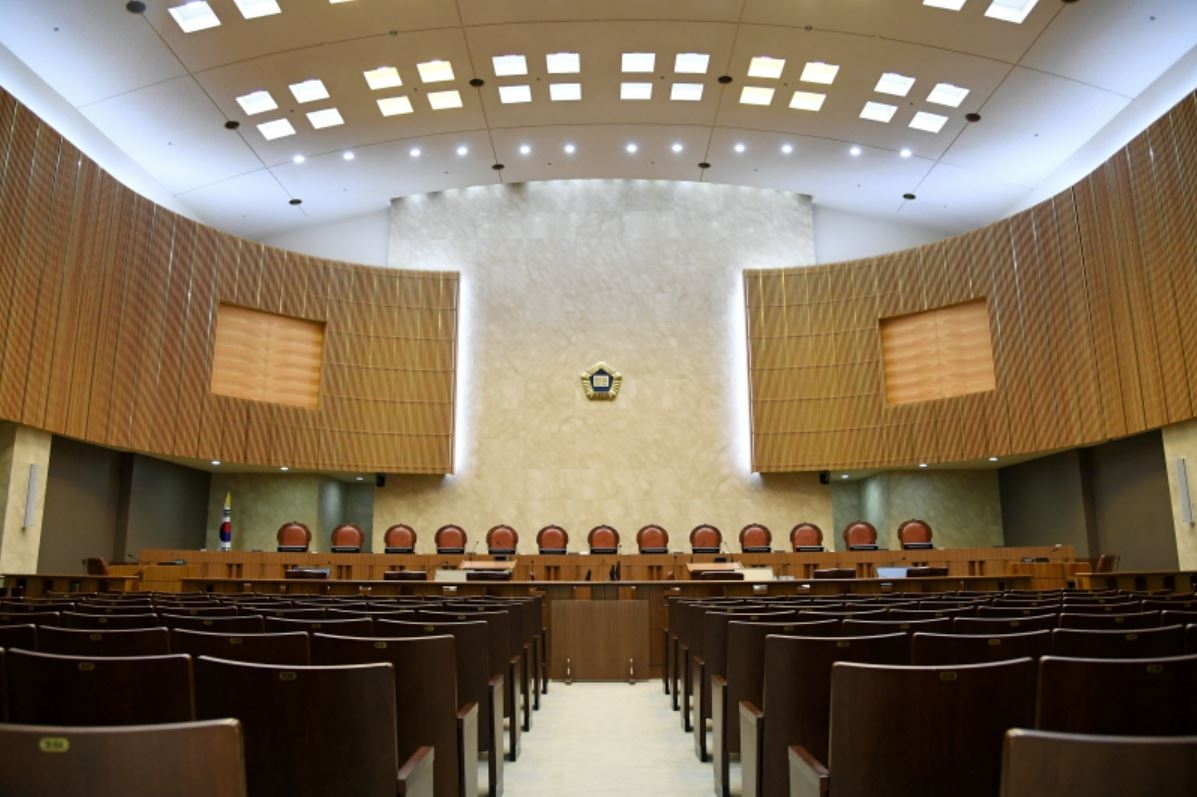
South Korea’s judicial systen is on course for a major overhaul with a set of reform bills on course to pass this week.
The bills are among four contentious bills that the ruling Democratic Party of Korea pushed through for Tuesday's plenary session in the face of strong objections from the conservative People Power Party.
The bill package comprises three bills. These are revisions to the Criminal Act to establish a deliberate misapplication of law as a criminal offense; the Court Organization Act to increase the number of Supreme Court justices from 14 to 26 before President Lee Jae Myung's term ends; and a revision to the Constitutional Court Act to allow Supreme Court rulings to be appealed at the Constitutional Court.
The ruling party says that the revisions are crucial to restoring public trust in the judiciary, and to address court delays and enhance people's right to a fair trial.
The main opposition People Power Party has vowed to filibuster against all three bills. It cannot prevent votes on the bill by doing so, though it can delay them. Under South Korean law, a filibuster can continue for 24 hours before it can be stopped. Doing so requires through three-fifths of votes of all National Assembly lawmakers.
With a filibuster ongoing over a revision to the Commercial Act on Tuesday afternoon, all three bills are likely to be filibustered, one per day, from Wednesday.
Critics of the revisions, which include the Supreme Court, say these bills have failed to reach public consensus and would do more harm than good.
The Supreme Court said Tuesday it would hold an emergency meeting of court chiefs Wednesday to assess the impact of the revisions.
Describing the reform as the most radical since the judicial branch was established in 1948, Supreme Court Chief Justice Jo Hee-de told reporters Monday that the reform bills "carry elements that require a constitutional amendment" but lacked effort to reflect public opinion.

Regarding the criminalization of misapplying criminal law, which is modeled on a similar German law, Jo said South Korea's Constitution was "completely different from that of Germany," adding the revision bill package could "do harm to people."
Rep. Song Eon-seog, floor leader of the People Power Party, said in a party meeting Tuesday that the reform drive could be exploited to bring South Korea's judicial branch under the control of the legislative branch, especially given the situation that there are pending criminal cases against President Lee Jae Myung.
The ruling party was committing "a shameless act of threatening the judicial system to exonerate one's crimes in the name of a judicial reform," Song said, likening its move to undermine judicial power to those of the world's historically authoritarian leaders like Adolf Hitler and Hugo Chavez.
This came as 105 Democratic Party of Korea lawmakers launched an initiative Monday to call for criminal cases against the incumbent president to be canceled. These lawmakers contended that Lee's indictment in these cases — including one in which Lee was ruled guilty by the top court in May last year and was remanded to an appellate court — were the outcome of politically motivated prosecutors' manipulation of evidence.
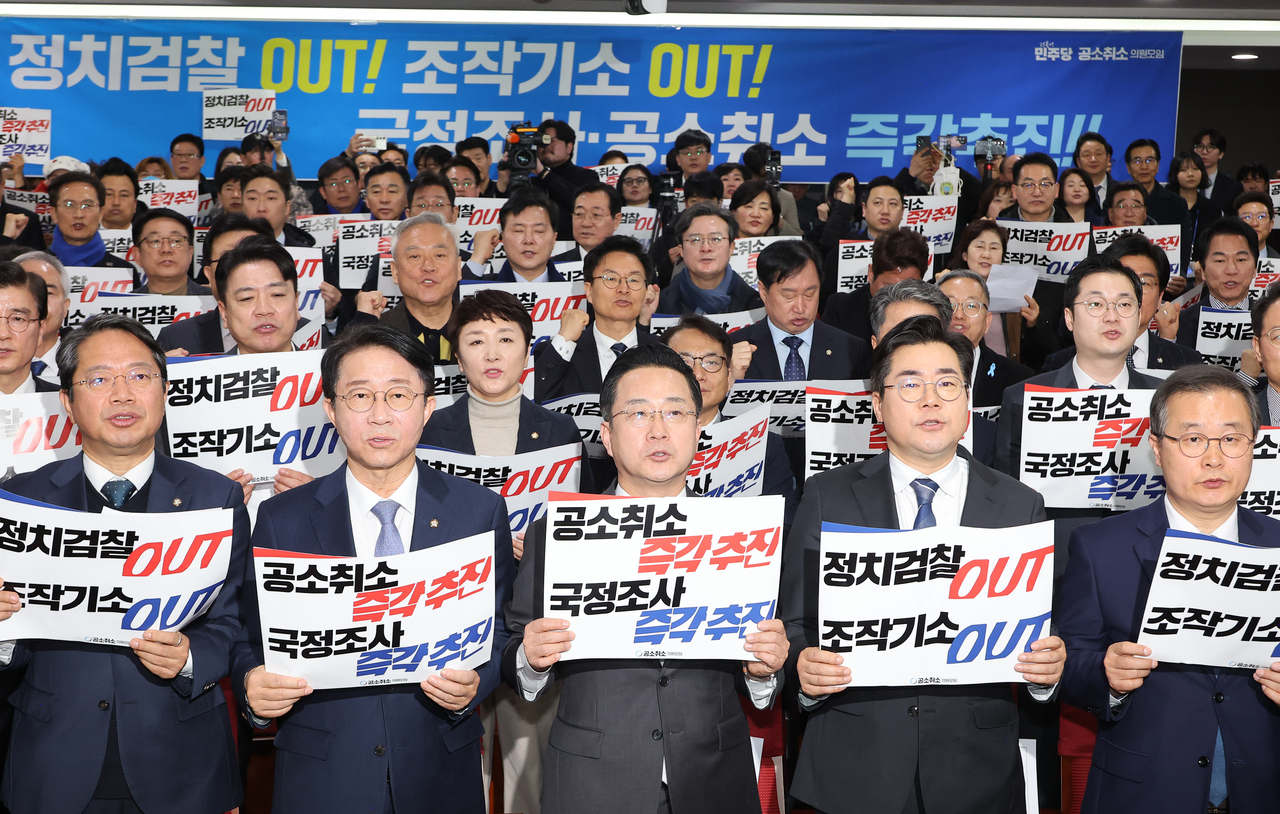
Moreover, nearly doubling the number of justices on the Supreme Court before Lee's five-year term ends in 2030 is another point of contention.
The bill would require four new Supreme Court justices to be added every year from 2028 to 2030, in addition to the current 14-member bench. The president has the power to approve all Supreme Court justices’ nominations in South Korea upon the recommendation from the Supreme Court chief justice.
If the bill passes, up to 22 out of 26 justices would be appointed during Lee's tenure: 12 newly added posts and 10 vacancies to be created by outgoing Supreme Court justices through March 2030.
Regarding the bill to allow Supreme Court rulings to be appealed at the Constitutional Court, critics have said the legislation could change the current three-tier structure in the judicial system in South Korea, which consists of the Supreme Court, high courts and district courts.
consnow@heraldcorp.com