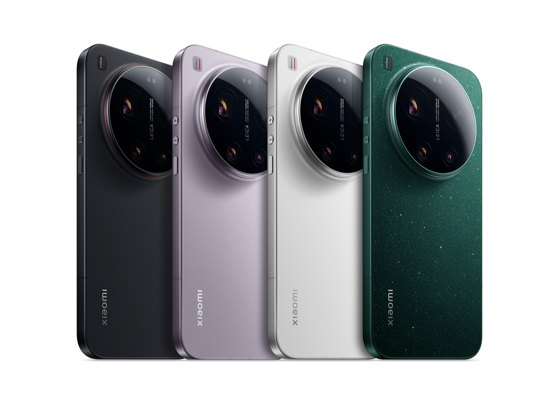
Chinese smartphone maker Xiaomi is poised to unveil its camera-centric flagship, the Xiaomi 17 Ultra, on the global stage, setting up a direct showdown with Samsung’s forthcoming Galaxy S26 series just days after its rival’s own launch event.
According to industry sources on Tuesday, Xiaomi will introduce the Xiaomi 17 series at MWC26 in Barcelona on Saturday. Samsung Electronics is set to unveil its Galaxy S26 lineup in San Francisco on Wednesday, placing the launches within the same week.
The Xiaomi 17 Ultra deepens the company’s partnership with German camera brand Leica. Moving beyond joint research and development, Leica participated from the earliest product-planning stage under what Xiaomi calls a “strategic co-creation model,” making this the first handset developed under that framework.
The device features a 200-megapixel telephoto camera and a rear triple-camera system composed of ultrawide, wide and telephoto lenses. It combines an ultrawide lens, a 1-inch image sensor main camera and the high-resolution telephoto unit.
Its predecessor, the Xiaomi 15 Ultra, also offered a 200-megapixel telephoto lens. This time, Xiaomi redesigned the internal structure. The lens physically shifts within the module to adjust magnification, enabling continuous optical zoom. The Leica-branded telephoto camera supports seamless zoom across a 75mm to 100mm focal range.
High-resolution imaging, particularly in the 200-megapixel class, has long been regarded as a defining strength of Samsung’s Galaxy Ultra models, notably in long-distance zoom performance. Xiaomi’s latest approach signals a push deeper into the premium tier, underscoring the company’s intent to compete more directly in the segment.
The handset runs on Qualcomm’s Snapdragon 8 Elite 5th generation processor built on a 3-nanometer process, supporting high-resolution photography, advanced video processing and AI-driven image computation.
It features a 6.9-inch display with peak brightness of up to 3,500 nits. Xiaomi says its Xiaomi Shield Glass 3.0 delivers drop resistance up to 20 times stronger than conventional strengthened glass. Despite housing a 6,800 milliampere-hour battery, the device measures 8.29 millimeters in thickness, making it the slimmest Ultra model in Xiaomi’s lineup.
The Xiaomi 17, released in China in September last year, is priced at 6,999 yuan ($1,013), 500 yuan higher than its predecessor, reflecting rising component costs including semiconductors and camera modules. In Europe, however, the device is expected to launch at 1,499 euros ($1,766), unchanged despite industry-wide cost pressures, sources said.
“We are unable to comment on specific pricing ahead of the launch, but the final price will reflect market conditions in each country, including tariffs, exchange rates and logistics costs,” a Xiaomi Korea official said.
Following the global debut, Xiaomi is preparing a Korea launch. While its market share here remains near zero — Korea is often described as a graveyard for foreign smartphone makers — the company has maintained solid momentum overseas.
According to market researcher Omdia, Samsung led Southeast Asia last year with an 18 percent share across Indonesia, Vietnam, Thailand, the Philippines and Malaysia, followed closely by Xiaomi at 17 percent.
yeeun@heraldcorp.com