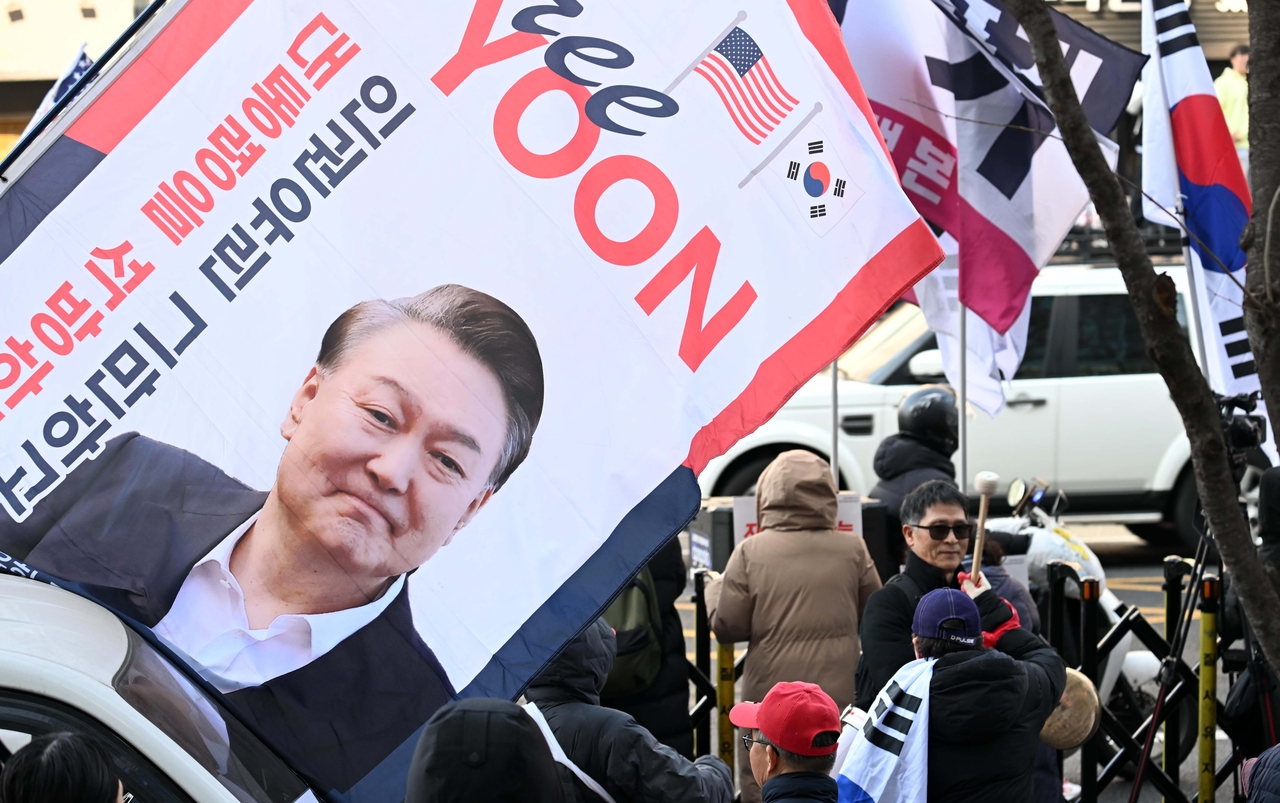
Ruling party politicians slammed Thursday's decision by the Seoul Central District Court to sentence former President Yoon Suk Yeol to life in prison for insurrection, rather than the death penalty.
Ruling Democratic Party of Korea Chair Rep. Jung Chung-rae claimed that the Seoul Central District Court's ruling stems from a misinterpretation of how Yoon's self-coup attempt failed.
The sentence left the possibility of Yoon being granted clemency in the future, he said, though Korea has not actually carried out the death penalty since 1997.
About 30 minutes after the verdict, Jung said it threatened "a disruption of the criminal justice system" because it did not impose capital punishment on Yoon, which technically remains on the books in Korea and is the only other sentence possible for insurrection.
He continued, saying the ruling "disregarded the spirit of the revolution of light" by not issuing the death penalty, and that the court had failed to recognize that public resistance was what stopped Yoon's martial law in December 2024.
While the court upheld the prosecution's charges that imposing martial law and events that followed were an act of insurrection, the court sentenced Yoon to life in prison. It cited the apparent lack of meticulous planning leading to ultimate failure, and took into consideration Yoon's age and his lack of a criminal record. Yoon is 65 years old.
National Assembly Speaker Rep. Woo Won-shik echoed Jung, saying it was "regrettable" that Yoon was sentenced to life in prison. Woo, with his gavel, passed the resolution to lift martial law on the night of the Yoon-led insurrection.
"It is regrettable to see that the failure of Yoon's insurrection became a mitigating factor," Woo told reporters. "It failed not because (insurrection forces) lacked preparation, but because the National Assembly and the people joined forces to resist it."
Minor left-leaning Rebuilding Korea Party leader Cho Kuk, said on his YouTube channel Thursday that the legislature should act to prevent him from being granted a presidential pardon.
“Now, it is necessary to revise the law to prohibit presidential pardons for insurrection criminals or impose a new requirement to approve their pardons only with the consent of the National Assembly,” Cho said.
South Korea has sentenced previous presidents to death only to later grant clemency. Coup leader-turned-President Chun Doo-hwan was given a death sentence in 1996 before it was commuted to life in 1997. He was pardoned later that year by President Kim Young-sam.
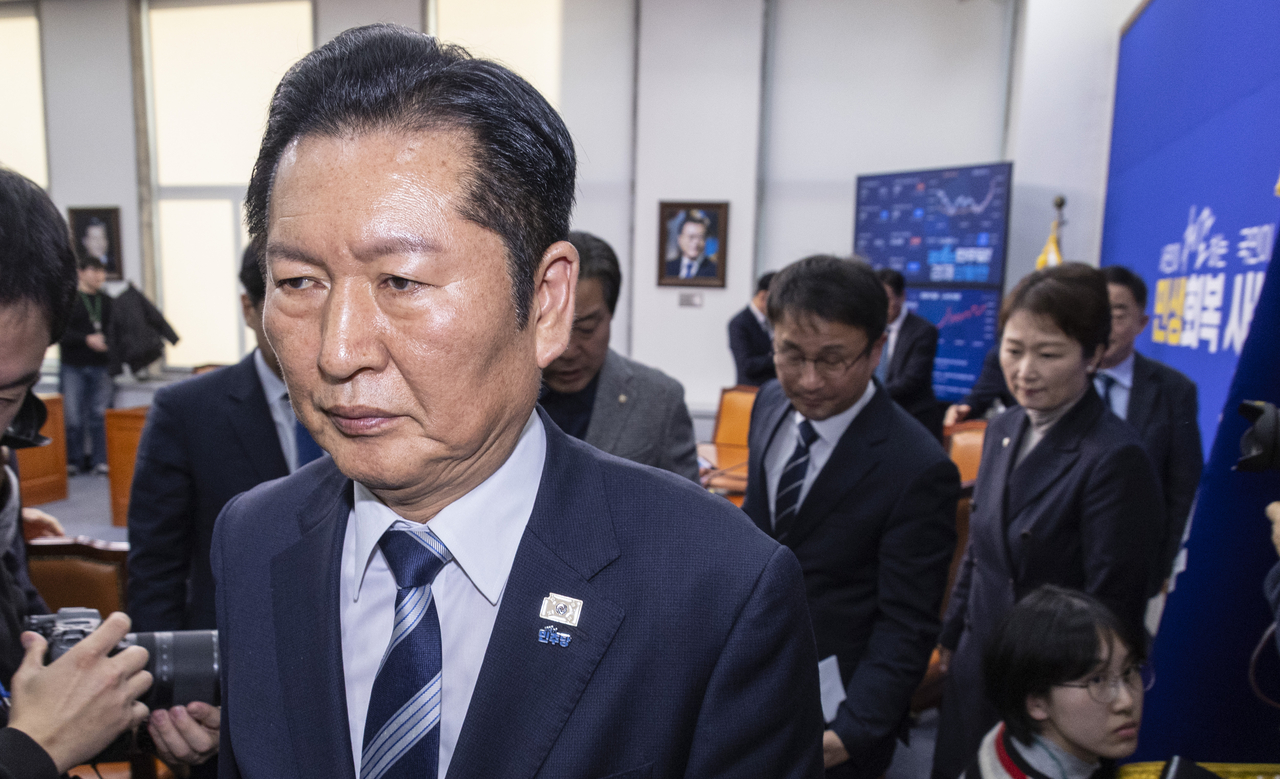
Meanwhile, Jung of the Democratic Party claimed Thursday's ruling was an indication that a new special counsel investigation should be launched.
Noh Sang-won, retired chief of the Army Defense Intelligence Command, was sentenced to 18 years in prison on Feb. 12 for joining Yoon's insurrection. The court found that the writings in his notebook, which the prosecutors claimed had detailed a plan to provoke North Korea, were incomprehensible, and therefore could not serve as evidence against insurrectionists, including Yoon.
"The Democratic Party will do its utmost to uncover the truth about Noh's notebook through an (upcoming) second special counsel investigation and ensure that insurrection leader Yoon receives the maximum sentence possible," Jung said.
"If Noh's plan were executed as planned, as described in the notebook, no one here would have been alive," Jung added.
The main opposition People Power Party, of which Yoon was a member, responded to the ruling with an apology.
Rep. Song Eon-seog, People Power Party floor leader, apologized in a statement released Thursday, expressing regret that a former president affiliated with his party had been sentenced on insurrection charges. He added that the conservative party will work to sever ties with forces that threaten constitutional orders.
consnow@heraldcorp.com
![[Graphic News] Korea’s marine waste up 20% in 4 years](https://wimg.heraldcorp.com/news/cms/2026/10/27/news-p.v1.20261027.091c35e4ae1a4bb2a598a9138e673a7b_T1.gif?type=h&h=800)