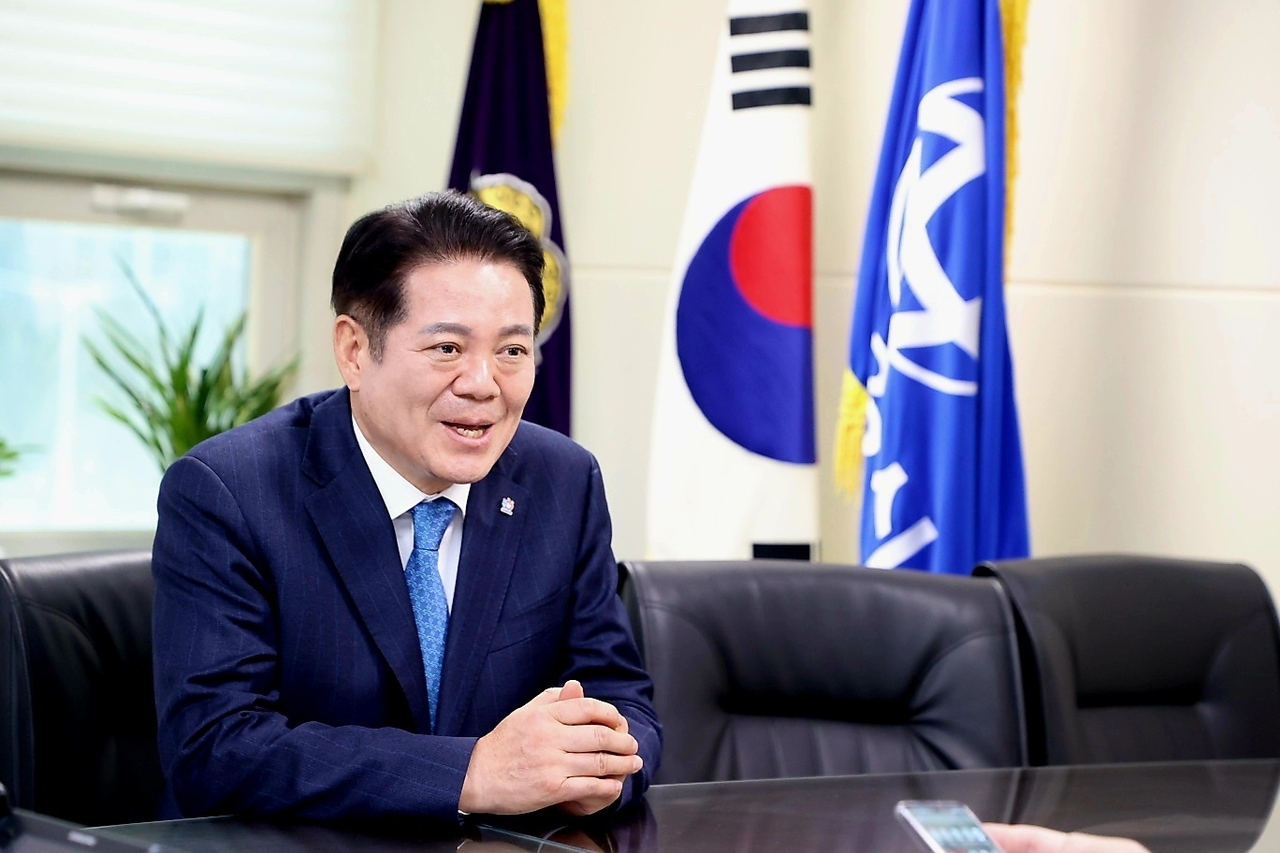
Korea’s mid-sized cities are under pressure to prove they can stand on their own. Anyang officials believe they have found a formula.
Rather than competing solely on proximity to Seoul, the city of about 570,000 residents is building an integrated model where industrial policy, housing supply and daily infrastructure reinforce one another.
The premise is straightforward. Companies expand first. Jobs follow. Residents stay.
City officials describe the strategy as a work-live-enjoy framework that treats quality of life as an economic variable rather than a social afterthought.
“Growth and living standards are not separate priorities for us,” an Anyang official said. “We build the ecosystem as one.”
From attraction to accumulation
Anyang’s industrial policy has shifted from luring firms to embedding them.
A 3.17 square-kilometer district covering Anyang-dong, Bisan-dong and Gwanyang-dong has been designated as a venture promotion zone, offering tax reductions and streamlined approvals. As of last year, 778 venture companies were operating inside the cluster.
The concentration has begun to produce network effects. Firms share suppliers, talent pools and technology pipelines, creating what local officials call an accumulation structure rather than a temporary inflow.
The city is focusing on extended reality, optical convergence technology, artificial intelligence and smart manufacturing. The XR Frontier Optics Research Center, launched in 2023, now anchors a growing base of immersive technology companies.
In parallel, Anyang is expanding AI industry infrastructure and supporting internet of things-based smart factory upgrades for manufacturers.
Financial support has been redesigned around the most capital intensive phases of expansion. The city introduced special loans for equipment investment and broadened interest support tied to business growth. The intent is to reduce friction during scaling rather than at entry.
Predictability as competitiveness
For companies weighing expansion, administrative clarity often matters as much as financial incentives.
Anyang operates a mobile regulation response center that visits company sites to identify obstacles. Issues outside municipal authority are escalated through formal coordination with central government agencies.
The approach has earned five consecutive years of recognition for active administration and repeated top evaluations in local regulatory innovation programs.
“Businesses want to know not just what is possible, but when and under what conditions,” a city official said. “Predictability is competitiveness.”
Connectivity over proximity
Long considered a commuter belt city, Anyang is reframing itself as a transportation hub. Major rail projects including GTX-C, the Wolgot-Pangyo line, the Indeogwon-Dongtan line and the Shinansan line are reshaping regional access.
As lines converge, planners expect denser development around stations and a reorganization of residential and commercial patterns.
The city is also pursuing additional KTX-Eum stops and the undergrounding of the Gyeongbu rail segment passing through central districts.
“Connectivity determines where people choose to live and invest,” a city planner said. “We are designing a city that expands outward, not just upward.”
Youth retention as an economic signal
Population data suggests early traction. Anyang’s population rose for a second consecutive year to 570,598, driven largely by residents aged 19 to 39.
Housing supply has been central to that shift.
Redevelopment projects in Deokhyeon, the Bisancheon area and the Samsin complex have expanded stock.
Youth-focused rental housing priced at 60 to 80 percent of market rates has been supplied near transit corridors, with more than 250 units delivered over the past two years and further expansion planned through 2033.
Additional support includes rental deposit loan assistance, relocation stipends, mortgage support for newlyweds and expanded childbirth and childcare benefits.
The next growth cycle
The city’s long term vision centers on the K37+ Belt AI Innovation Cluster, a strategy linking Anyang to surrounding research and industrial corridors.
Parkdal Smart City aims to redevelop former military storage sites into mixed districts combining advanced industry, housing and cultural facilities.
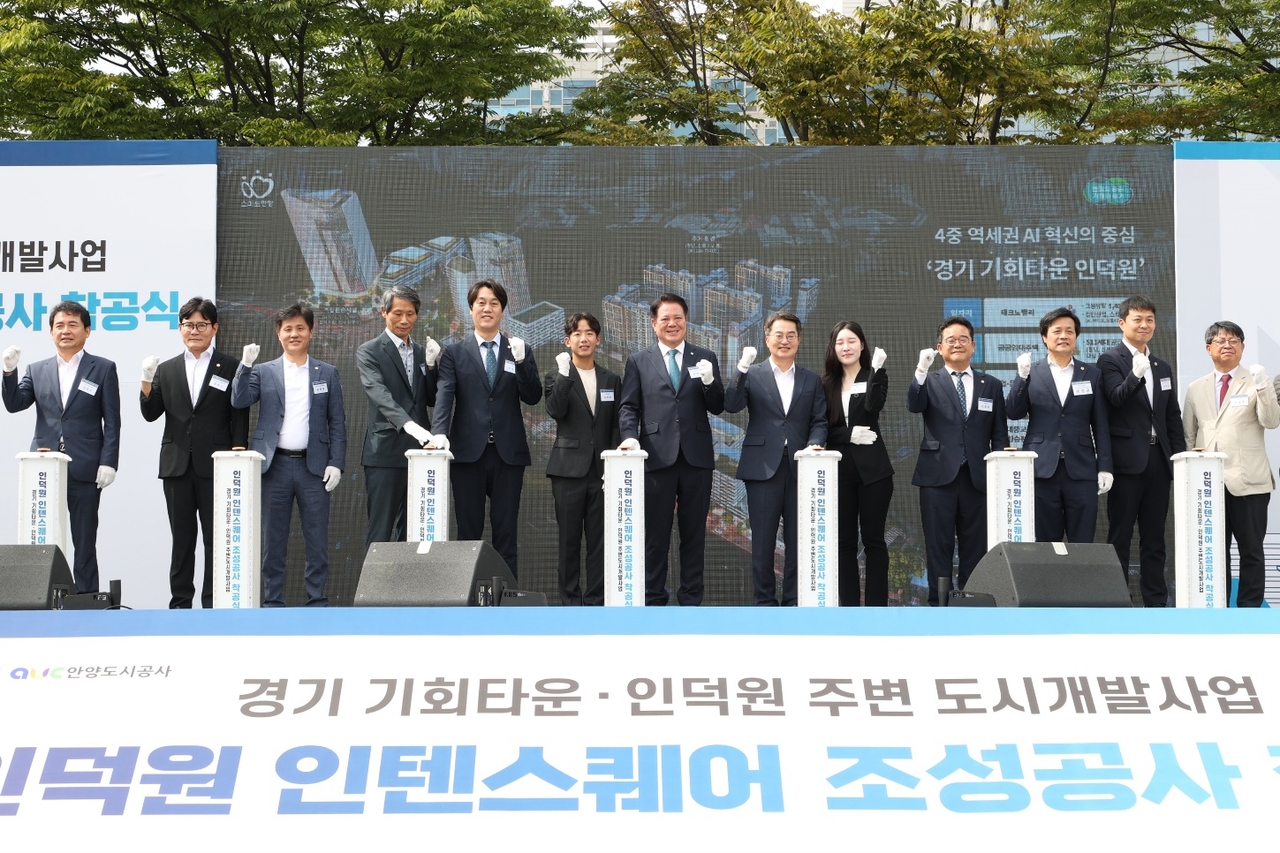
Indeogwon’s IntenSquare project is designed as a compact smart city anchored by a four-line rail interchange, incorporating startup space, conference infrastructure and more than 800 housing units.
Officials see these projects as positioning Anyang as an AI-focused industrial node within the capital region.
Everyday infrastructure
Beyond industry, the city has invested in natural and cultural assets.
In partnership with Seoul National University, Anyang opened portions of the university’s historic arboretum to the public for the first time in nearly six decades.
The Anyangcheon river corridor is being prepared for national garden designation.
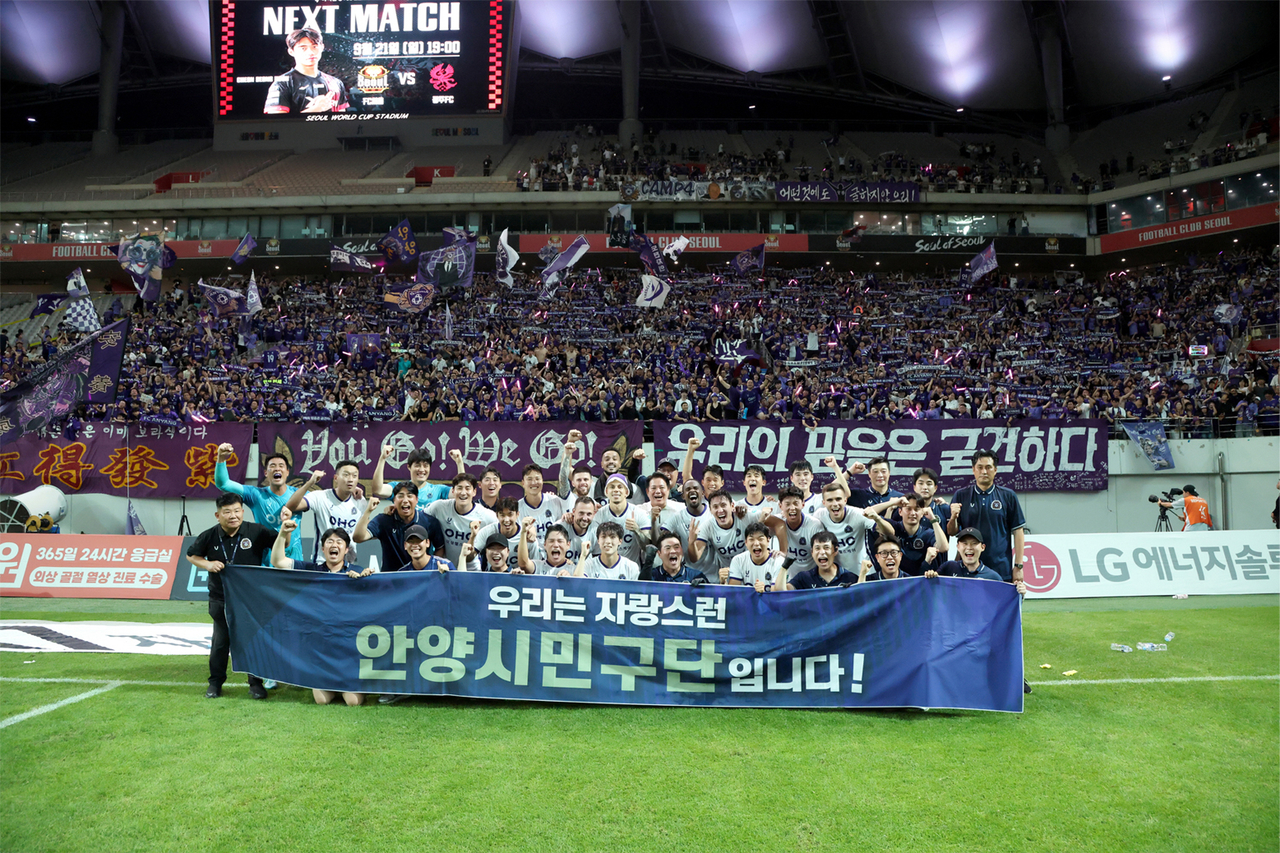
Cultural life includes FC Anyang in the K-League and the citywide Anyang Dance Festival.
“In Anyang, growth is not something we separate from daily life,” a senior city official said. “We are building a place where companies can scale, young people can settle and citizens can enjoy the city every day.”
(hnpark@heraldcorp.com)
(fob140@heraldcorp.com)
hnpark@heraldcorp.com
fob140@heraldcorp.com











