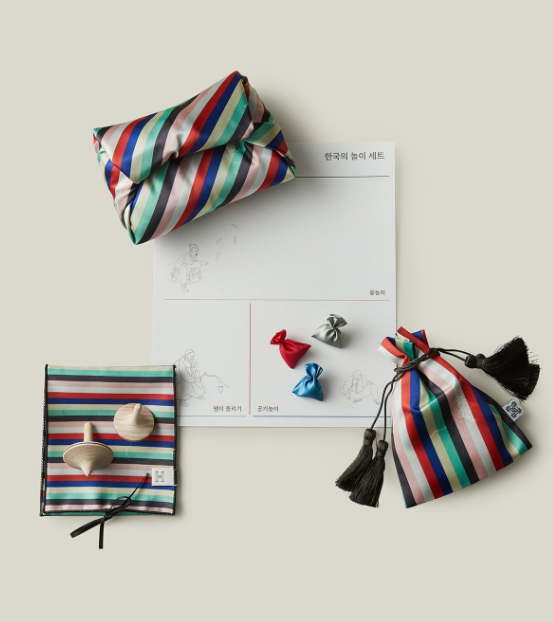
The following is part of a series exploring how traditional Korean living is reimagined for contemporary lifestyles amid renewed attention on cultural heritage — Ed.
The way Seollal is spent has gradually become more individual. As families grow smaller and social norms shift, large gatherings have become less common than they once were. More people find themselves spending the holiday in quieter, more personal ways.
Traditional family games, once a staple of the festivities, are now less commonly played, as televisions and smartphones have largely taken over the role of entertainment.
Still, at its heart, Seollal remains a time meant for family as a moment to reconnect, share stories and catch up with loved ones.
This year, why not bring a set of traditional games to your family gathering to spark conversation and laughter? Some crafty designs can be a good present for friends as well.
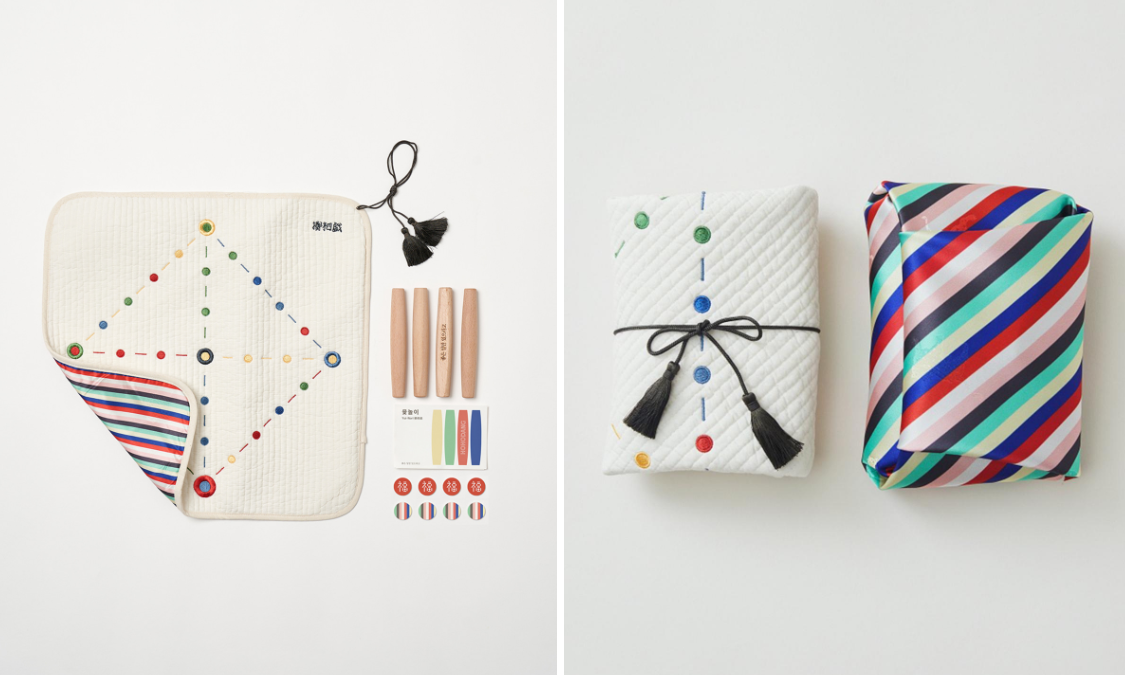
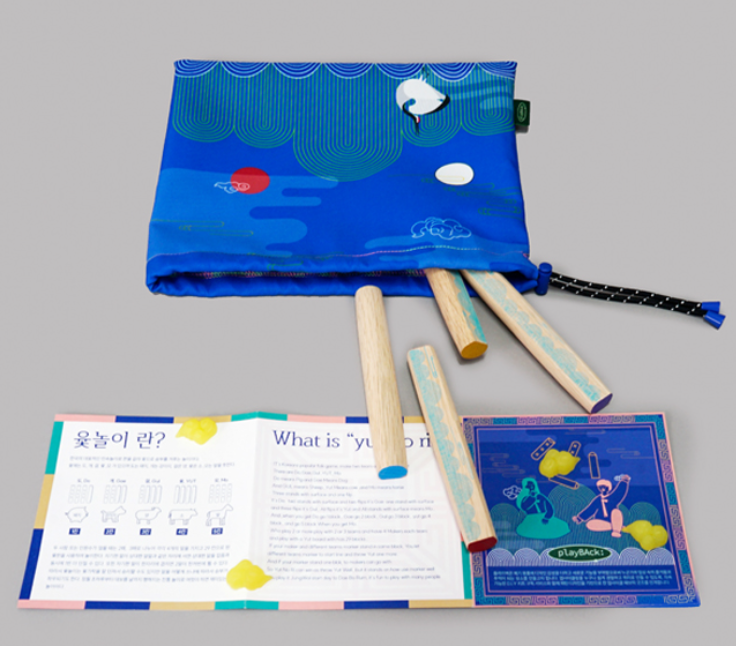
Yutnori
The traditional board game is played by throwing four curved wooden sticks. The way they land — do, gae, geol, yut or mo — determines how far a player's token moves on the board. Each team typically controls four tokens and the first to guide all four pieces around the board wins the game.
Yutnori is particularly more associated with Seollal than Chuseok, with people playing the game at the beginning of the year for family and community, welcoming the new year and expressing hope for an abundant harvest in the coming fall.
According to the National Folk Museum of Korea, the game is found to have existed in the Baekje Kingdom (18 BC–660). By the Goryeo Kingdom (918–1392), it was so widely enjoyed that scenes of the game were depicted in poetry.
Gongginori
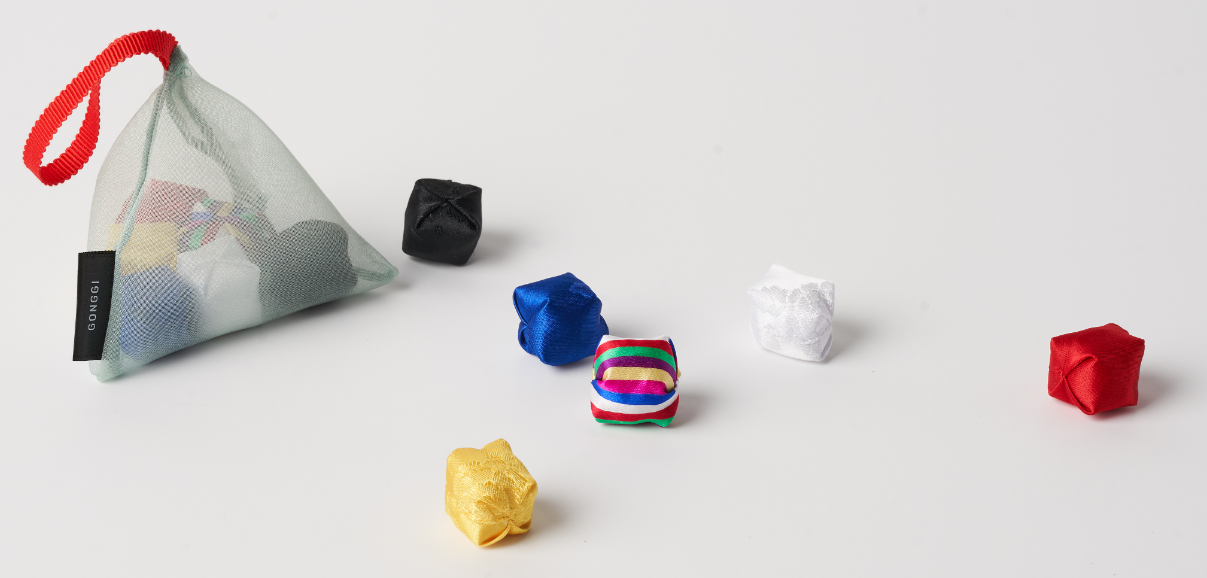
Unlike team-based games such as yutnori, gongginori is usually played individually for casual competition. The traditional hand game has long been a playground favorite among Korean children, especially girls, though anyone can play.
Players scatter the five pieces of stones on the floor — one piece is tossed into the air, and while it is airborne, the player must quickly pick up one (or more) of the remaining pieces before catching the tossed piece. The game progresses through five stages, developing into more difficult rounds.
Although its exact origins remain unclear, gongginori is believed to be centuries old. A painting by Yoon Deok-hee (1685-1766) depicts the game, and it was also recorded in Ojuyeonmunjangjeonsango, an encyclopedia from the 19th century, which describes children tossing and catching small stones in play, according to the Academy of Korean Studies.
Over the past years, the game gained global recognition after appearing in the Netflix series "Squid Game."
Paengichigi
Commonly played during the winter months — especially around Seollal — Paengichigi uses a small wooden spinning top, or paengi in Korean, and a string.
Players wind the string tightly around the top and throw it onto the ground, pulling the string back sharply to make it spin.
The goal is to keep the top spinning for as long as possible — or to knock over other players' tops in a more cutthroat, competitive version of the game.
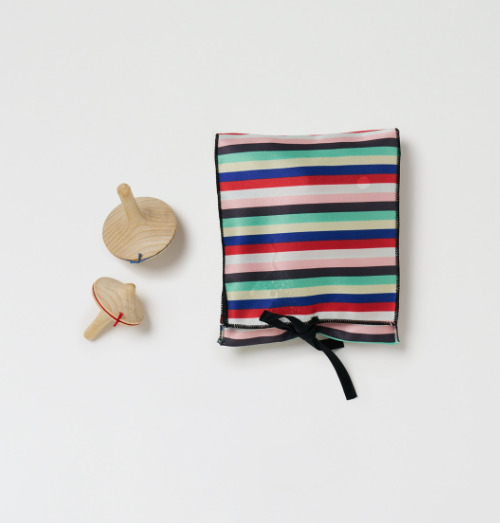
Historically, it was a popular outdoor game particularly for boys in the winter, as the frozen winter ground provided an ideal surface, although open spaces such as courtyards or village streets were also commonly used.
There is no official record of when paengichigi began in Korea. However, the Nihon Shoki, which chronicled the history of Japan through 720 — also the 19th year of King Seongdeok of Silla in Korea — shows the traditional game was introduced to Japan from China through the Silla Kingdom (57 BC-935).
yunapark@heraldcorp.com