President Lee Jae Myung will hold a luncheon meeting with the leaders of the ruling and main opposition parties on Thursday to discuss bipartisan cooperation on livelihoods and state affairs.
Lee will sit down at Cheong Wa Dae with Rep. Jung Chung-rae of the Democratic Party of Korea and Rep. Jang Dong-hyeok of the People Power Party for the first time since September last year.
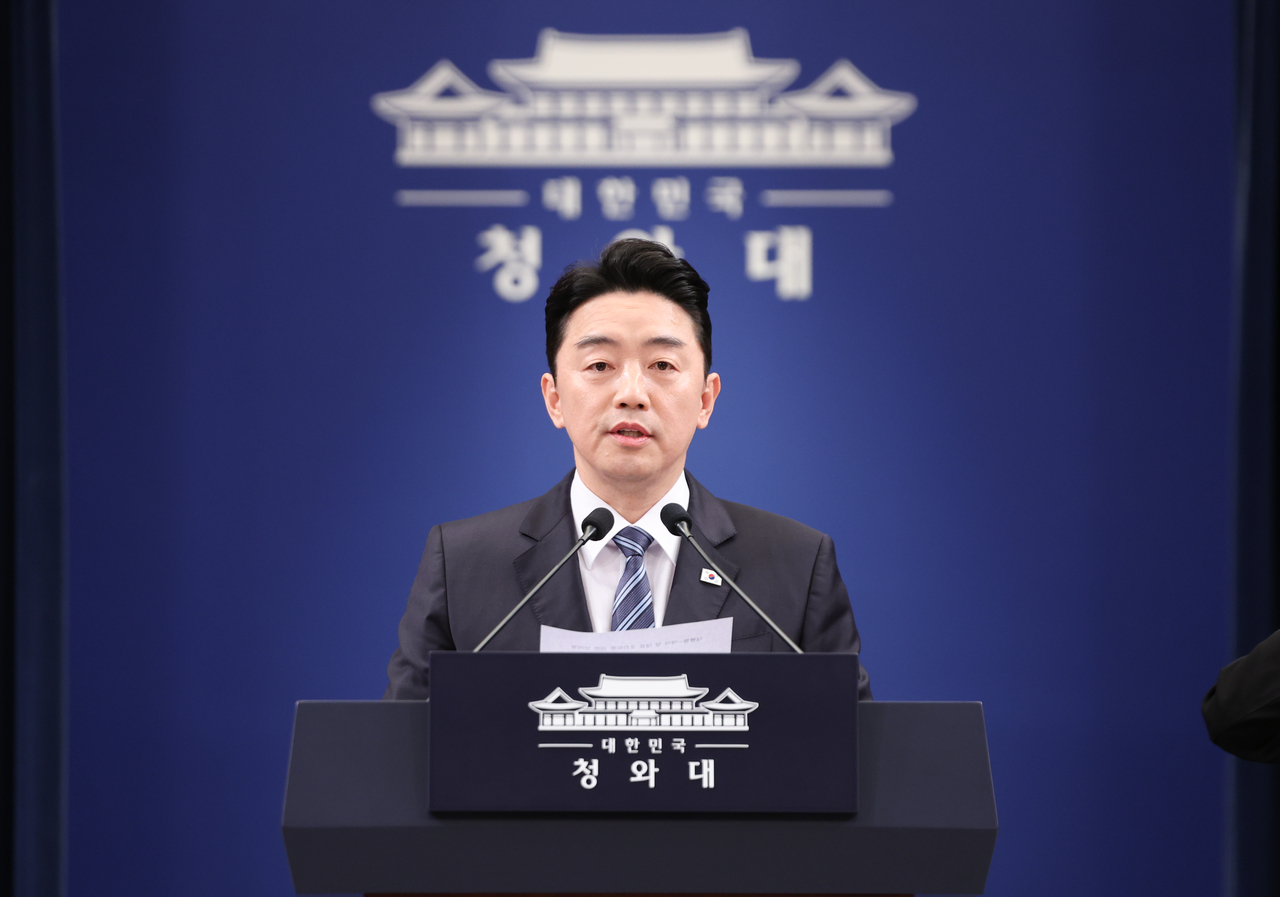
“This meeting is intended to discuss measures for bipartisan cooperation aimed at restoring people’s livelihoods and stabilizing state affairs,” Kang Hoon-sik, presidential chief of staff, said Wednesday during a press briefing. “Without placing limits on the agenda, we expect a candid exchange of views on overall national affairs.”
The meeting comes as a long list of issues requires bipartisan cooperation, including the National Assembly’s passage of a bill to facilitate South Korea’s planned $350 billion special investment in the United States.
US President Donald Trump cited delays in the legislative process as one reason for his surprise announcement on Jan. 26 that he would raise tariffs on South Korean automobiles, lumber and pharmaceuticals — along with other “reciprocal" tariffs — from 15 percent to 25 percent.
The talks also come amid the People Power Party’s repeated calls for special prosecutor probes, including allegations of illicit money in the Democratic Party’s nomination process ahead of the 2022 local elections, as well as cross-party allegations of illegal donations from religious sects such as the Unification Church.
The luncheon will mark Lee’s first face-to-face meeting with Jang since the September gathering with the leaders of the ruling and opposition parties. Lee’s most recent engagement with party leadership was a dinner with the Democratic Party’s top brass on Jan. 19.
The meeting comes amid speculation of rifts within the ruling bloc, particularly between Lee and Chung over several contentious issues.
Controversy also surrounded the recommendation of Jeon Jun-cheol — one of two candidates put forward by the Democratic Party — after it emerged he had previously provided legal representation for a businessperson who testified against Lee.
Jung’s failed proposal to merge the Democratic Party with the Rebuilding Korea Party, which is led by former Justice Minister Cho Kuk, exposed internal friction.
Despite the political undercurrents, Kang signaled the presidential office would keep its distance from intraparty maneuvering.
“Whether to merge is a matter for the two parties to decide, and the presidential office has neither held discussions nor taken a position on the issue,” Kang said when asked about Cheong Wa Dae's post on the merger of the two parties.
Attention is also focused on whether Lee will hold a separate one-on-one meeting with Jang, as he did last September. This time, however, such a bilateral session appears less likely.
Jang renewed his call for a one-on-one meeting during a Feb. 5 meeting with Hong Ihk-pyo, senior presidential secretary for political affairs.
Asked whether a separate conversation between Lee and Jang would be arranged alongside the luncheon, Kang replied, “At this point, we believe communication between the two parties as a whole is more important.”
“Fundamentally, decisions on legislation will be made by the National Assembly based on sufficient dialogue between the ruling and opposition parties, and the government’s position is to respect and follow those decisions,” Kang said.
“Our hope is to listen to both party leaders tomorrow and make this the beginning of renewed cooperation.”
dagyumji@heraldcorp.com