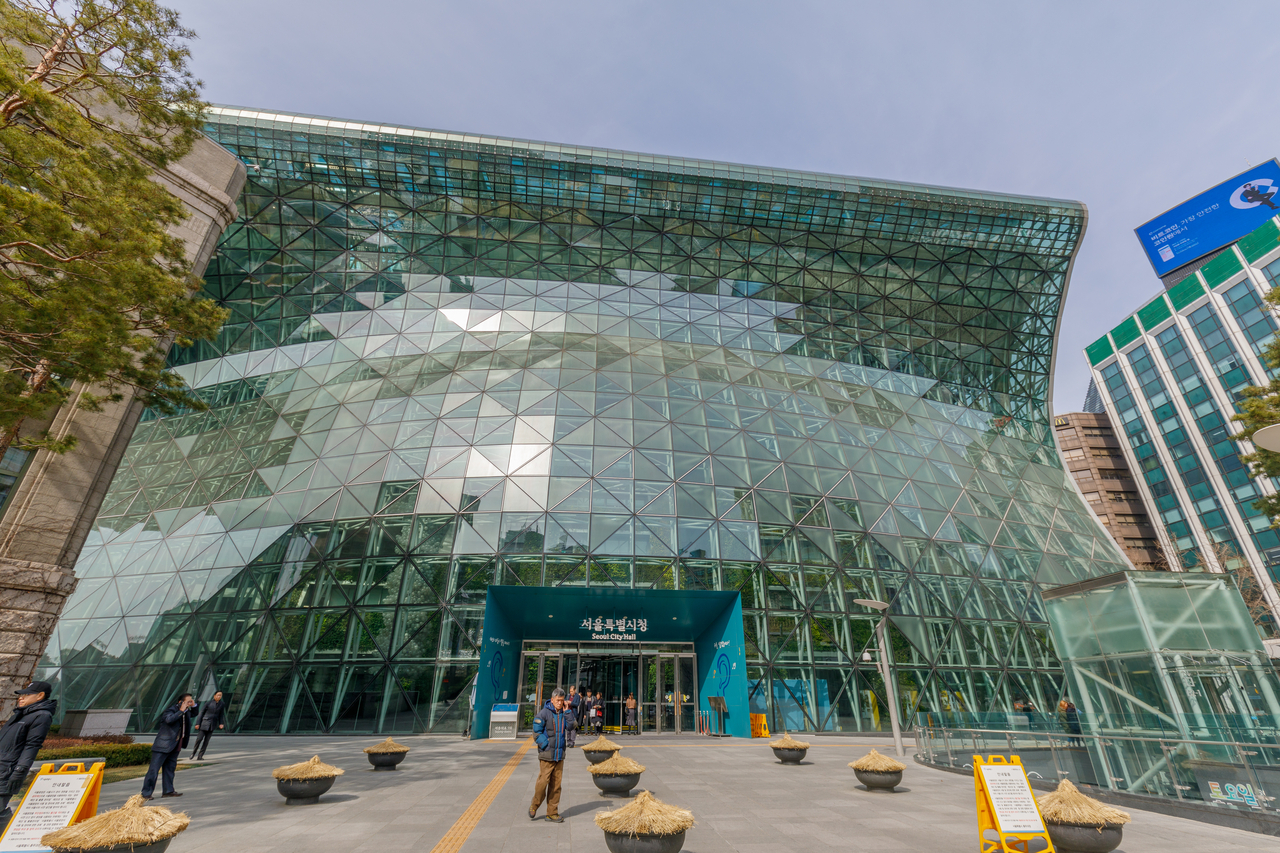
Seoul City has announced the first results of its open-innovation partnership with global pharmaceutical company AstraZeneca, selecting two domestic biotech startups to receive yearlong R&D mentoring and support for overseas expansion.
The city on Monday named Aavatar Therapeutics and Curogen as the final winners of the “Korea AstraZeneca–Seoul Bio Hub Global Open Innovation” program during an awards ceremony held at the Seoul Bio Hub’s industry support center.
The initiative marks the first concrete outcome of a joint incubation agreement signed in October between the city government, AstraZeneca Korea and Seoul Bio Hub.
The two companies were chosen from a pool of 33 bio and medical startups after evaluations of their technological competitiveness, potential for global collaboration and prospects for technology transfer.
Aavatar Therapeutics specializes in an AAV gene-delivery platform that uses AI-based biological data analysis. The technology is designed to deliver gene therapies precisely to targeted tissues, with the potential to reduce side effects and improve treatment efficiency compared to existing approaches.
Curogen is developing therapies for autoimmune diseases based on small molecules and fusion proteins. The company has experience attracting global investment and aims to enter US clinical trials within the year. Reviewers credited Curogen for presenting a differentiated mechanism of action in immunology.
Under the program, the selected startups will receive mentoring from AstraZeneca’s global research teams, covering clinical strategy and commercialization planning over 12 months.
They will also be eligible to join Sweden’s Gothenburg BioVenture Hub, while receiving workspace and rent support at Seoul Bio Hub, along with 35 million won ($23,877) in research funding per company.
Seoul City said it plans to expand collaboration models based on the needs of multinational pharmaceutical firms. The government aims to build an ecosystem in which early-stage startups can move seamlessly into joint research and technology transfer.
Since opening in 2017, Seoul Bio Hub has supported 360 companies, drawing a cumulative 600 billion won in investments and generating 100 billion won in revenue.
jychoi@heraldcorp.com