Still rare and stigmatized, nonmarital births on the rise as support systems expand to encourage parenthood
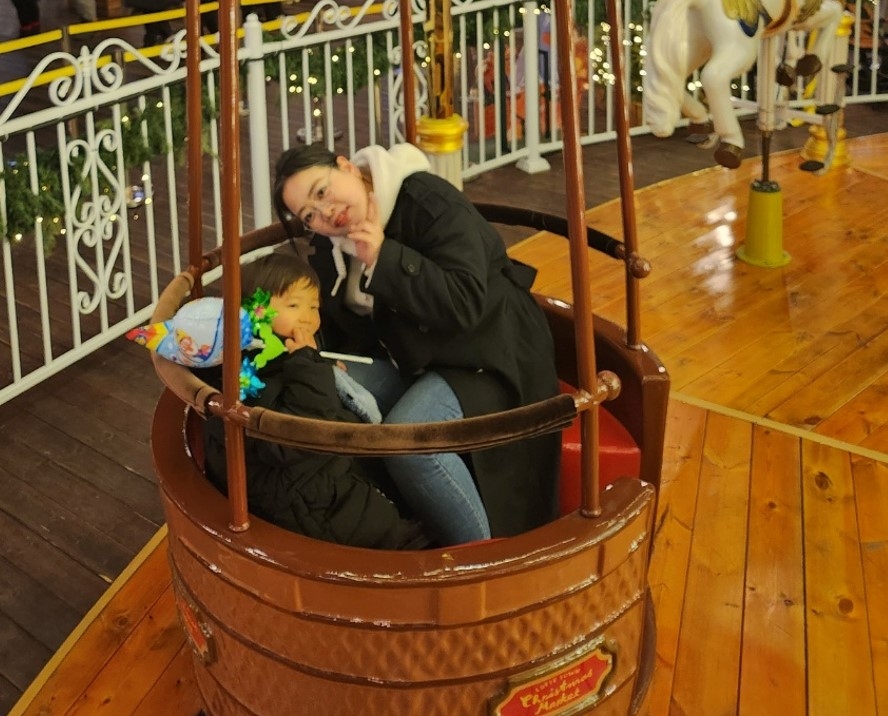
By the time Yoo Eun-a (pseudonym) realized she was pregnant in 2023, she had already ended a five-year relationship and three years of cohabitation — the final phases of which had been marked by violence and verbal abuse.
She informed the baby’s father of the pregnancy, and they briefly reunited. In the final weeks of her pregnancy, however, an argument escalated into a violent outburst, with him smashing furniture throughout their home, forcing Yoo to flee to a friend’s house.
She ended up giving birth at Aeranwon, a shelter for unmarried pregnant women in Seoul. She did not tell her family.
“My parents wanted me to get married and live a stable life,” Yoo, in her late 20s, said. “I couldn’t bring myself to tell them about this situation.”
With no stable housing, limited income and no family support for child care, Yoo initially considered placing her baby up for adoption. While preparing for the adoption process, she learned that an acquaintance, Park Seo-yeon, was raising a child alone after experiencing a similar situation.
With Park’s support, Yoo entered a community facility in Mapo-gu and decided to raise her child herself.
“Meeting my child’s father is something I deeply regret,” Yoo said. “But raising my baby, I have no regrets at all. My child is a blessing. I would have regretted it deeply if I had sent my baby for adoption.”
“I will live my life diligently for my baby,” she added, smiling firmly.
Rising births outside marriage
Unlike some other countries that emphasize individual choice and maintain relatively open attitudes toward premarital pregnancy, South Korea has long viewed it negatively, as a sign of one’s wayward youth and a source of shame for the family.
The data speaks volumes. As of 2022, the average share of births outside marriage across OECD countries stood at 41 percent. France recorded the highest rate at 65.2 percent, followed by Sweden at 57.8 percent, the United Kingdom at 51.4 percent and the United States at 39.8 percent. In the same year, South Korea’s figure was just 3.9 percent.
According to government data, about 90 percent of children placed for domestic or overseas adoption, as well as abandoned children, were born to unmarried mothers.
However, albeit slowly, the share of nonmarital births has been rising in recent years as attitudes toward childbirth outside marriage — and related government and community support — have begun to shift.
Since official data collection began in 1981, the share of births outside marriage in Korea remained largely between 0 and 2 percent for decades. The figure rose from 1.9 percent in 2017 to 2.2 percent in 2018, continuing a gradual increase to reach 5.8 percent in 2024.
While the number of unmarried parents raising children fell from 35,088 in 2015 to 24,140 in 2024, the decline was far less steep than the drop in total births, which plunged from 438,420 to 238,317 over the same period — effectively indicating a relative increase.
Public perception has also evolved. According to a government social survey, the proportion of respondents who agreed that “people can have children without getting married” rose from 22.4 percent in 2002 to 37.2 percent in 2024. Experiences of discrimination against children from single-parent families in neighborhoods or local communities dropped sharply, from 22.1 percent in 2021 to 5.4 percent in 2024.
“Traditionally, there has been a strong social belief that marriage and childbirth are inseparable,” said Park Hyun-jung, director of population trends at Statistics Korea. “But we are beginning to detect signs of change.”
Expanded support for single parents
Economic assistance from the government and local communities has played a role in this shift.
Yoo’s friend Park Seo-yeon, 30, also became pregnant outside marriage several years earlier. When she informed her boyfriend, he immediately suggested terminating the pregnancy. Frequent arguments followed, and Park ultimately decided to raise the child alone. Her family also strongly urged her to have an abortion, and she gave birth alone.
Like Yoo, Park gave birth at Aeranwon and later entered Areumtteori, a residential facility in Mapo-gu, Seoul, that supports unmarried mothers raising children under the age of three. The facility provides housing, self-reliance programs and vocational training for up to two years, with extensions available under certain conditions.
Park earned a baking certificate and is currently preparing for a confectionery licensing exam. Once her permitted stay at the facility ends, she plans to move into public rental housing. The Korea Land & Housing Corp. offers homes at around 30 percent to 50 percent of market rent for single parents.
Monthly child-rearing allowances for single-parent families increased to 230,000 won ($161) in 2025 from 50,000 won in 2012, while eligibility expanded from children under 12 to those under 22. The government also provides low-cost child care services, with costs varying by income, the child’s age and hours of care.
“Without this support, raising my child alone would have been extremely difficult,” Park said.
Persistent challenges
Despite expanded assistance, significant obstacles remain.
“The number one reason unmarried mothers consider giving up their babies is economic hardship,” said Kim Min-jung, head of the Korea Unwed Mothers’ Families Association. “When pregnancy occurs, many women separate from partners who do not want the child. They often cannot tell their families, struggle to maintain livelihoods and become completely isolated, unable even to confide in friends.”
Some unmarried pregnant women avoid hospitals due to medical costs, Kim added. “We’ve had women ask us to send instant noodles because they were starving.”
All unmarried mothers interviewed by The Korea Herald said they received no financial support from their children’s fathers, and some filed lawsuits over child support.
Park Ju-eun, a senior researcher at the Incheon Foundation for Women and Family, noted that single-parent households face severe time constraints because they must shoulder a dual role.
"They are solely responsible not only for child-rearing and housework as caregivers, but also for earning the family’s livelihood," Park said. "This form of 'time poverty' makes labor market participation more difficult, while also reducing opportunities to secure decent jobs or participate in education and training."
She added that it is also a key factor affecting psychological and physical well-being, including stress and health, at both the individual and family levels.
"Therefore, for single-parent families who face economic hardship as well as limited flexibility in how they can use their time, it is necessary to consider time-related support alongside cash assistance."
Social attitudes may be shifting, but stigma persists.
Park Seo-yeon said she has received strong emotional support from her church, which has given her the courage to continue raising her child.
However, she still feels negative judgment from her family. When meeting acquaintances in public with her mother, her mother avoids mentioning the child’s father and does not want others to know that Park is an unmarried mother.
“I told her I’m not ashamed, so why does she care so much?” Park said. “But she asks me whether I really don’t mind people’s looks and stares.”
The issue has caused frequent arguments and emotional pain, she said.
Seo Bo-bae (pseudonym), a divorcee raising a child from her previous marriage, said she was deeply hurt during marriage counseling when a counselor insisted that a father must always be present and described that arrangement as a “normal” family.
“They may have meant to discourage divorce,” she said. “But to me, those words were painful.”
“I hope my child grows up healthy, and I hope we become a society where diversity is accepted,” she said.
“There are single-parent families, multicultural families, many forms of family. I want my child to respect others and never discriminate.”
shinjh@heraldcorp.com