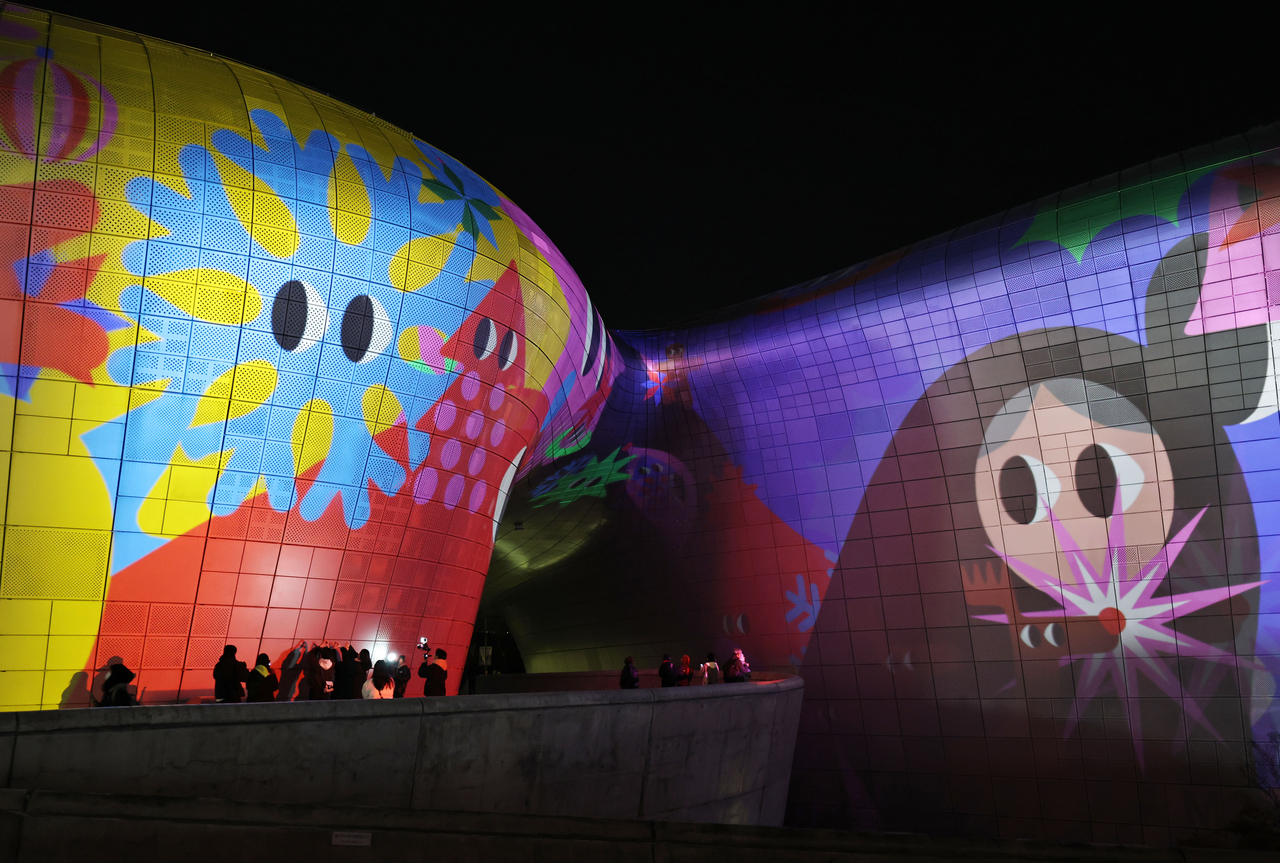
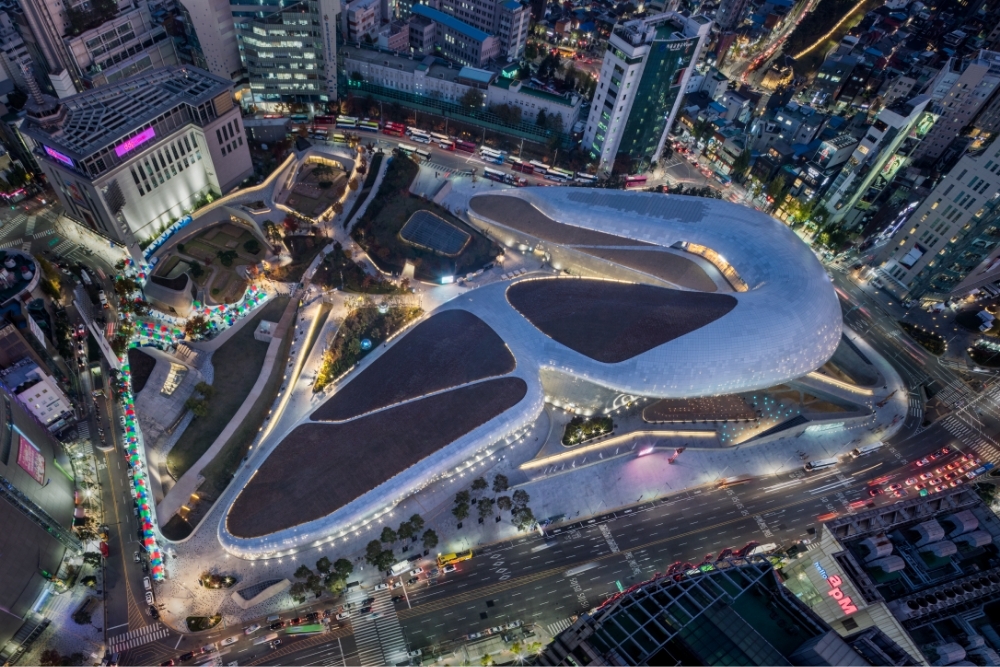
For more than a decade, Dongdaemun Design Plaza, better known as DDP, has stood as one of Seoul’s signature landmarks and a “must-visit” stop for tourists.
Designed by the late Zaha Hadid, the aluminum-clad cultural complex has been widely regarded as an exemplar of futuristic architecture, serving as a backdrop for fashion shows, exhibitions and major design events.
But ahead of the local elections in June, the space finds itself at the center of an unexpected political storm — and its long-term future could hinge on the next Seoul mayor.
Over the past month, several mayoral hopefuls have openly questioned DDP’s value, with some going as far as suggesting its demolition.
The controversy began when Chong Won-o, district mayor of Seongdong-gu, argued that the site — originally home to the old Dongdaemun Stadium — should have been developed into a domed arena for sports and performances.
He claimed the area’s local economy is “struggling” because DDP has become “a place where people only take photos and leave,” offering limited economic benefits.
The Seoul city government quickly pushed back. Citing visitor data, officials said DDP attracted 17.1 million people last year alone, with cumulative foot traffic exceeding 126 million since its opening.
The city also highlighted economic indicators, saying credit card spending in nearby commercial zones jumped 25.5 percent between 2022 and 2024, while foreign-card transactions surged more than sixfold.
Yet the issue resurfaced when the ruling Democratic Party of Korea's Rep. Jeon Hyun-hee, now running for mayor, labeled DDP a “symbol of dysfunctional administration” and pledged to demolish it to build what she calls the world’s largest “Seoul Dome.” Her comments intensified speculation that the election could decide whether DDP’s future lies in preservation, overhaul or removal.
While modern retail hubs such as Hyundai City Outlet and Doota Mall remain busy with both domestic and foreign shoppers, vendors in the area have said that traditional fashion arcades, such as Tongil Sangga and Pyeonghwa Market, now see fewer visitors.
Experts say the downturn stems from broader structural shifts.
The move toward online shopping, rising labor costs and intensified competition from Chinese manufacturers have weakened the once-dominant Dongdaemun fashion district. Many specialists argue that DDP is not the cause and that restructuring within the fashion industry is long overdue.
“DDP’s role as a landmark could have been better aligned with the surrounding commercial ecosystem,” said Lee Eun-hye, professor of consumer science at Incheon National University. “But blaming DDP for market decline is misleading. The downturn reflects deeper issues, not a single building.”
Another key consideration is the enormous public cost that demolition would entail.
The construction of DDP, which opened in 2014, cost about 500 billion won ($341 million). For comparison, Gocheok Sky Dome, the venue on the other side of the city that replaced the former Dongdaemun Stadium when it opened in 2015, cost around 200 billion won to build.
With the current construction of the Seoul Arena concert complex in Chang-dong, located in Seoul's far northern Dobong-gu, experts question whether another domed venue would be necessary.
In a statement, Yoon Young-hee, spokesperson for the People Power Party on the Seoul Metropolitan Council, criticized the demolition proposal. “Who among the people of Seoul would support tearing down a fully functioning building only to construct another one in its place?” she said.
“How much will it cost to dismantle the DDP, and how much more to build a new facility? These are expenses that ultimately fall on taxpayers.”
Urban-planning scholars emphasize that landmarks are not simply aesthetic structures, but form part of a city’s identity and competitiveness.
“DDP is an iconic architectural asset and a highly used public space,” said Suh Jin-hyung, a professor of real estate law at Kwangwoon University.
“It deserves preservation, and demolition would waste national resources. If anything, large-scale venues like domes should be built in outer districts where scale and access align better.”
jychoi@heraldcorp.com